Community and Kinship at Smith College in the Early Twentieth Century
Domesticity and the Private Lives of Women Faculty
Smith College, a small liberal arts women’s college in Northampton, Massachusetts founded in 1871, created new spaces for intimate connection between women outside the home. At the end of the nineteenth century the women faculty at Smith College lived amongst their students. This arrangement kept women from having the private lives that male faculty members were afforded. Among women’s professional duties in these household, was tending to the personal lives of their students and setting “the intellectual and social tone at the dinner table and the parlor.”1
At the turn of the twentieth century, women on the faculty at Smith joined the first generation of American women to purchase homes. This privilege provided privacy for the intimate lives of Smith faculty women’s friendships and romantic relationships to flourish. Historian Helen Lefkowitz Horowitz described that, “as women left the residence hall they generally withdrew in pairs of friends to apartments or houses…These domestic structures provided them with physical confirmation of their existence, their independence, and their intimacy with other women. Their libraries, dining rooms, and gardens offered inviting places for stimulating talk, refreshment, and relaxation.”2
Housing from Student to Professor
Attending Smith as an undergraduate meant joining the Smith family. Many students who pursued higher education opted to come back to Smith as teachers. Smith was a site of refugee and home making for women who loved women. In 1922, Smith College graduates made up 26 percent of the 265 faculty members and women outnumbered men on the faculty. That same year there were 62 men on the faculty and 203 women.3
Suzan Rose Benedict’s room in Washburn House, Smith College, 1895, Suzan Rose Benedict papers, Box 678, Smith College Archives, CA-MS-00383, Smith College Special Collections. (Left)
Suzan Rose Benedict in her home at 11 Barrett Street, c. 1930, Suzan Rose Benedict papers, Box 678,Smith College Archives, CA-MS-00383, Smith College Special Collections. (Right)
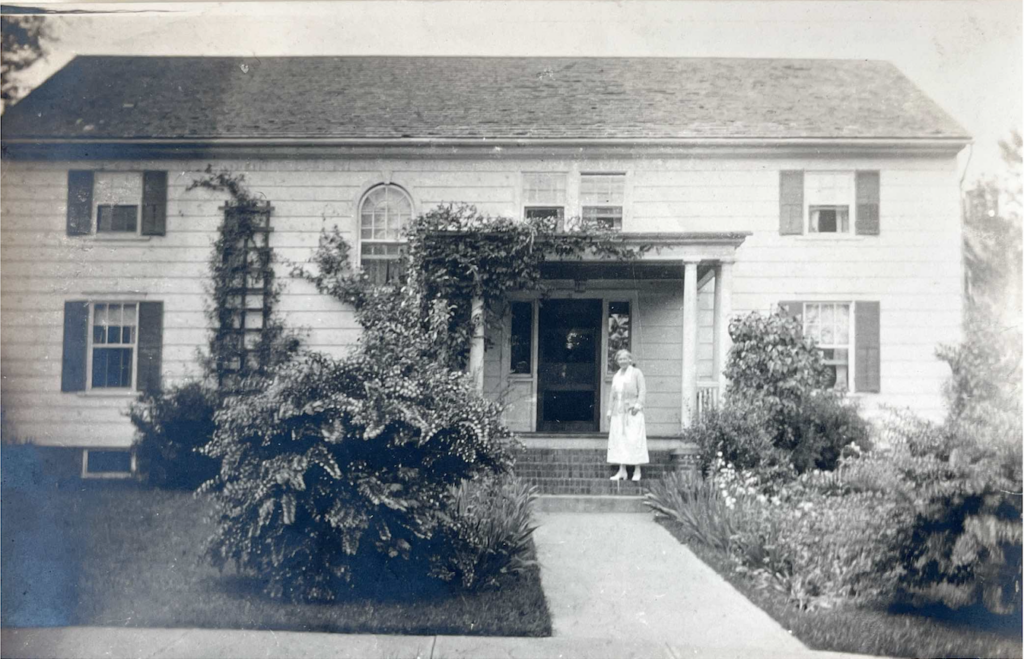
Suzan Rose Benedict purchased her home on 11 Barrett Street in Northampton with her life partner Susan Miller Rambo in 1918. Not only did the couple open their cozy home on Barrett Place to their fellow women faculty members for weekly teas and other gatherings, but they also opened it to their students. Upon Rambo’s death her former student Carmel Benson Hastings, Class of 1938, reminisced, “I treasure also my memory of friendly afternoon student teas at her home. Smith was indeed a far better place because she was there.4
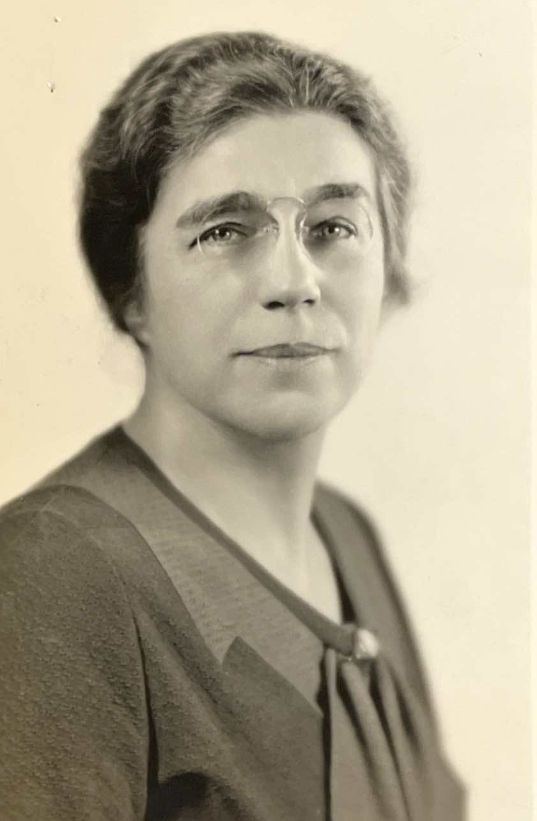
Susan Miller Rambo, c. 1920, Faculty and staff biographical files, Box 984, Smith College Archives.

Suzan Rose Benedict papers, Box 678, Smith College Archives, CA-MS-00383, Smith College Special Collections.
- Horowitz, Helen Lefkowitz. Alma Mater: Design and Experience in the Women’s Colleges from Their Nineteenth-Century Beginnings to the 1930s. University of Massachusetts Press, 1993; 185. ↩︎
- Horowitz, Alma Mater (1993) 190. ↩︎
- Smith College Weekly, 1921 – 1922, Student publications and student publications records, College Archives, Smith College Special Collections. ↩︎
- Smith Alumnae Quarterly, April, 1977 p. 62. ↩︎