The Park Slope neighborhood of Brooklyn, New York gained a reputation as “Dyke Slope” during the 1980s-1990s.1 Prior to this nickname Park Slope had a substantial Black and Brown community, who were driven out as the neighborhood experienced an influx of new white residents. As lesbians began to move en masse to the area beginning in the 1980s, new businesses and community spaces built by and for lesbians emerged. The Dyke Slope era paved the way for the further gentrification of Park Slope, which is now an incredibly wealthy, majority white neighborhood.
The Audre Lorde Project, Kitchen Table Women of Color Press, and the Brooklyn AIDS Task Force were important spaces for Black women, especially Black lesbians, in Brooklyn at the time. The Brooklyn AIDS Task Force produced a group called Shades of Lavender in Park Slope, a multicultural group of lesbian/queer youth who gathered for workshops, self-help groups, and community discussions. The work of Black lesbians like Audre Lorde, Barbara Smith, Achebe Betty Powell, and so many other members of these collectives played a pivotal role in intentionally carving out space for Black women in the larger women’s movement.2
Many of the lesbian businesses that emerged in the 80s-90s were white-owned, and just as Park Slope is associated with whiteness today, the public’s understanding of the Dyke Slope era is largely centered around the white lesbians who lived there. But what about the Black lesbians? How did they fit into the Dyke Slope moment?
Some white-owned businesses like La Papaya, the Rising Cafe, and the Tea Lounge gained a reputation for being racially diverse and accepting to all lesbians. La Papaya (1980-1983) was a lesbian-owned women’s bookstore and restaurant on the border of Prospect Heights and Park Slope. As the only feminist restaurant in New York City at the time La Papaya was a vital resource for lesbians city-wide, and frequently appeared in lesbian/feminist publications such as Big Apple Dyke News. La Papaya also served as a much-needed meeting place for lesbians of color who may not have been able to rely on the often discriminatory queer spaces that already existed in the city. Because of the racially exclusionary nature of many of New York’s queer clubs, Black lesbians often gathered in alternate spaces like these cafes to foster community.
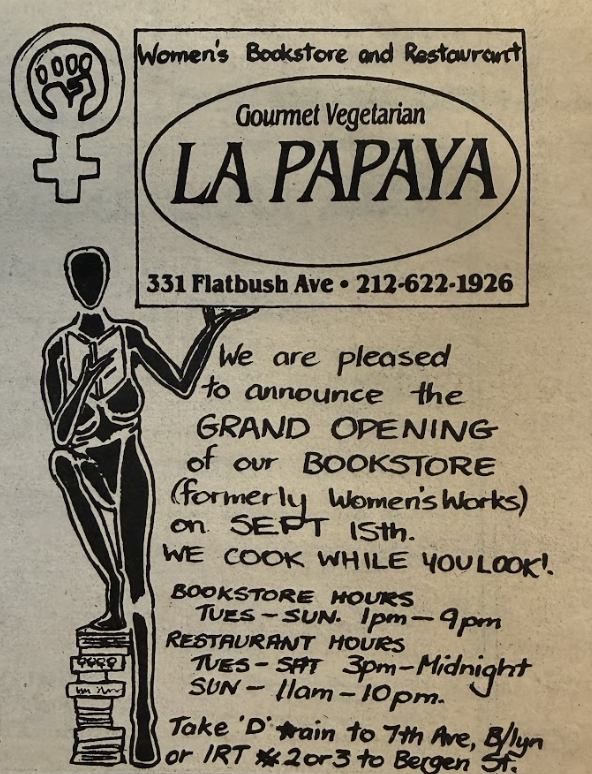
Big Apple Dyke News, which published their first issue in March of 1981, frequently advertised La Papaya and the events they hosted.
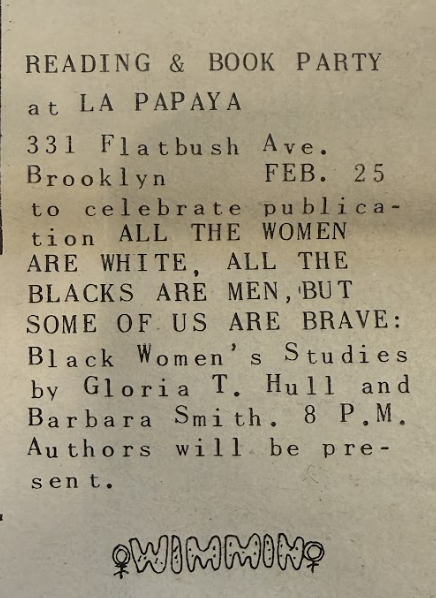
This event is a shining example of Black lesbians creating space for kinship and a celebration of Black feminist praxis. The book, All the Women Are White, All the Blacks Are Men, But Some of Us Are Brave: Black Women’s Studies by Akasha Gloria Hull, Barbara Smith, and Patricia Bell-Scott is one of the most influential Black feminist anthologies ever published. As a co-founder of the Kitchen Table Press, which moved operations to New York in 1981, Barbara Smith was an important figure in the social and political movements of Black women in Brooklyn at the time. La Papaya not only creating a space to celebrate the publication of a key Black feminist text, but also inviting Hull and Smith to personally present their book at this event, displays their active inclusion of Black lesbians in the broader women’s movement.
How did sites like La Papaya, the Rising Cafe, and the Tea Lounge gain a reputation for being diverse/racially mixed? When did lesbians of color begin to enter those spaces?
The racial inclusivity in establishments like La Papaya and the Rising Cafe was certainly important in the social lives of Black lesbians in Brooklyn at the time. However, these white-owned establishments were not the only places that Black lesbians created space for kinship and joy. Perhaps the most fundamental and fascinating method of Black lesbian gathering was the Black queer/lesbian culture of house parties that thrived in Brooklyn during the 1980s-2000s.
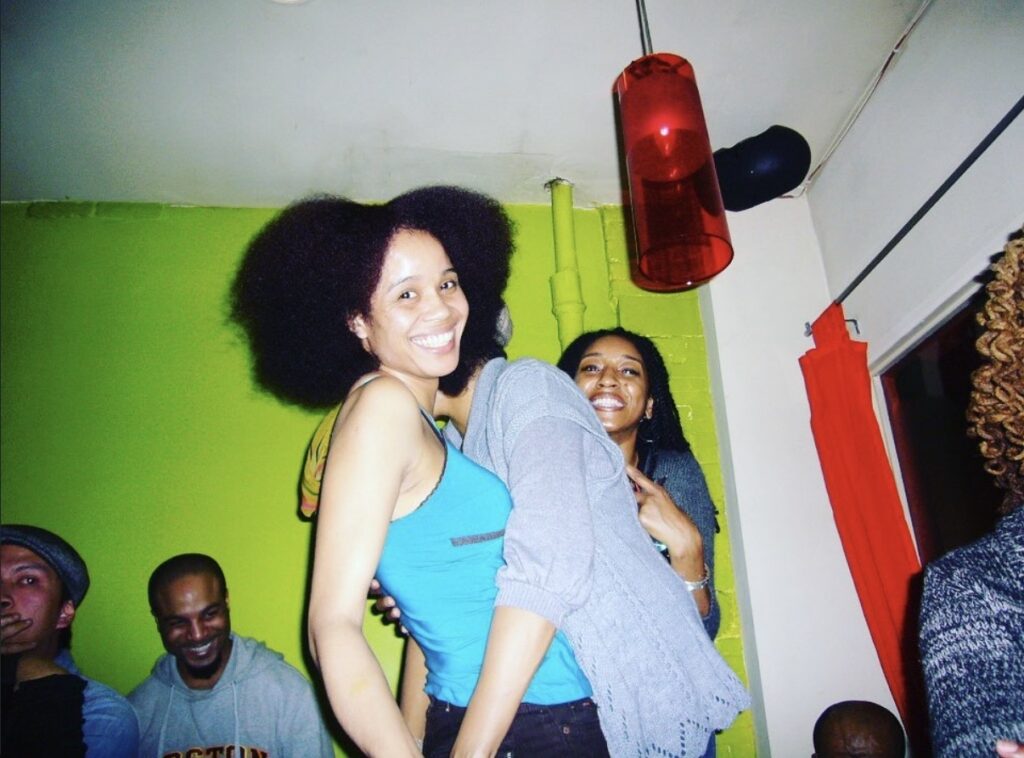
House parties are a longstanding component of Black queer existence, providing a communal space to dance, love, and comfortably co-exist. Historically, Black queer people have turned to house parties to escape racially hostile and exclusionary gay clubs and bars, otherwise relying solely on the occasional underground themed nights for queer people of color at said bars. Alongside these house parties, rent parties and dinner parties have also been utilized for years by the Black queer community for kinship and mutual aid. Black lesbians in Brooklyn during the 1980s-2000s certainly continued this tradition of gathering at home in the name of joy, love, sexual freedom, and community.
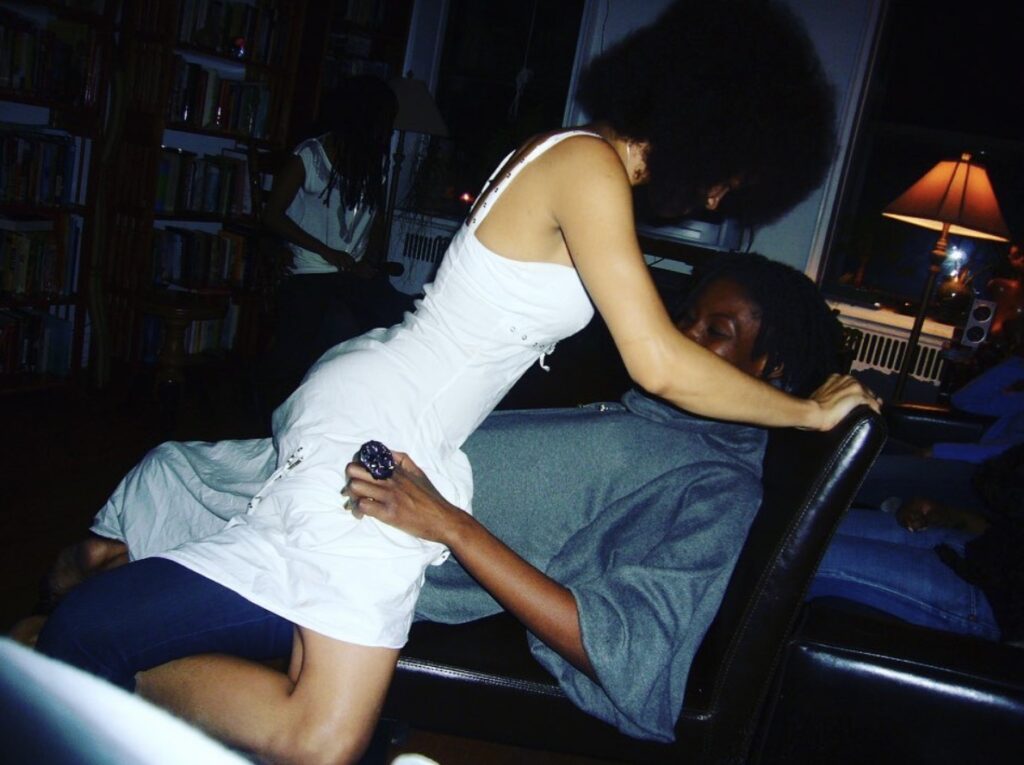
These photographs shared by author-activist Staceyann Chin on Instagram offer a stunning look into the experience of being at one of these parties.3
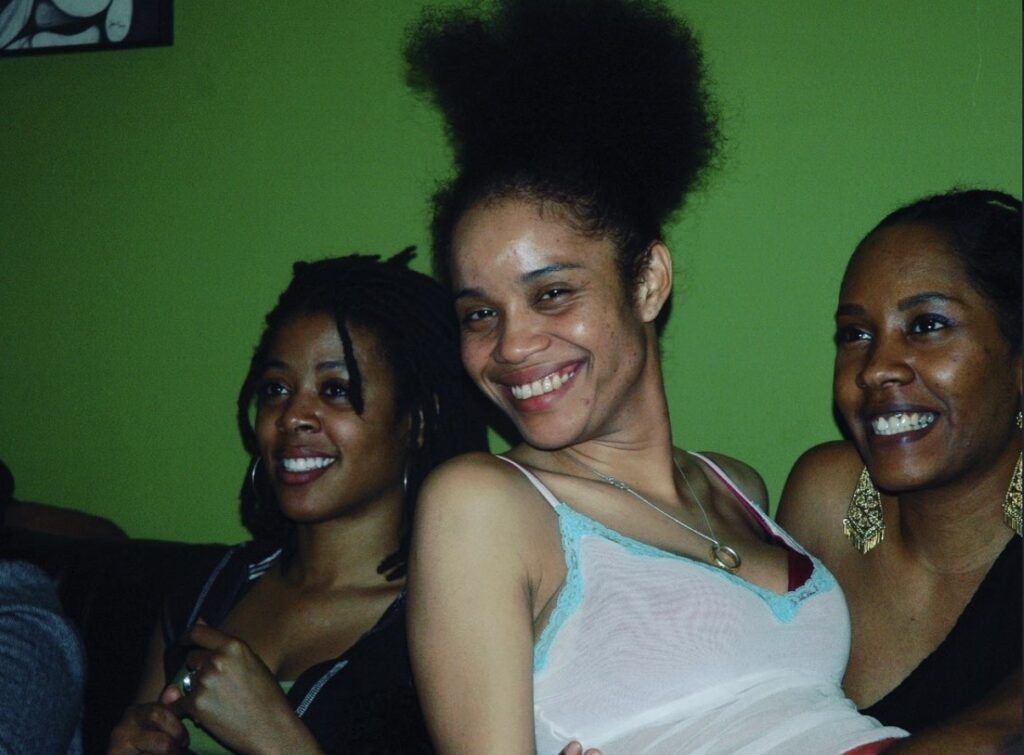
These house parties, dinner parties, and rent parties played a huge role in the social lives of Black lesbians in Brooklyn in the 80s-2000s, and point to the drive to create comfortable Black queer communal spaces. Why does it matter that house parties were so essential to Black lesbian nightlife? What does that say about the racism in queer nightlife in Brooklyn (or even New York City broadly) at the time? How might we preserve and recreate the embodied experience of being present in these Black lesbian spaces?
Notes
- Jack Jen Gieseking. 2020. A Queer New York. NYU Press. ↩︎
- Achebe Betty Powell papers, Sophia Smith Collection, SSC-MS-00834, Smith College Special Collections, Northampton, Massachusetts. ↩︎
- Staceyann Chin (@staceyannchin), One of the best things about being a Black lesbian/in Brooklyn/in the late 90s/2000s, was being with other Black lesbians. Instagram post, October 13, 2022. https://www.instagram.com/p/Cjpq4bNufF-/?utm_source=ig_web_copy_link&img_index=1 ↩︎
Further Research!
NYC LGBTQ Historic Sites Project
A wonderful resource to explore a map of important queer sites in New York City, including La Papaya, The Audre Lorde Project, the Rising Cafe, and more.
Big Apple Dyke News, Periodical Collection, Sophia Smith Collection, Smith College, Northampton, Mass.
For more on lesbian life in New York City in the 1980s, including information about events and organizations by and for lesbians of color.
Secondary Sources
Jack Jen Gieseking. 2020. A Queer New York. NYU Press.
Gieseking specifically mentions La Papaya and the Rising Cafe, and also has some incredibly helpful chapters that explore Dyke Slope, and the perspectives of queer people of color on what it felt like to be queer in Brooklyn in this time. In one chapter, lesbians of color reflect on house parties, racism in existing queer spaces, and the (problematic) ways in which white lesbians who participated in the gentrification of Park Slope and the surrounding neighborhoods viewed their presence there.
Kemi Adeyemi, Kareem Khubchandani, and Rivera-Servera Ramón H. 2021. Queer Nightlife. Ann Arbor: University Of Michigan Press.
This collection offers many different articles that touch on the queer of color experience. In the book, the history of queer people of color turning to house parties is discussed, as well as the ways in which these parties functioned as black communal space. The book provides historical context on what queer nightlife looks like for communities of color, and can be used to better imagine what it might have been like to participate in these Black queer communal spaces in Brooklyn.
Okundaye, Jason. 2024. Revolutionary Acts. Faber & Faber.
This book is an incredible resource for contextualizing Black queer nightlife and gatherings. Okundaye writes about Black gay house parties as “‘more of a gathering, a kiki, than dancing’” that remind guests “of home, and […] family” (136). His descriptions of Black queer house parties as a formative, safe, generative space echo Chin’s reflections on Instagram of Black lesbain parties in Brooklyn in the 90s. Okundaye’s historical survey of Blackness and queerness in Britain can guide this work exploring Blackness and lesbianism in the heyday of Park Slope’s Dyke Slope moment.