“What are you willing to not know in order to become?”
– Thomas DeFrantz
In the process of developing An Anomaly in the Deep, I allowed myself the space to lean into not knowing. Providing space for unknowingness in this process showed me the beauty of synergy and emergence and fully demonstrated how all of the parts of our existence and experience are always with us in our process and product. A central aspect of my piece was ocean and water, which revealed itself in the structure of my process and the structure of the piece. Here, I will demonstrate how leaning into the discomfort of “not knowing” and allowing it space led to the emergence of water and ocean as thematic and structural influences and unexpected opportunities for investigation of self.
At the beginning of my process, one of the only things that felt certain to me was that I did not know where to begin. Feeling the weight of this project as the culmination of my time in the Smith Dance Department, I felt grounded in a question asked by Thomas DeFrantz, “What are you willing to not know, in order to become?” (BDF x Gibney Connect Intensive 2021). I became fascinated by this question—how it presents a certainty in the arrival even though it is unclear what that arrival might be. This certainty of arrival allowed me to enter and be in this process without forcing production or meaning. Angie Hauser also shared words of a similar sentiment during our seminar class, assuring that our surroundings and experiences are always present in our process and we do not have to actively ensure they are there—they just are (Senior Seminar 2021). Taking the pressure off the endgame and not meticulously forcing all I care about into my process allowed me space for possibility.
Leaving room for possibility gave me freedom to allow for the emergence of themes and explore various entry points for movement research. Sound production was a very interesting entry point for me at the beginning of this process. In one of my primary investigations, I used a sound producing software called Typatone created by Jonathan (Jono) Brandel which allows you to “make music while you write.” It achieves this by having each letter correspond to a musical note. I decided to choose words “randomly” that felt resonant while in the studio. The words I came up with were resurface, revolve, and receive. After playing around with Typatone, I felt less interested by the soundscape and more interested in the application of the words’ imagery and metaphoric. Resurfacing in particular brought on an intense connection to ocean and identity. Resurface is interesting because it can mean a lot of different things – a memory, a returning, pushing down or floating up, the feeling of diving under a wave and coming up for air. The generative nature of this word and its relation to my personal story made me feel leaning into not knowing was leading me down a path full of emergent answers to my anxieties. The imagery of the ocean brought on by resurfacing aligned with another movement investigation I explored that led me to glaciers.
Another of my primary investigations was with breath. In my investigations, I kept an intentional awareness of breath and became very interested in how it could organize timing and speed in the body, informing movement quality. The sounds of my breathing brought up vivid imagery of glaciers and their crashing sounds during calving events. This imagery became influential in how I wanted to play with perception and speed. I also was drawn to the idea of glacial inspired movement because of a comment made by my professor in intermediate composition about how I was able to embody extreme slowness (Intermediate Composition Fall 2017, Professor Chris Aiken). In this way, my movement style has often been described as earth or water bender-y and I felt leaning into and committing to it would take me somewhere unanticipated. The continued emergence of ocean and water related imagery confirmed my notion that leaning into the unknown would bring me to where I was meant to arrive.
My interest in the ocean is not limited to her recurrence in my dance space. I have spent a lot of time thinking about the ocean from a biologist’s point of view and, as a mixed-race Filipina, thinking specifically about the vastness and mystery of the Pacific Ocean as a metaphor for my existence in a space between worlds: the Philippines and the United States of America. The natural arrival of ocean and water as recurring themes in my process emphasized the importance of centering them and asking movement questions inside of this metaphor of Pacific Ocean and water cycling as self. This theme emerged naturally by leaning into possibility and letting the subconscious flow run naturally like the cycling of water.
Not knowing also allows for the emergence of group chemistry and individuality inside the piece. When I began working with the dancers, I was very interested in seeing how they could manipulate movement phrases I gave them. One approach I had with the dancers was giving them specific movement material and then giving them tasks such as changing direction or picking certain movements or gestures to repeat at some point in the phrase. A section of the piece was built from this layering and complexifying; each of the dancers manipulated the original phrase I gave them using directional and decompositional tasks. In this section, one of the group scores I gave to them was to look for moments of synchrony with one another and pull them out. In the performance, this section was a little different every time because the dancers were actively making choices of who they were trying to connect with and how they were achieving that. Originally, I tried to set these connections, but it felt that trying to set every connection upset the natural flow of them connecting on their own. The unpredictability of this section made it special for the dancers, as well as viewers, because of the satisfaction which comes from seeing these little moments of honest connection being pulled out. I value collaboration as a central aspect of my process. Due to the unpredictable nature of collaboration, this brought on an exciting aspect of not knowing what was going to happen.
A comment I received from multiple people after the performance was that the individual strengths of each of the dancers were well highlighted. A structural aspect of the piece was that each dancer had a “solo” moment which we built together. The process of developing these solo moments was very individualized. The collaborative aspect left a lot of space for me to not know how the dancers were going to interpret what I was asking of them or what they would come up with, which was exciting. I also did not know my dancers personally before this process and having these shared investigations together was a very intimate way of beginning to know one another. A significant aspect of developing the solo material was giving my dancers improvisational prompts, recording their improvisations, and pulling things they or I liked. As they developed the movement with tasks I gave them, such as repeating at different speeds, playing with levels or directions, the actual phrasing became less known to me, but the essence and life force of what was arriving became tangible. This trust in my dancers’ creative identities and choice making and allowing myself to not know every detail let me see the bigger picture of what we were creating and gave them the space to be highlighted as individual artists.
Leaning into not knowing feels like a representation of my own story and cycles of not knowing and becoming regarding my identity. I value investigating my own identity inside of the work I do. I grew up surrounded by other Asian and Filipinx people and upon arriving at Smith, I was categorized as a “Person of Color (POC),” which I had not previously self-identified as. This caused a rift in how I understand people’s perceptions of me. It created a necessary, radical shift in how I approach thinking about my identity. The unknowingness of this project took on this unknowing of self in a new way and put it into something more tangible than a feeling in my stomach or wordless thoughts in my brain.
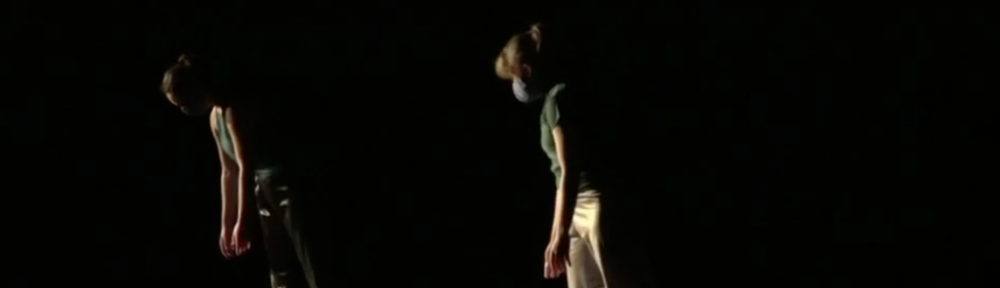
The inevitable becoming felt like the first of what could be many, and I wanted this to be reflected in the way the piece ended: with the possibility of more. The piece currently ends with the dancers each breaking out of a group phrase one at a time, coming together synchronously, and shifting away from each other again in a cannon. Their last movement is stretched out, unfurling arms out while sinking into the Earth. The never-ending unfurling of possibility is the last thing that the audience sees before the lights go down. The reality of ongoingness feels resonant. I am brought to these gifts shared by Chris Aiken and Angie Hauser: “You can always remember, but you cannot go back” and “Everything you need is already inside you” (Performance and Movement Ecology, Smith College Spring 2021). We are all on our own individual and collective journeys all the time. Daily, we are embracing the unknown of what is to come and what possibilities lie ahead.
Embracing unknowing in the creative process has the power to unveil the obvious to our conscious selves and harness the power of emergence. As a choreographic tool, it embraces possibility and nourishes emergence inside of collaboration. Welcoming unknowing can lead to unpredictable beauty, drawing out individuality and group chemistry. Thematically, unknowing is resonant to my journey and personal investigations. Giving permission for not knowing provides a grounding point to be certain in arrival even if I am unsure of where I am heading. There is so much richness in harnessing the possibility of possibility and I am certain that it will continue to be an important aspect of my creative processes in the future.