Lali Vega

English: This podcast is centered around undocumented people (who can get pregnant) and how their access to reproductive health care (specifically abortions) have changed from the early 2000’s to Trump’s first time in office to now, his second time in office in a post-Dobbs environment. I will demonstrate how there has always been a focus on this stigmatized group’s access to abortions and health care within the National Latina Institute for Reproductive Health and the National Coalition for Immigrant Women’s Rights ever since the 2000’s. Then for a little more history around undocumented people’s experience with Trump, there is a case (brought on by an undocumented girl) that emphasizes Trump’s pro-life agenda. I conclude the podcast by highlighting how fellow community members can support their undocumented neighbors with information regarding abortions in a post-Dobbs world and other pertinent health care information.
Espanol: Este pódcast se centra en personas indocumentadas (que pueden quedar embarazadas) y en cómo su acceso a la atención sanitaria reproductiva (específicamente abortos) ha cambiado desde principios de los 2000 hasta la primera vez de Trump en el cargo y ahora, su segunda vez en un entorno post-Dobbs. Voy a demostrar cómo siempre ha habido un enfoque en el acceso de este grupo estigmatizado al aborto y a la atención sanitaria dentro del Instituto Nacional Latina para la Salud Reproductiva y La Coalición Nacional por los Derechos de las Mujeres Inmigrantes desde los años 2000. Luego, para un poco más de historia sobre la experiencia de las personas indocumentadas con Trump, hay un caso (presentado por una chica indocumentada) que enfatiza la agenda provida de Trump. Concluyo el podcast destacando cómo otros miembros de la comunidad pueden apoyar a sus vecinos indocumentados con información sobre abortos en un mundo post-Dobbs y otra información sanitaria relevante.
Podcast & Transcript
Transcript
English:
Hi my name is Lali and I am so glad that you are here listening to learn more about undocumented people’s fight for reproductive justice, specifically their historical presence along with their current struggles and reality under Trump’s second administration.
I am beginning by setting the scene for how it was for undocumented people to get access to healthcare when abortions were legal and during Trump’s first administration.
In 2017 Democracy Now, an independent global news hour, reported on the unjust realities of being undocumented during that time period. Specifically, an undocumented adolescent tried getting an abortion but the Trump administration kept pushing a pro-life agenda onto her for a month until the U.S. appeals court ruled in her favor. In addition, the refugee resettlement shelter that the teen was placed in after being detained (in Brownsville, TX) forced her to call her abusive parents to tell them about her pregnancy. Despite the fact that the teen’s parents allegedly beat her older sister until she miscarried since she was pregnant without being married. The refugee shelter also allegedly harassed the teen after finding out that she wanted an abortion by asking her what she planned to name the baby and limiting her time to interact with the other kids at the shelter. This case signifies one example of how hard it was for the undocumented community to obtain reproductive health care and this was pre-Dobbs…(dun dun dun/horror music)
- Next I will briefly mention and define what “Dobbs” means:
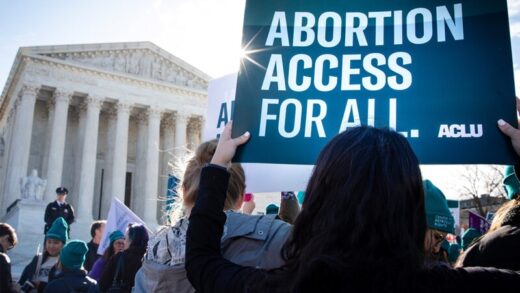
For those who are not aware, the reason why I am so dramatic is because Dobbs v Jackson Women’s Health Organization is a landmark supreme court ruling that came out in 2022, so relatively recent, that stated that the Constitution can no longer grant the right to abortions for all. This ruling overturned the 50 year old ruling of Roe v Wade, which allowed all to have access to abortions as a constitutional right. In addition, Dobbs returned the power of access to abortions back to the people and their elected officials. Thus, states who are against abortions have begun to criminalize and outlaw abortions within their state. This obviously pushes undocumented people who can get pregnant further to the margins as they now have to seek home-remedies or illegal ways to terminate any unwanted pregnancies. Therefore, I use the terms post and pre-Dobbs as a signifier as to what the political landscape and who had the power to grant abortions was like.
I will now use Texas as a worst-case scenario example of how when states are given control over access to reproductive justice AND they DONT have women in mind, how horrible these circumstances are for undocumented people. In an article by Latin Times, author Carla Guerrero de Leon wrote about a teen who specifically cited ‘fear of deportation’ being their biggest concern when debating whether to get reproductive care after the teen abandoned her newborn in a Houston dumpster. This teen is now facing felony child abandonment charges and could potentially serve up to 20 years in prison and subsequently, deportation. Guerrero de Leon highlights how in Texas there were 18 abandoned babies in 2024, compared to 7 babies a decade earlier. This example highlights the sneaky yet deliberate way that the Texas government officials’ are harming undocumented people who can become a mother when combined with the knowledge that Texas lawmakers allocated $165 million to anti-abortion initiatives, yet no money to publicize and educate Texans about safe haven laws. Texas’ Safe Haven Law allows parents to legally give their newborns (up to 60 days old) at designated locations, such as hospitals and fire stations,without facing legal repercussions. Therefore, Texas’ lawmakers actions that deliberately continue to not spread access to knowledge regarding maternal health care succeed in deliberately harming undocumented people who can get pregnant.
- Privilege:
Since I am not undocumented I do not live in a reality where I fear for my livelihood every day and I can only imagine what that must be like. Therefore, I–and I am encouraging you, if you can, to also do this–I am using my privilege to shed and be a voice for my undocumented sisters and people who do not have the privilege to speak up. Especially in Trump’s second administration. We can and should seek and be aware of ways to help our neighbors who are in a vulnerable position.
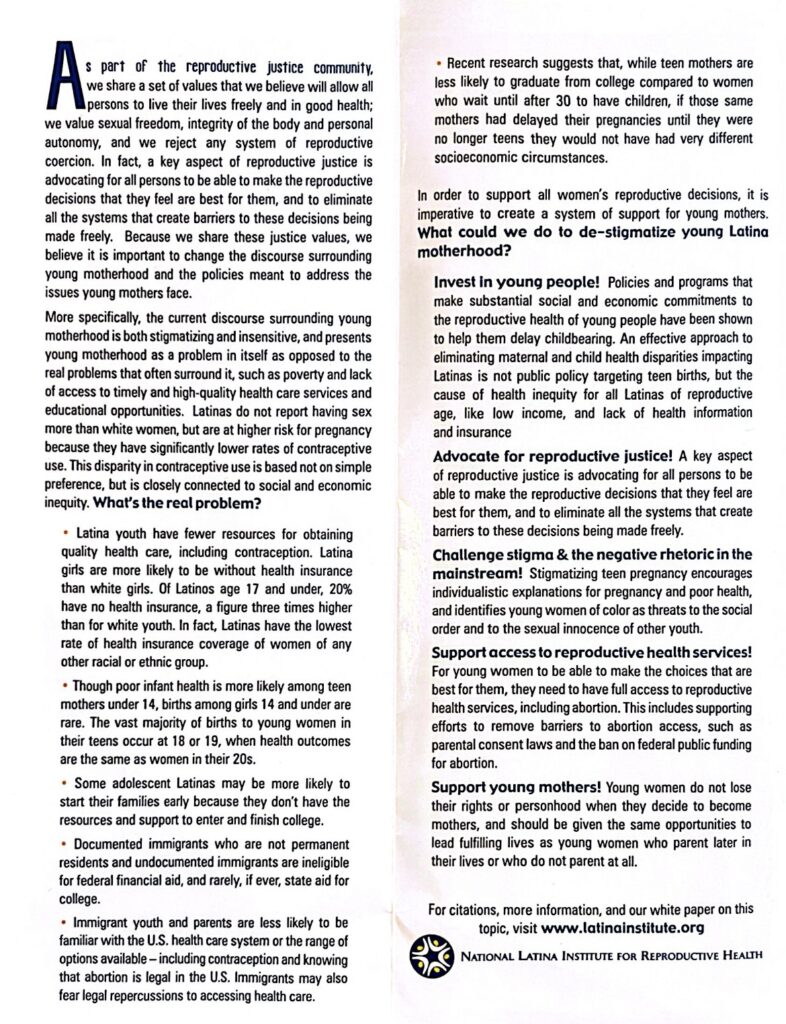
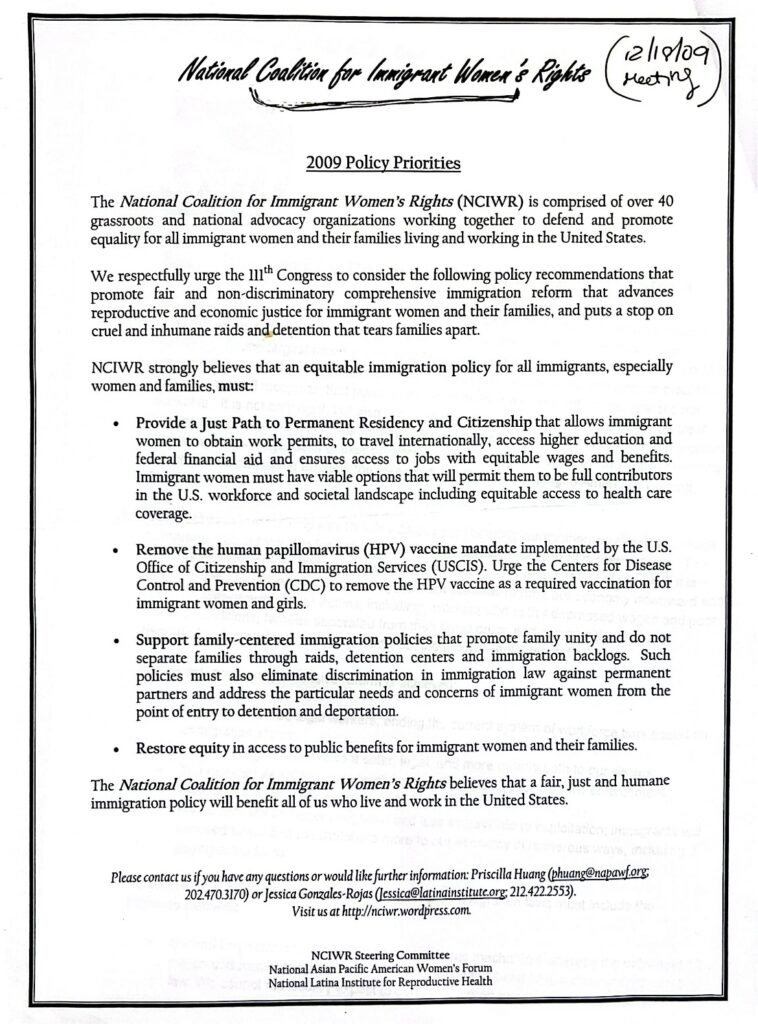
I am furthering this point by doing an historical dive into some of the first groups who first included immigrant people as an important vulnerable group to include. This is seen in the archival posters that I got from the Sophia Smith Collection of Women’s History in the Smith College Archives collection. In the early 2000’s the National Latina Institute for Reproductive Health highlighted the disproportionately low rates of educational understanding held by immigrant people about the U.S. healthcare system in one of their pamphlets. In addition, in 2010 the National Coalition for Immigrant Woman’s Rights emphasized the economic value that immigrant women offered while also facing discriminatorily high accounts of sexual and pregnancy discrimination.
Therefore, when intentional we can and should strive to be inclusive to all.
- Finally I will present different resources specific to undocumented people for abortion care:
- The National Immigration Law Center has an info-sheet that was last updated in 2022, so relatively recently and this is the one that they still have on their website. This info sheet answers frequently asked questions regarding immigrants and the legal system when trying to obtain reproductive care, such as the ability to get abortion care if the your state deems it legal, the legalities behind traveling to a different state for an abortion, and if it is safe to seek medical emergency if you are undocumented and pregnant? In addition, this info sheet also has a page dedicated to additional resources so that also has resources that I do not have listed.
- Next, Plan C is a non-profit organization dedicated to shipping cheap and/or free abortion pills to anyone who needs them in America. Also the Plan C website has a frequently asked section that highlights that although research shows that in less than one percent of the time/extremely rare cases people have gotten in legal trouble for using and performing their own abortion. In addition, the Plan C website also offers a range of hotlines and support options such as a confidential legal helpline to confidential, free peer-based logistical and emotional support. Their website is www.plancpills.org
Well thank you so much for joining me on this journey and I hope that this podcast gave you a little insight into the historical and current realities regarding reproductive health care that immigrants face and allow you to have more tools to better support your community.
Espanol:
Hola me llamo Lali y yo estoy muy feliz que tu estas aqui escuchando para aprender más sobre la presencia histórica y luchas actuales de inmigrantes indocumentados a lo largo de la segunda administración de Trump.
Comienzo con el tema de las personas indocumentadas acceder a la attenccion sanitaria cuando los abortos eran legales y durante la primera adminstracion de Trump.
En el ano dos mil diecisiete, Democracy Now, una noticia global independiente informo sobre las injustas realidades de ser indocumentado durante ese periodo. Concretamente, una adolescente indocumentada intento abortar, pero la administracion Trump sigio impulsandole una agenda provida durante un mes hasta que el tribunal de apelaciones de los Estados Unidos fallo a su favor. Además, el refugio de reasentamiento de refugiados en el que la adolescente fue internada tras ser detenida (en Brownsville, Tejas) la obligo a llamar a sus padres abusivos para contarles lo de su embarazo. A pesar de que los padres de la adolescente supuestamente golpearon a su hermana mayor hasta que sufrio un aborto espontaneo porque estaba embarazada sin estar casada. El refugio tambien supuestamente acoso a la adolescente tras descubrir que quería abortar, preguntando como planeaba llamar al bebe y limitando su tiempo para interactuar con los otros niños del refugio. Este caso es un ejemplo de lo difícil que fue para los indocumentados.
- A continuación mencionaré brevemente y definiré qué significa “Dobbs”:
Para quienes no lo sepan, la razón por la que soy tan dramática es porque Dobbs contra Jackson Women’s Health Organization es una sentencia histórica del Tribunal Supremo emitida en dos mil venti dos, relativamente reciente, que estableció que la Constitución ya no puede conceder el derecho al aborto para todos. Esta sentencia revocó la sentencia de hace cincuenta años de Roe contra Wade, lo que permitió a todos tener acceso al aborto como derecho constitucional. Además, Dobbs devolvió el poder de acceso al aborto a la población y a sus representantes electos. Así, los estados que están en contra del aborto han empezado a criminalizar y prohibir el aborto dentro de su propio estado. Esto, evidentemente, empuja aún más a las personas indocumentadas que pueden quedarse embarazadas hacia los márgenes, ya que ahora tienen que buscar remedios caseros o formas ilegales de interrumpir cualquier embarazo no deseado. Por eso, utilizo los términos post y pre-Dobbs como indicador de cómo era el panorama político y quién tenía el poder de conceder abortos.
Ahora usaré Texas como el peor ejemplo posible de cómo, cuando los estados tienen control sobre el acceso a la justicia reproductiva Y NO tienen en mente a las mujeres, lo horribles que son estas circunstancias para las personas indocumentadas. En un artículo de Latin Times, la autora Carla Guerrero de Leon escribió que en Texas había ochenta bebés abandonados en dos mil veinticuatro, en comparación con siete bebés una década antes. El enfoque principal de Guerrero de León en el artículo era sobre un adolescente que citaba específicamente el ‘miedo a la deportación’ como su mayor preocupación al debatir si debían recibir atención reproductiva. Este adolescente ahora se enfrenta a cargos graves de abandono de menores y podría cumplir hasta veinte años de prisión y, posteriormente, deportación. Este ejemplo pone de manifiesto la forma astuta pero deliberada en que los funcionarios del gobierno de Texas están perjudicando a las personas indocumentadas que pueden convertirse en madres si se combina con el conocimiento de que los legisladores de Texas destinaron un mil ciento sesenta y cinco millones de dólares a iniciativas antiaborto, pero no tienen dinero para dar a conocer y educar a los texanos sobre las leyes de refugio seguro. La Ley de Refugio Seguro de Texas permite a los padres dar legalmente a sus recién nacidos (hasta sesenta días) en lugares designados, como hospitales y parques de bomberos, sin enfrentar consecuencias legales. Por lo tanto, las acciones de los legisladores de Texas que ocultan y reprimen deliberadamente este conocimiento también están logrando dañar deliberadamente a personas indocumentadas que pueden quedar embarazadas.
- Ahora voy a hablar del privilegio que algunos de nosotros tenemos:
Como no soy indocumentada, no vivo en una realidad en la que el tema por mi sustento cada día y solo puedo imaginar cómo debe ser. Por eso, yo—y nosotros con animo, si podéis, a que también hagáis esto—estoy usando mi privilegio para desprenderme y ser una voz para mis hermanas indocumentadas y para quienes no tienen el privilegio de alzar la voz. Especialmente en la segunda administración de Trump. Nosotros (ciudadanos estadounidenses) podemos y debemos buscar y ser conscientes de formas de ayudar a nuestros vecinos que se encuentran en una situación vulnerable.
Estoy reforzando este punto haciendo una exploración histórica de algunos de los primeros grupos que primero incluyeron a las personas inmigrantes como un grupo vulnerable importante y incluir. Esto se puede ver en los carteles de archivo que obtuve de la Colección Sophia Smith de Historia de la Mujer en la colección de Archivos de Smith College. A principios de los años dos mil, el Instituto Nacional Latino para la Salud Reproductiva destacó las tasas desproporcionadamente bajas de aprendizaje educativo que tenían las personas inmigrantes sobre la curación de EE. UU. en uno de sus folletos. Además, en dos mil diez la Coalición Nacional por los Derechos de la Mujer Inmigrante destacó el valor económico que ofrecían las mujeres inmigrantes, además de enfrentarse a críticas discriminatoriamente altas de discriminación sexual y por embarazo.
Por lo tanto, cuando es intencionado, podemos y debemos esforzarnos por ser inclusivos con todos.
- Finalmente, presentaré diferentes recursos específicos para personas indocumentadas para la atención al aborto:
- El Centro Nacional de Derecho de Inmigración tiene una hoja informativa que se actualizó por última vez en dos mil veintidós, así que relativamente reciente, y esta es la que aún tienen en su página web. Esta hoja informativa responde a preguntas frecuentes sobre inmigrantes y el sistema legal al intentar acceder a atención reproductiva, como la posibilidad de acceder a atención abortiva si tu estado lo considera legal, las cuestiones legales de viajar a otro estado para abortar, y si es seguro solicitar emergencias médicas si estás indocumentada y embarazada. Además, esta hoja informativa también tiene una página dedicada a recursos adicionales, así que también hay recursos que no tengo listados.
- A continuación, Plan C es una organización sin ánimo de lucro dedicada a enviar píldoras abortivas baratas y/o gratuitas a quien las necesite en Estados Unidos. Además, la web de Plan C tiene una sección de preguntas frecuentes que destaca que, aunque la investigación muestra que en menos del uno por ciento de las veces o en casos extremadamente raros las personas han tenido problemas legales por usar y practicar su propio aborto, Además, la web de Plan C también ofrece una variedad de líneas de ayuda y opciones de apoyo, como una línea de ayuda legal confidencial y apoyo logístico y emocional gratuito entre iguales. Su página web es www.plancpills.org
Muchas gracias por acompañarme en este camino y espero que este podcast te haya dado una pequeña visión de las realidades históricas y actuales de la atención a la salud reproductiva a las que se enfrentan los inmigrantes y te haya permitido tener más herramientas para apoyar mejor a tu comunidad.
Transcript References
Democracy Now!, dir. 2017. Undocumented Teen Wins Abortion Fight, But Thousands in Shelters Still Live Under Anti-Choice Policy. 10:50. https://www.youtube.com/watch?v=J8jfP3JlaXY.
León, Carola Guerrero De. 2024. “Migrant Teen Who Abandoned Baby in Houston Dumpster Didn’t Seek Medical Care Due to Fear of Deportation.” Latin Times, December 29. https://www.latintimes.com/migrant-teen-who-abandoned-baby-houston-dumpster-didnt-seek-medical-care-due-fear-deportation-570648.
National Latina Institute for Reproductive Justice records (SSC-MS-00527), Sophia Smith Collection, Smith College Special Collections, Northampton, Massachusetts. https://findingaids.smith.edu/repositories/2/archival_objects/571062 Accessed December 10, 2025.
NILC. 2022. “Know Your Rights: Abortion Access For Immigrants.” October 25. https://www.nilc.org/resources/abortion-access/.
Norwood, Candice. 2025. “The Reality of Navigating Immigration Enforcement and Abortion Bans as a Pregnant Migrant.” The 19th, March 7. https://19thnews.org/2025/03/navigating-immigration-enforcement-abortion-bans-pregnant/.
“PLAN C: Abortion Pills by Mail in Every State.” n.d. Accessed December 8, 2025. https://www.plancpills.org/.
Further Reading
Luthra, Shefali. 2025. “Texas Passes Bill Banning Abortion Pills from Being Mailed to the State.” The 19th, September 4. https://19thnews.org/2025/09/texas-abortion-pill-ban/.
“Know Your Rights: Abortion Access for Immigrants.” 2022. National Immigration Law Center, September 2. https://www.nilc.org/wp-content/uploads/2022/10/KYR_Abortion-Access-for-Immigrants-English-1.pdf.
Shakouri, Shireen Rose. 2025. “How to Spot a Fake Abortion Clinic.” Ms. Magazine, March 17. https://msmagazine.com/2025/03/17/how-to-fake-anti-abortion-clinic-crisis-pregnancy-center/.