Lucia Infantine
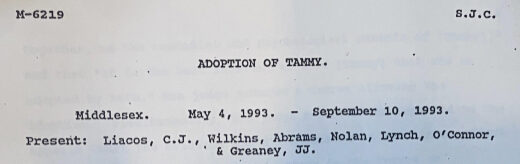
Second parent adoption is an adoption process that has historically been used by lesbian parents to obtain full parental rights over their children, even if those children aren’t biologically related to one of the parents. While the Dobbs decision, which overturned Roe v. Wade, did not overturn Obergefell vs Hodges (the “same sex marriage act”), second parent adoption for LGBTQ+ parents has been on the rise since the decision came down. This podcast explores how second parent adoption has changed from the late 1990s through today in a Post-Dobbs world, and the impact of second parent adoptions on families.
Transcript – Second Parent Adoption and Lesbian Motherhood in a Post-Dobbs World
(Music)
[Lucia Infantine] You know in your hearts and with our social circle that you are my parents, Why did you choose to go through with the second parent adoption?
[Francesca Infantine] Have you met your mother, the attorney? Everything comes with risks and everything is, you know, subject to the bounds of the law and if you don’t have that codified around you, your family, your papers, your possessions, your everything, then it’s a risk. And why even open up anything to risk that you love and care about?
(Music)
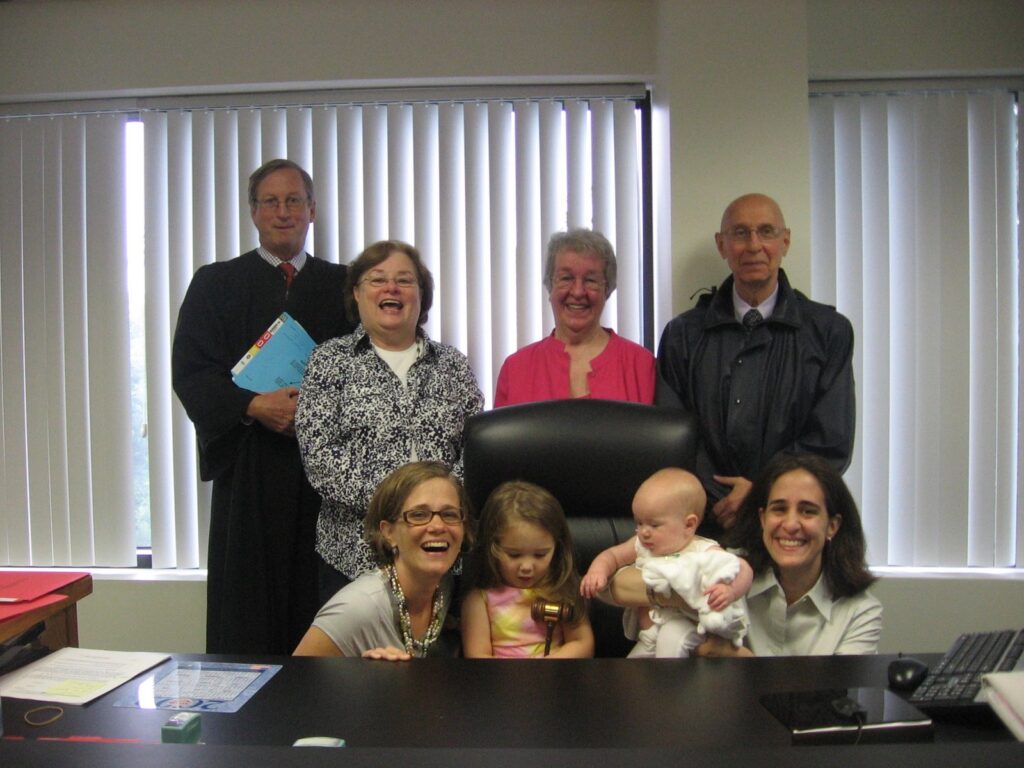
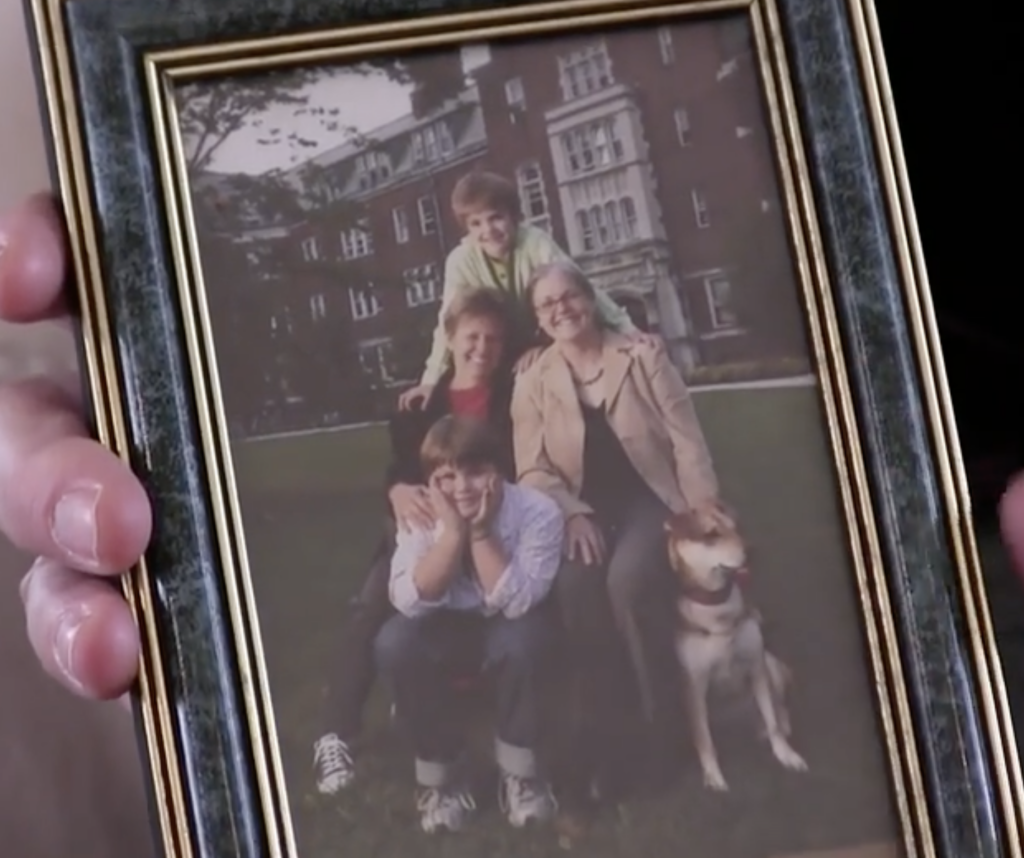
[Lucia Infantine] I’m Lucia, and the clip you just heard was a conversation with one of my mothers about the Second Parent Adoption process that my family underwent when I was born. Second-Parent Adoption is the common term for a legal process where a non-biological parent gains parental rights of their children. For lesbian parents, this process isn’t just a formality – it is crucial in maintaining their right to have and protect their children.
During the 2016 Obergefell vs. Hodge’s decision, commonly referred to as the Same-Sex Marriage Act, second-parent adoption was considered the best way for lesbian parents who did not have biological relation to their children to legally maintain their parental rights. After Obergefell’s passed, legally married lesbian parents in most states were able to obtain rights to their children through marital presumption. Marital presumption is where the spouse of a child’s gestational mother, no matter the spouse’s biological relation to the child, is considered the child’s parent and can sign their name on the child’s birth certificate. However, birth certificates don’t always hold as much legal weight in parental rights cases. Furthermore, lesbian couples that are not married cannot use marital presumption to obtain parental rights.
While the Dobbs decision, which overturned Roe v. Wade, did not overturn Obergefell vs. Hodges, second parent adoption for LGBTQ+ parents has been on the rise since the decision came down. My goal is to trace how second parent adoption has changed from the late 90s until now, through legal progression or regression that impacts the reproductive justice of lesbian parents.
(Music)
Jill Schneiderman is a professor of earth sciences at Vassar College. She was interviewed as a part of the Smith Special Collections in 2022, where she spoke about her life experiences as a lesbian and a parent.
[Jill Schneiderman] With a second parent adoption you have to have a social worker come to your house and interview the person who’s going to do the adoption. At least that’s how it used to be.
We are so, we are leagues ahead from where we were, you know, in 1997 when we were first trying to get pregnant and then, you know, going through the second parent adoption business and having a file to have a different birth certificate.
(Music)
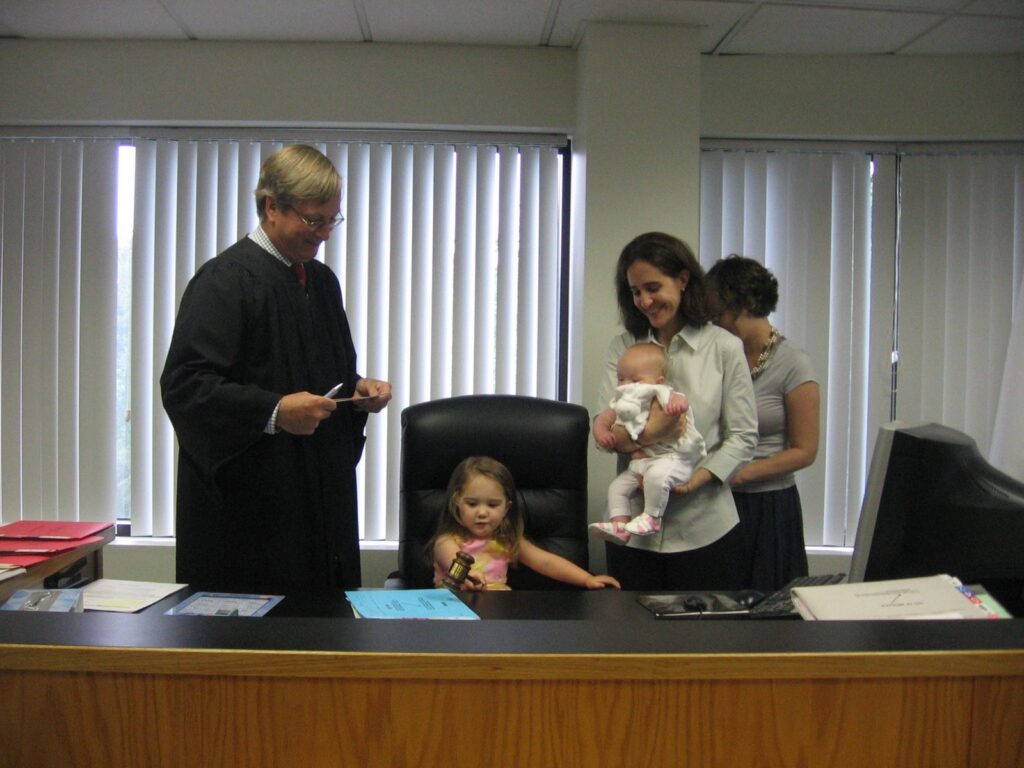
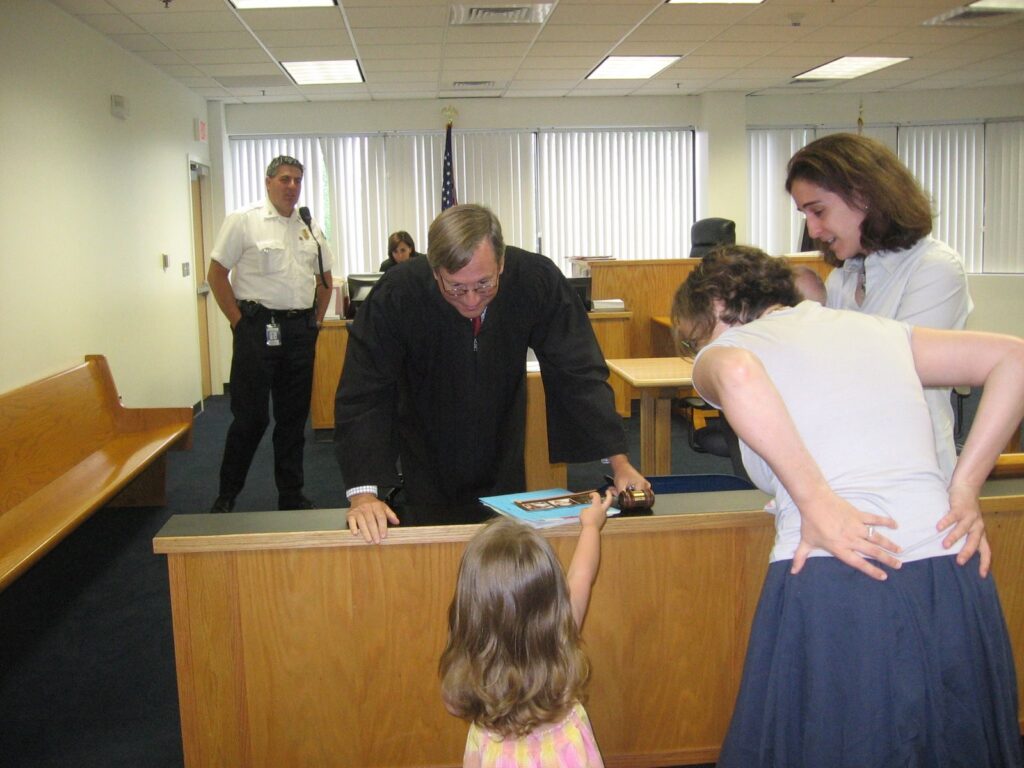
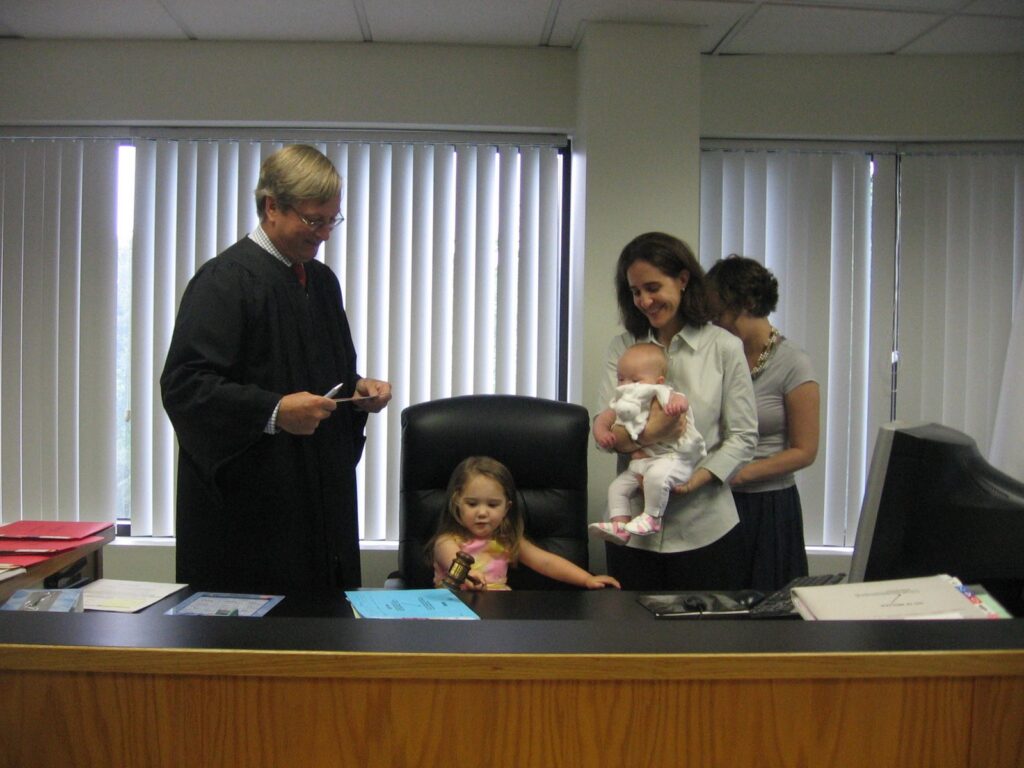
[Lucia Infantine] My own parents went through with a second parent adoption for both myself and my sister after we were born as a way of protecting their parental rights in a time when marriage equality was only legal in a few states. I interviewed my parents about their experience with second-apparent adoption for myself in 2007. The landscape of this adoption was very different than how it is today after Obergefell.
[Lucia Infantine, as interviewer] From a legal standpoint, what did the process of second parent adoption look like for me in 2007?
[Meredith Leary] We hired an attorney. It involved getting affidavits from your pediatrician, from friends and from family members, attesting our fitness as parents, to be able to adopt you. But essentially there was material you had to submit under oath to convince the judge that you were worthy. Meaning we were worthy of you.
The way we were advised to do it at that time was to terminate my parental rights that I got automatically from having birthed you, and then to have us both adopt you simultaneously. And the reason for that was to avoid any legal presumption or implication that one of us was somehow apparent with more rank or more rights than the other.
[Lucia Infantine, as interviewer] Fran, were you originally allowed to sign my birth certificate?
[Meredith Leary] Her name was listed on it, but we were not allowed to leave the hospital with it. We had to wait for some additional process to happen. I don’t remember the details of that, but I remember that we weren’t able to get it right away.
(Music)
[Lucia Infantine] I’ve known Ashlee Reed since before I could walk or talk. She has been a long-standing good friend of our family and she and her wife Michaela have three children, two daughters and a son all born after Obergefell. Ashlee’s youngest daughter was born in February of 2022 only a few months before the Dobbs decision came down in June.
[Lucia Infantine, as interviewer] Do you remember what that process looked like for you and your family?
[Ashlee Reed] Our plan was always to have three children and so we decided to wait until having our third child to go through the process and our third child was born in 2022. So we did have at that point more of an urgency to kind of get things done quickly. It was a very easy decision to make because I wanted to make sure that I as the second parent have all of the rights and of course my wife wanted to make sure of that as well. I say that because it was also a hard decision because it’s just difficult that we actually have to go through this process and so it was emotional in some ways. But I do feel that it was very important for each of their protection and to make sure that basically that they are protected for both of us and that we both have the rights to make decisions for them, mostly kind of medically, legally.
Or, This is something I was thinking a lot about today that I didn’t quite touch on is really the traveling piece about it. Because now, I have family kind of all over the country. We traveled for our 10-year wedding anniversary last year. There’s just a lot more things that we have to think about. Do we need to travel with our adoption parent papers? You know, is this something that we need to be concerned about if we go to a state that doesn’t have as many rights? How do we make sure that we’re protected? And it’s just added an additional layer there for sure that wasn’t there before.
(Music)
[Lucia Infantine] The uncertainty and anxiety surrounding parental rights that Ashley discussed is not new for lesbian parents. But in a post-Dobbs world, it has expanded beyond the concerns of custody and parental rights. It is uncertain what ramifications Dobbs may have in the future for marriage equality and the protection of Queer-headed families. But within these politics of fear, there are also politics of care and hope. In the book Queering Reproductive Justice by Candice Bontherot, I found a quote from theorist and feminist Alexis Pollan Gumbs. Gumbs wrote, “We were never meant to survive, and here we are creating a world of love”. The “we” that Gums refers to is the community of lesbian mothers that have been creating a community of care and support since before marriage equality was legal anywhere.
I’m Lucia Infantine, and thank you for listening.
References
“Adoption by LGBT Parents,” National Center for Lesbian Rights, June 3, 2020, https://www.nclrights.org/wp-content/uploads/2013/07/2PA_state_list.pdf
Ashlee Reed in discussion with the author, 2025
Bond-Theriault, Candace. Queering Reproductive Justice: An invitation. Stanford, CA: Stanford University Press, 2024.
Butterfield, Joniann, and Irene Padavic. “THE IMPACT OF LEGAL INEQUALTY ON RELATIONAL POWER IN PLANNED LESBIAN FAMILIES.” Gender and Society 28, no. 5 (2014): 752–74. http://www.jstor.org/stable/44288186.
Francesca Infantine and Meredith Leary in discussion with the author, 2025
Jill Schneiderman, “Jill Schneiderman interviewed by Zoë Viñas-Crutcher.” Interview by Zoë Viñas-Crutcher. March 13, 2022, video recording, Documenting Lesbian Lives,Smith College Special Collections.
Kogut & Wilson, L.L.C. “Second Parent Adoption Following the Reversal of Roe v. Wade.” Kogut & Wilson Family Law Attorneys. March 15, 2023. https://www.kogutwilson.com/second-parent-adoption-following-the-reversal-of-roe-v-wade/.
“Protecting LGBTQ+ Families and Identities: A 10-Year Reflection on Obergefell and the Ongoing Fight for Equality.” 2025. Lambda Legal. June 24, 2025. https://lambdalegal.org/protecting-lgbtq-families-couples-marriage-equality-obergefell/.