Lola Uehlinger
This podcast examines how the post Roe legal landscape has intensified long standing barriers to reproductive health care for Indigenous women in the United States. It draws on historical context and contemporary developments to analyze the relationship between federal restrictions, limited access to clinical abortion services, and the resurgence of Indigenous midwifery. This is discussed in relation to the wider topics of reproductive autonomy, sovereignty, and the continuous effects of settler colonialism.
Transcript
(Intro music fades in)
Welcome to Reclaiming the Womb, a podcast that explores how the overturning of Roe v. Wade has changed Indigenous women in the United States’ access to abortion, and how midwifery is emerging as a powerful method of resistance to government control.
(Intro music fades out)
When the U.S. Supreme Court issued its decision in Dobbs v. Jackson in 2022, many saw it as a rollback of reproductive rights. But for Indigenous women, the impact was much deeper, and exposed long-standing systemic barriers that were already in place. The demand for abortion care and even more generally, reproductive health care among Indigenous communities surged, but access remains incredibly limited. After Dobbs, Indigenous people face numerous barriers: clinics closing, providers leaving, and long and expensive journeys to seek care. In some states with large Indigenous populations, like Oklahoma or the Dakotas, abortion bans or severe restrictions make access virtually impossible.
(Music)
So why has access been and remains to be so difficult? One big reason is the colonial history of this country. Perhaps most exemplified by the forced sterilization of Native Americans in the 1970s, government assertion of power over Indigenous women’s reproductive lives has been an issue for decades. Additionally, sexual violence against Indigenous women can be traced back to the original actions of colonization, where colonizers used rape as a way to assert control over Indigenous women’s land and bodies. This makes it all the more necessary for Indigenous people to have access to reproductive health and abortion services, yet these are still lacking. It is also especially culturally problematic, as Shayne Beverly Arnold puts it, “Unlike many cultures in which access to abortion is limited, gender norms in Native American cultures traditionally support and respect women’s autonomy with regard to reproductive health decisions.”
(Music)
Additionally, The Indian Health Service, or IHS, which provides care for many Indigenous people, has been legally restricted from offering abortion services for decades. This is due to the Hyde Amendment, which prohibits, in most cases, the use of federal funds for abortions, and this hits Indigenous communities especially hard, as many rely solely on the IHS facilities for healthcare. This, as well as the deeply rooted injustices of disproportionally high rates of sexual violence, high maternal mortality, and systemic underfunding of reproductive health in tribal systems makes the impact of Dobbs exponentially worse. As Lauren van Schilfgaarde, a tribal law specialist puts it, “Roe has never been accessible for Native women… and Dobbs has exacerbated that.”
Beyond simply abortions, Native women’s reproductive rights have never been recognized or respected by the government. Instead of personal or community provided care, it has been shifted to hospitals that are underfunded and lack resources, contributing to the “over-medicalization of reproductive health care.” In addition to this, Indigenous women have the highest rate of violent victimization and one of the highest of sexual assault, yet the least access to emergency contraception and health care needs. All of these factors combined point to an extreme need for the development of reproductive autonomy, healthcare, and justice for Indigenous women.
(Music)
This is beginning to happen through a renaissance of Indigenous midwifery. Indigenous midwives and nurse-midwives, though still less than 1 percent of the workforce, are expanding training programs, opening community based services, and explicitly centering cultural traditions as part of the birth and pregnancy process. The fact that simultaneously as institutional access to abortion shrinks, community-led midwifery grows, exposes a clear image of resistance. Midwives are not only filling gaps left by hospitals, they are offering bodily autonomy. For many Indigenous communities, midwifery practices reconnects people to ancestral knowledge, and often to safer options than a medical system built on racism and colonialism.
(Music)
This is not the first time that there has been a movement towards traditional midwifery practices. Although it was in Canada, this movement reflected the beginnings of a global shift towards acknowledgement of Indigenous peoples culture and practices. In 1999, there was to be a Quebec Midwifery Law that defined the practice of midwifery, but did not include an exemption clause for aboriginal women. The Iewirokwas (pronounced Ae-wil-o-guas) Midwifery Program, Jennie Stonier, Catherine Roy, and others advocated for the reform of this law, and today it essentially allows Native midwives that are not members of the College of Midwives of Quebec to still practice legally.
Similarly, Indigenous midwife Katsi (pronounced Gudji) Cook, telling her journey with Indigenous midwifery, states “how important it was to have practitioners in areas where there were no physicians.” This was just after the Vietnam War; another moment of turmoil, and it reflects the same lack of resources for reproductive healthcare as the United States is facing post-Roe. Her story emphasizes the importance of Indigenous midwives in the past, and how it is increasingly relevant today. Nicolle Gonzales, a certified nurse midwife in New Mexico, founded the Changing Woman Initiative in 2015 with the goal of building “the first Indigenous-led birth center in the country.” This is an important step in the direction of reclaiming Indigenous tradition that has been erased by a colonialist medical system.
(Music)
When government policy restricts clinical routes to reproductive health care, communities turn inward. This shift is an act of resistance that reasserts the moral and cultural authority of Indigenous peoples to make their own decisions about pregnancy, parenting, or the lack thereof. When formal institutions close off already limited options, communities will revive older systems of care, and in doing so, they turn those systems into active resistance to governmental control over bodies.
(Exit music fade in)
This has been Reclaiming the Womb: Indigenous Reproductive Justice. Thank you for listening.
(Exit music fade out)
References
Arnold, Shaye Beverly. “Reproductive Rights Denied: The Hyde Amendment and Access to Abortion for Native American Women Using Indian Health Service Facilities.” American Journal of Public Health 104, no. 10 (October 2014): 1892–93. https://doi.org/10.2105/AJPH.2014.302084.
“Empowering Native Mothers Through Midwifery.” Think Global Health. Accessed December 3, 2025. https://www.thinkglobalhealth.org/article/empowering-native-mothers-through-midwifery.
Tribal Health. “Indigenous Midwifery: Reinventing Native Pregnancy and Birth.” Tribal Health, May 10, 2024. https://tribalhealth.com/midwifery/.
Hill, Margo, et al. “Reproductive Injustice in Action: The Impact of the Supreme Court’s Dobbs Decision on Indigenous and Minority Women.” First Nations Health and Wellbeing – The Lowitja Journal 3 (January 2025): 100042. https://doi.org/10.1016/j.fnhli.2024.100042.
Jacobs, Abbie. “Native American Midwife Revives Traditional Birthways.” February 29, 2016. https://www.midwifeschooling.com/blog/native-american-midwife-birth-center/.
News21. “Indigenous Women Navigate Abortion Access Hurdles after Dobbs.” NonDoc, September 16, 2023. https://nondoc.com/2023/09/16/indigenous-women-navigate-abortion-access-after-dobbs.
Richards, Sheena L., Emily Gilbert, Emily Wright, and Tara N. Gilbert. “Federal Policy Has Failed to Protect Indigenous Women.” Ms. Magazine, July 6, 2021. https://msmagazine.com/2021/07/06/biden-congress-policy-violence-indigenous-women/.
Modern Tribe. “Native Reproductive Justice: Practices and Policies from Relinquishment to Family Preservation.” Petrie-Flom Center, Harvard Law School, May 12, 2022. https://petrieflom.law.harvard.edu/2022/05/12/native-reproductive-justice-adoption-relinquishment-family-preservation/.
Québec. Midwives Act. Bill 28. June 17, 1999. https://www.publicationsduquebec.gouv.qc.ca/fileadmin/Fichiers_client/lois_et_reglements/LoisAnnuelles/en/1999/1999C24A.PDF.
Katsi Cook Papers. Sophia Smith Collection, Smith College, Northampton, MA. Accessed November 20, 2025. https://findingaids.smith.edu/repositories/2/archival_objects/128952.
Nowell, Cecilia. “How Indigenous Women Are Taking Back the Birthing Process: ‘There Is a Reclaiming Happening.’” The Washington Post, January 5, 2021. https://www.washingtonpost.com/gender-identity/how-indigenous-women-are-taking-back-the-birthing-process-there-is-a-reclaiming-happening/
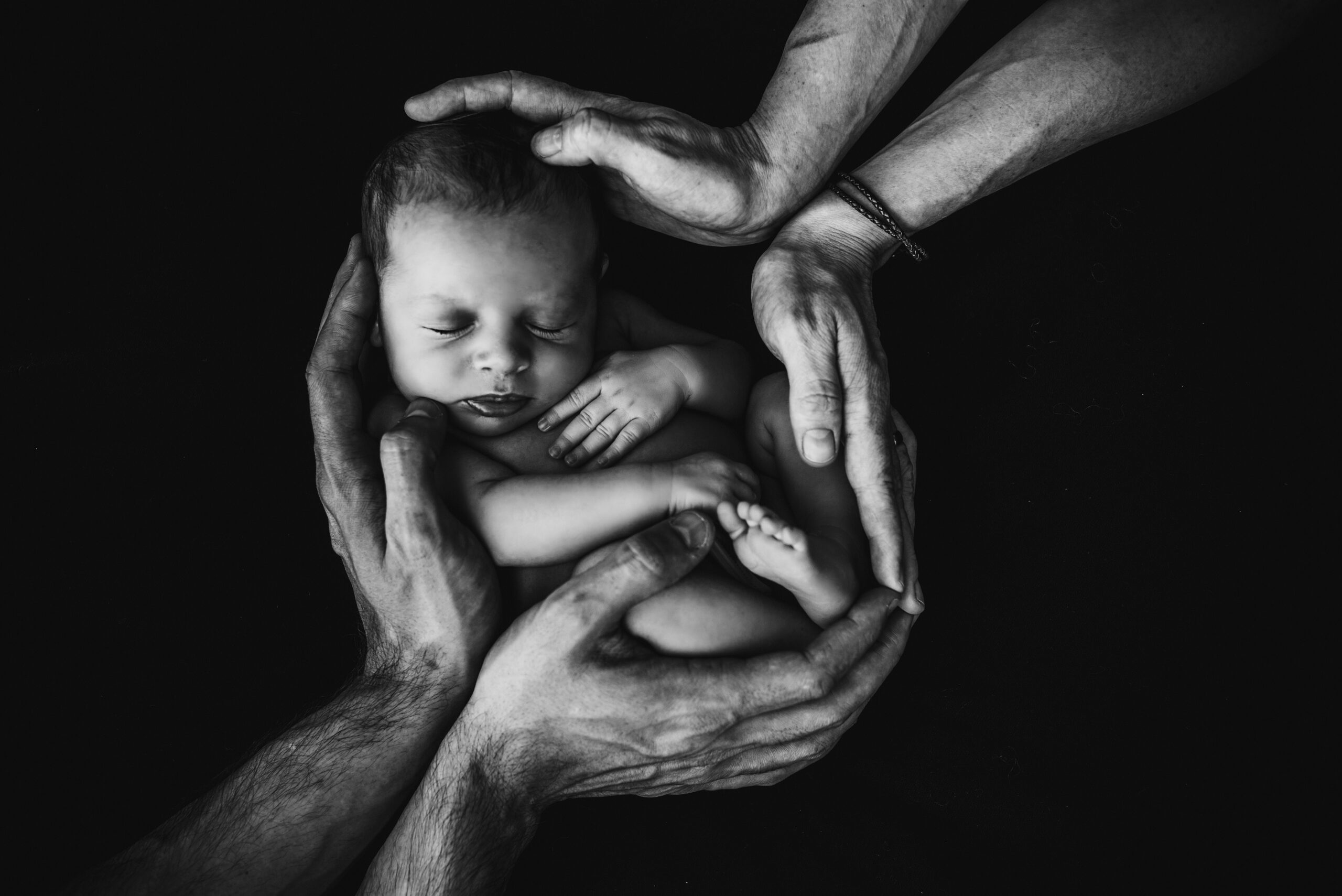
Photo by Arren Mills on Unsplash
Photo by Isaac Quesada on Unsplash