Lena Norelli
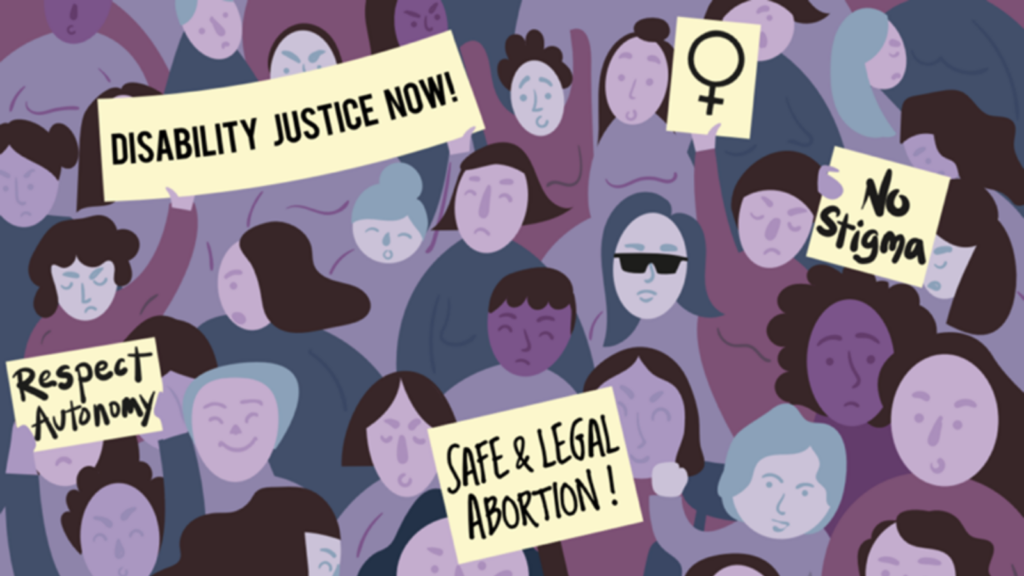
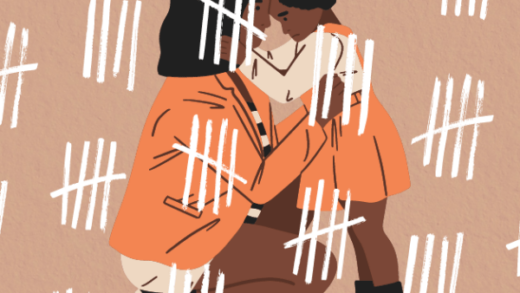
In this podcast, I will discuss how disabled people’s reproductive rights have been dictated by the state, focusing on two court cases: Buck v. Bell and Dobbs v. Jackson.
Transcript
Intro music plays, then fades out.
[Lena Norelli] Welcome to the Listening for Reproductive Justice podcast. My name is Lena Norelli. In this podcast, we will focus on how disabled people’s bodies and reproductive rights have been dictated by the state, focusing on two court cases: Buck v. Bell and Dobbs v. Jackson.
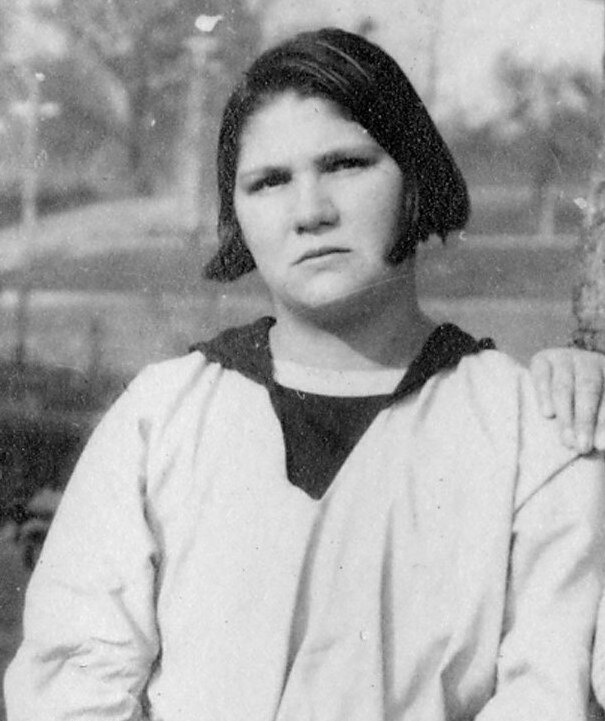
[LN] Carrie Elizabeth Buck was born in 1906 in Charlottesville, Virginia. Buck’s foster parents, the Dobbses, raised her since she was 3 years old. In 1923, 17 year old Carrie Buck became pregnant due to rape committed by her foster parents’ nephew. However, no one questioned or reprimanded their nephew for his actions. Instead, the Dobbses attributed Buck’s pregnancy to promiscuity and thus of “feeblemindedness.” They successfully petitioned a court to have Buck committed to the Virginia State Colony for Epileptics and Feeble-Minded. This later led to major implications for disabled people as a collective.
Music fades in, then out.
[LN] A draft of the Resolution on Disability and Reproductive Rights written in 1983 states, “Disabled people as a group suffer not only from economic impoverishment, social stigma, and a denial of access to education, employment, transportation, and housing, but also from a denial of their reproductive rights.” Maria Town, president and CEO of the American Association of People with Disabilities speaks on how bodily autonomy, or lack thereof, has always been part of the disability rights movement.
[Maria Town] “Bodily autonomy specifically is not new or unfamiliar for the disability community. In fact, bodily autonomy is a core principle of the disability rights movement. Historically, disabled people have been denied the opportunity to decide what happens to our bodies.”
Music fades in, then out.
[LN] After Carrie Buck was committed to the Virginia State Colony for Epileptics and Feeble-Minded, the colony petitioned the state courts to order her forced sterilization. The written judgement was that Buck was “feeble-minded and by the laws of heredity was the probable potential parent of socially inadequate offspring” and should therefore be sterilized. In 1927, this was upheld by the Supreme Court decision in Buck v. Bell. This ruling upheld a state’s authority to forcibly sterilize individuals deemed “unfit” to reproduce, sanctioning the sterilization of approximately 70,000 Americans. It mainly targeted people with intellectual and psychiatric disabilities. The opinion was never overturned, and two decades later at the Nuremberg Trials, Nazi defendants cited Buck v. Bell in their defense. Though the Supreme Court never overturned the 1927 decision itself, the Virginia law that the case upheld was repealed in 1974 and the reasoning used in the case has been undermined by a subsequent Supreme Court decision striking down a law providing for involuntary sterilization of criminals. Buck v. Bell is a representation of the eugenic thinking that still shapes assumptions about disabled people’s reproductive autonomy today.
Music fades in, then out.
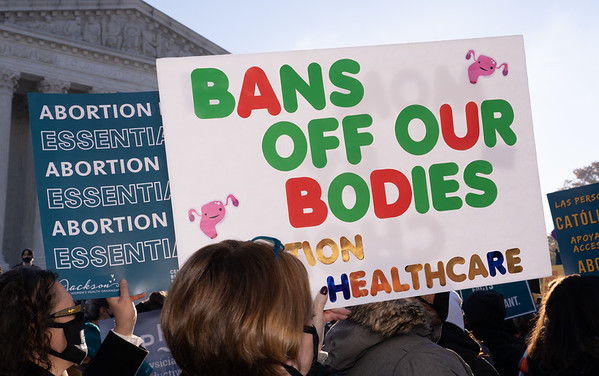
[LN] The 2022 Supreme Court case Dobbs v. Jackson Women’s Health Organization (not to be confused with Carrie Buck’s foster parents who coincidentally have the last name Dobbs) overturned Roe v. Wade, nullifying the constitutional right to abortion and allowing states to restrict abortion access while upholding systems that prevent people with disabilities from making their own reproductive decisions.
[LN] People with disabilities are frequently left out of conversations regarding abortion access. Maria Town stated “I think one of the reasons that disabled people are not centered in these conversations, even though we should be, is that typically disabled people are de-sexualized. In fact, the assumption is that we just don’t have sex when, in reality, disabled people do have sex. We need and deserve accessible, affordable reproductive and informed reproductive health care, and that includes abortion.” When abortion is banned or restricted, disabled people lose the ability to have agency over their own bodies, even in cases of rape or medical emergency, but some groups are more affected than others. According to the CDC, about 1 in 4 Black adults in the U.S. has a disability, compared with 1 in 5 white Americans; 36% of Black people with disabilities live in poverty, compared with 26% of the overall U.S. population.
[LN] According to DC Abortion Fund, a nonprofit group that helps low-income people pay for abortions, people with disabilities are also more likely to live in poverty and often rely on state insurance programs like Medicaid to meet health care needs. Only 15 states and Washington, D.C. cover abortions through Medicaid, leaving disabled people in other areas with a financial barrier to abortion access. For many disabled people, pregnancy can cause permanent physical harm or death because of pre-existing health conditions. The physical strain of pregnancy for people with cardiac conditions, severe connective tissue disorders, or respiratory impairments could result in organ failure or stroke. In states that have banned abortion, many people travel out of state or utilize telehealth services, but many telehealth platforms’ user interfaces are not accessible to people with disabilities. If abortion is inaccessible or unavailable, people are forced into pregnancies that put their health and survival on the line. Further, abortion access is necessary for disabled people’s bodily autonomy because many live under guardianship arrangements where others make their medical decisions. People who have disabilites experience higher rates of sexual violence, coercion, and poverty, which increases the number of unintended pregnancies and makes them more dangerous.
Music fades in, then out.
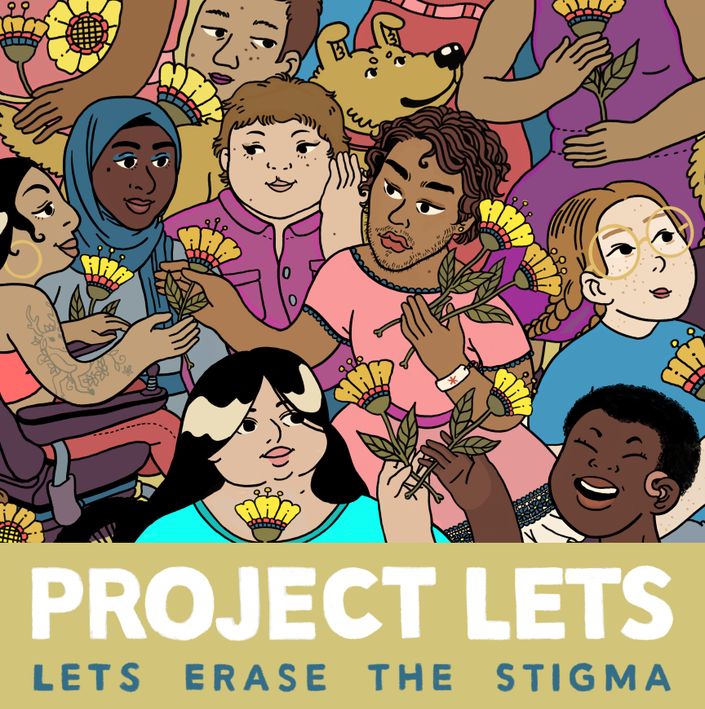
[LN] Since the overturning of Roe v. Wade, many disability rights groups have spoken out. For example, the Disability Rights Education and Defense Fund and the American Association of People with Disabilities (whose president, Maria Town, spoke earlier in the podcast) have condemned the Supreme Court’s action. The groups described the many ways people with disabilities will be affected by the decision and called out ableism in the national conversation about reproductive justice. Stefanie Lyn Kaufman-Mthimkhulu, founder of the disability rights grassroots organization Project LETS, has pushed for awareness and change. After Roe was overturned, Project LETS began working to create political education sessions to both teach the public about how reproductive and disability rights intertwine and strengthen mutual aid networks to support people with disabilities who need access to abortion, medication, and other reproductive necessities. Kaufman-Mthimkhulu noted that strengthening systems that allow people with disabilities to give birth outside of traditional medical environments is a great way to fight back against abortion restrictions. Project LETS demonstrates this by working with doulas and birth workers to establish care networks for people outside of the traditional health care system since people with disabilities often have to navigate systems that don’t consider their needs.
[LN] I would like to close this episode by encouraging you to check out the readings listed on my WordPress page to learn more information about the material I covered, such as the Project LETS website which includes how to get involved with the organization. Thank you and have an amazing day!
Outro music fades in, then out.
Further Information
More information about challenges faced by disabled people accessing telehealth services: Wynter, Jacqueline A. “ADA and Telehealth Challenges Faced by People with Disabilities Accessing Telehealth Services.” Southeast ADA Center. https://adasoutheast.org/resources/ada-and-telehealth-challenges-faced-by-people-with-disabilities-accessing-telehealth-services/
Project LETS Website: Project LETS. Accessed November 30, 2025. https://projectlets.org/
Book: Lombardo, Paul A. Three Generations, No Imbeciles: Eugenics, the Supreme Court, and Buck v. Bell. Baltimore: Johns Hopkins University Press. Updated Edition: February 1, 2022.
References
Adams, Char. “Disability rights groups are fighting for abortion access — and against ableism.” NBC News. July 21, 2022. https://www.nbcnews.com/news/us-news/disability-rights-groups-are-fighting-abortion-access-a%20bleism-rcna38703
Powell, Robyn. “Dobbs, Disability, and the Assault on Reproductive Autonomy.” American Bar Association. July 18, 2025. https://www.americanbar.org/groups/crsj/resources/human-rights/2025-july/dobbs-disability-assault-reproductive-autonomy/
Resolution on Disability and Reproductive Rights. Draft from April 28, 1983. CDRR. Box 11/Folder 13. Sophia Smith Collection of Women’s History. Reproductive Rights National Network records (SSC-MS-00576). College Archives. Smith College Special Collections, Northampton Massachusetts.
“The Right to Self-Determination: Freedom from Involuntary Sterilization.” Disability Justice. Accessed December 4, 2025. https://disabilityjustice.org/right-to-self-determination-freedom-from-involuntary-sterilization/
Town, Maria., Callie Wells, and Rachita Singh. “Reproductive Rights and Disability Dialogue.” AAPD. YouTube. April 11, 2024. Educational Video, 1:01:44. https://www.youtube.com/watch?v=VpC-n6kV-Zo
Wolfe, Brendan. “Buck v. Bell (1927).” Encyclopedia Virginia. February 12, 2021. https://encyclopediavirginia.org/entries/buck-v-bell-1927/