Quinn Obi
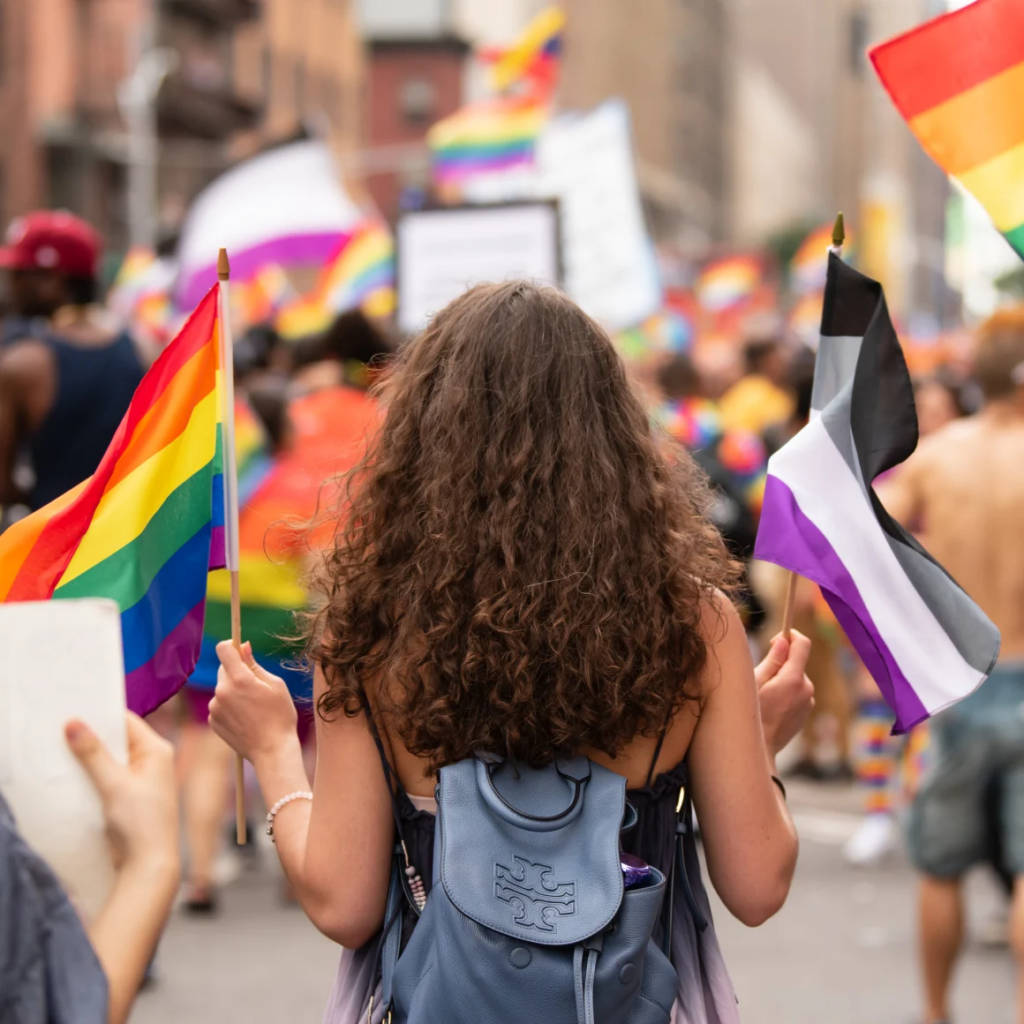
What About Asexuals? Where do asexual people fit into conversations about Reproductive Justice? Listen with me as I unpack how medicalization, corrective violence, and structural discrimination shape asexual lives. This podcast expands the reproductive justice framework to include the experiences mainstream discourse overlooks, challenging listeners to rethink whose stories get centered when we talk about rights, bodies, and liberation.
Podcast Transcript – What about Asexuals?
Hey, I’m Quinn Obi, and welcome to What About Asexuals?,
a podcast produced as part of the Smith College Listing for Reproductive Justice Podcast series.
[Music cut]
As someone still exploring my own experience of sexual attraction, I’ve become deeply familiar with the discrimination, misunderstanding, and erasure that asexual people experience every day. And that’s why I feel Asexual people’s experiences are an essential addition to the Reproductive Justice Listing collection.
Today’s episode is titled “What About Asexuals?”
Reading that title, you might be thinking one of two things:
What actually is an asexual person?
Or, what does asexuality have to do with reproductive justice?
Let’s start with the first.
What is Asexuality?
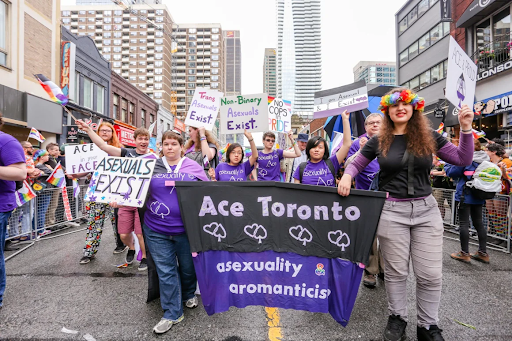
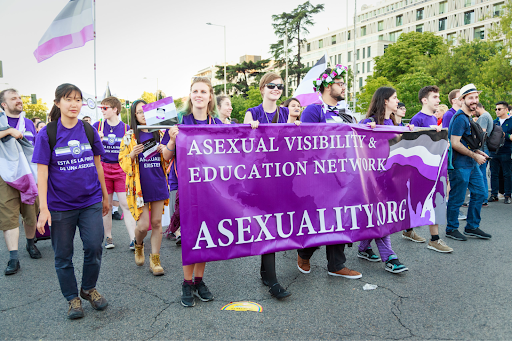
According to the Asexual Visibility and Education Network (AVEN), an asexual person experiences little or no sexual attraction to individuals of any sex or gender.
Unlike celibacy, which is a choice, Asexuality is an orientation, an intrinsic part of someone’s identity. Asexual people may still experience romantic, aesthetic, or sensual attraction. And they may or may not choose to engage in sex: some do so for a partner’s enjoyment or as part of a relationship; others are sexually indifferent or even sexually repulsed and choose not to participate in sex at all.
So now that we know what asexuality is, let’s get to the big question:
How Does Asexuality Relate to Reproductive Justice?
At first glance, you might think it doesn’t.
If asexual people often don’t desire sex, and if sex and reproduction are frequently linked, where’s the overlap?
In reality, asexual people face a range of injustices that connect directly to the four pillars of reproductive justice outlined in Loretta J. Ross’s Reproductive Justice: An Introduction:
- The right to have children
- The right not to have children
- The right to parent children in safe and healthy environments
- The right to sexual freedom and bodily autonomy
Let’s walk through these pillars one by one.
1. The Right to Have Children
This right includes asexual people.
Yet medical and social systems often assume that if you don’t desire sex, then you shouldn’t, couldn’t, or don’t want to have children.
Historically, these assumptions fueled eugenic sterilizations, targeting people whose sexuality or nonsexuality was deemed “unfit.”
Today, many asexual individuals report clinicians discouraging them from pursuing fertility services, contraceptives, sexual freedom, or parenting, because their identities are misunderstood or pathologized.
2. The Right Not to Have Children
Reproductive justice insists on the right not to have children.
But this right is often violated when asexual people are pressured, coerced, or assaulted in attempts to “correct” their orientation.
In so-called corrective rape, perpetrators often claim they are “helping” asexual individuals by forcing sexual contact to “fix” them. This violence shatters the right not to engage in sex, not to become pregnant, and not to have children.
Asexuality is treated not as a valid orientation, but as something to be overcome.
3. The Right to Parent in Safe, Healthy Environments
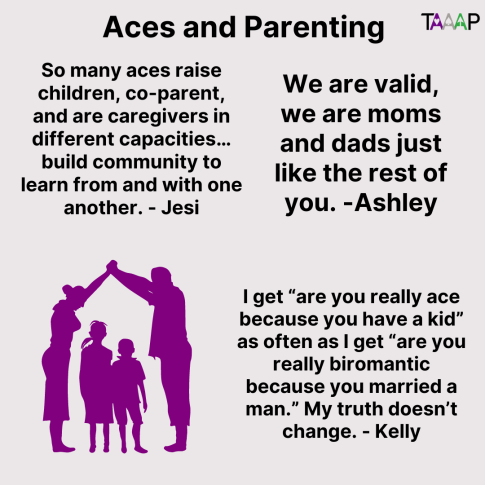
Asexual parents, or ace-spectrum people who foster, adopt, or co-parent, often encounter stigma that paints them as unfit or incapable.
Doctors may dismiss their concerns.
Courts sometimes question their ability to nurture children.
Social services may misunderstand their family structure or motives.
And when asexual people are recovering from sexual trauma, a trauma disproportionately affecting their community, the lack of trauma-informed care can further compromise their ability to parent in safety.
4. The Right to Sexual Freedom and Bodily Autonomy
This pillar strikes at the heart of asexual oppression.
Asexual people routinely have their bodily autonomy denied.
Doctors pathologize their identity.
Partners pressure them to “change.”
And some face sexual assault framed as a cure for who they are.
The fight for reproductive justice for asexual people is fundamentally a fight for the right to say no, and to have that no respected.
What the Research Shows
There is very little academic research analyzing corrective rape and coercion in the asexual community, but what does exist is striking.
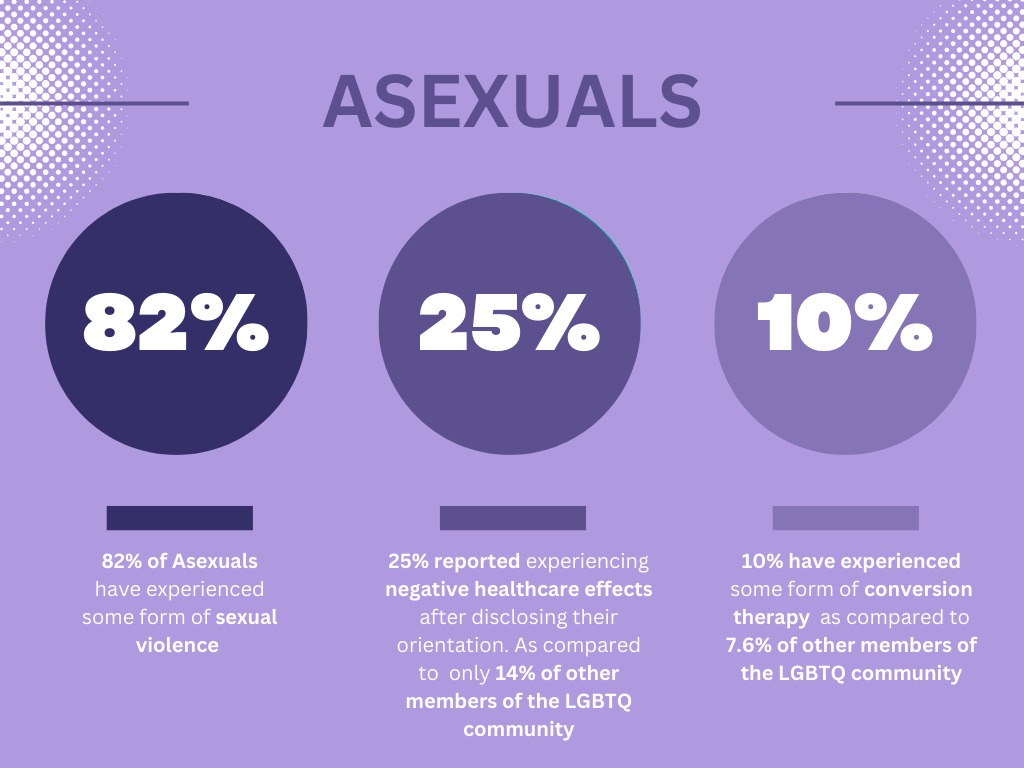
In a global sample of 10,648 participants, the 2019 Asexual Community Survey Summary Report found that 82.2% of asexual respondents had experienced at least one form of sexual violence in their lifetime.
These numbers are staggering, but statistics alone can’t capture what these experiences feel like.
Where research is limited, personal testimony becomes crucial.
Asexual activist Julie Decker, author of The Invisible Orientation, accounts of corrective rape within the asexual community.
Perpetrators believe they are “waking us up” and that their victims will “thank them later.”
Decker recounts receiving countless death threats, comments that she “just needs a ‘good raping,’” and even being assaulted by a friend who claimed he was trying to “fix” her.
When she rejected his advances, he pushed her against a door, licked her face, and screamed, “I just want to help you!”
Asexual people also experience rampant conversion therapy, with the 2024 National LGBTQ Survey reporting that they are 10% more likely to face it than other sexual minorities.
In many cases, conversion therapy includes coercive sexual acts, and sometimes corrective rape.
Case law reflects these patterns as well.
In a 1990 Minnesota court case, State v. Dutton, a woman sought counseling from her pastor for grief, suicidal thoughts, and low self-esteem. She expressly stated her desire to be asexual and to keep the relationship strictly platonic.
Instead, he told her he would be “working with her on her sexuality.”
He proceeded to engage in criminal sexual conduct, claiming it was part of her “treatment”,that it would “remove her inhibitions about sex,” “set her free,” and fix what he viewed as sexual “hang-ups.”
Although he argued the encounters were consensual, the court recognized that a counseling patient cannot consent to sexual contact initiated by her therapist.
Asexuality is not a footnote in the reproductive justice movement.
It is a test of the movement’s core promise:
that every person deserves full control over their body, their choices, and their future.
When asexual people are sterilized without consent, discouraged from parenting, denied trauma-informed care, pressured into sex, or assaulted to “fix” them, the pillars of reproductive justice are not just weakened; they are broken.
So when we ask, “What about asexuals?”
The answer is simple:
Asexual people belong at the center of reproductive justice conversations.
Their experiences show us where our systems fail, and where our collective work for bodily autonomy must begin again.
[Outro music fades in]Thank you for listening.
I’m Quinn Obi, and this has been What About Asexuals?
Refrences
Quinn Obi
Professor Kelly Anderson
SWG 150
Citations
Ace Week 2021 – Aces and Parenting – The Ace and Aro Advocacy Project. 2021. October 29. https://taaap.org/2021/10/29/ace-week-21-aces-parenting/.
Asexual Visibility and Education Network. 2020. “An Amazing Infograph + Several Studies on Asexuality Discrimination and Mental Health.” November 4. https://www.asexuality.org/en/topic/204663-an-amazing-infograph-several-studies-on-asexuality-discrimination-and-mental-health/.
“Asexuality and Its Implications for LGBTQ-Parent Families.” n.d. In ResearchGate. https://doi.org/10.1007/978-3-030-35610-1_11.
Battista, Silvia Di. 2025. “Stripping Humanity: A Multiple Mediation Analysis of Bias Toward Asexual Parents.” Sexes 6 (3). https://doi.org/10.3390/sexes6030043.
Bogaert, Anthony F. 2004. “Asexuality: Prevalence and Associated Factors in a National Probability Sample.” The Journal of Sex Research 41 (3): 279–87. https://doi.org/10.1080/00224490409552235.
Chan, Randolph C. H., and Fei Nga Hung. 2025. “Sexual Violence Victimization and Substance Use among Individuals Identifying on the Asexual Spectrum: Differences between Asexuality, Graysexuality, and Demisexuality.” The Journal of Sex Research 62 (9): 1807–19. https://doi.org/10.1080/00224499.2024.2351423.
Decker, Julie Sondra. 2015. The Invisible Orientation : An Introduction to Asexuality / Julie Sondra Decker. Skyhorse Publishing. scf.oai.edge.fivecolleges.folio.ebsco.com.fs00001006.ecad8ca2.ee32.5c7c.8f16.4561d11731f7. https://research.ebsco.com/linkprocessor/plink?id=2296586d-0a56-340f-b85d-88d3f53e4f6e.
Deutsch, Tamara. 2018. Asexual People’s Experience with Microaggressions. https://academicworks.cuny.edu/cgi/viewcontent.cgi?article=1050&context=jj_etds
Doan-Minh, Sarah. 2019. Corrective Rape: An Extreme Manifestation of Discrimination and the State’s Complicity in Sexual Violence.https://repository.uclawsf.edu/cgi/viewcontent.cgi?article=1418&context=hwlj
Fink, Brian N. 2023. “Experiences of Sexual Violence and Their Associations with Suicidal Ideation and Behavior in the Past Year: An Analysis of Adults from the 2021 Ace Community Survey.” Journal of Injury & Violence Research 15 (2): 147–55. 171950552. https://doi.org/10.5249/jivr.v15i2.1843.
Gupta, Kristina. 2017. “‘And Now I’m Just Different, but There’s Nothing Actually Wrong With Me’: Asexual Marginalization and Resistance.” Journal of Homosexuality 64 (8): 991–1013. https://doi.org/10.1080/00918369.2016.1236590.
GOV.UK. 2019. “National LGBT Survey: Research Report.” February 7. https://www.gov.uk/government/publications/national-lgbt-survey-summary-report.
Jones, Catriona, Mark Hayter, and Julie Jomeen. 2017. “Understanding Asexual Identity as a Means to Facilitate Culturally Competent Care: A Systematic Literature Review.” Journal of Clinical Nursing 26 (23–24): 3811–31. https://doi.org/10.1111/jocn.13862.
Justia Law. n.d. “State v. Dutton.” Accessed November 18, 2025. https://law.justia.com/cases/minnesota/court-of-appeals/1990/c5-89-801.html.
Kaur, Harmeet. 2019. “Asexuality Isn’t Celibacy or Abstinence. Here’s What It Is — and Isn’t.” CNN, October 20. https://www.cnn.com/2019/10/20/us/asexuality-explainer-trnd.
Lund, Emily M. 2021. “Violence Against Asexual Individuals.” In Violence Against LGBTQ+ Persons: Research, Practice, and Advocacy, edited by Emily M. Lund, Claire Burgess, and Andy J. Johnson. Springer International Publishing. https://doi.org/10.1007/978-3-030-52612-2_13.
Mollet, Amanda L., and Wayne Black. 2021. “A-Nother Perspective: An Analysis of Asexual College Students’ Experiences with Sexual Violence.” Journal of College Student Development 62 (5): 526–46. https://muse.jhu.edu/article/845602
“Motivational Drive in Non-Copulating and Socially Monogamous Mammals – PMC.” n.d. Accessed November 4, 2025. https://pmc.ncbi.nlm.nih.gov/articles/PMC6787552/.
National LGBT Survey: Research Report. 2018. Government Equalities Office. https://assets.publishing.service.gov.uk/media/5b3b2d1eed915d33e245fbe3/LGBT-survey-research-report.pdf
Parent, Mike C., and Kevin P. Ferriter. 2018. “The Co-Occurrence of Asexuality and Self-Reported Post-Traumatic Stress Disorder Diagnosis and Sexual Trauma within the Past 12 Months among U.S. College Students.” Archives of Sexual Behavior 47 (4): 1277–82. 2018-07601-001. https://doi.org/10.1007/s10508-018-1171-1.
Parshall, Allison. 2024. “Asexuality Is Finally Breaking Free from Medical Stigma.” Scientific American, January 1. https://www.scientificamerican.com/article/asexuality-is-finally-breaking-free-from-medical-stigma/.
“(PDF) Stripping Humanity: A Multiple Mediation Analysis of Bias Toward Asexual Parents.” 2025. ResearchGate, ahead of print, October 10. https://doi.org/10.3390/sexes6030043.
“PRZYBYLO_finalforprinter_KU.Indb – 1005725.Pdf.” n.d. Accessed November 18, 2025. https://library.oapen.org/viewer/web/viewer.html?file=/bitstream/handle/20.500.12657/24390/1005725.pdf?sequence=1&isAllowed=y.
Reporter, Dominique MosbergenSenior and HuffPost. 2013. “‘I Hope You Get Raped.’” HuffPost, June 20. https://www.huffpost.com/entry/asexual-discrimination_n_3380551.
ResearchGate. 2025. “(PDF) Social-Psychological and Socio-Structural Correlates of Negative Attitudes toward Asexuals’ Parenting Rights.” November 18. https://doi.org/10.21203/rs.3.rs-1633932/v1.
Stonewall. n.d. “Ace in the UK Report (2023).” Accessed November 4, 2025. https://www.stonewall.org.uk/resources/ace-report.
Stremel, Emily. 2022. “A History of Asexuality: From Medical Problem to a Recognized Sexual Orientation | the Ascendant Historian.” https://journals.uvic.ca/index.php/corvette/article/view/20810.
The Trevor Project. n.d. “2023 U.S. National Survey on the Mental Health of LGBTQ+ Young People.” Accessed November 4, 2025. https://www.thetrevorproject.org/.
Weis, Robin, Lea Hermann, Caroline Bauer, Tristan L Miller, and Ai Baba. n.d. 2019 Asexual Community Survey Summary Report. https://acecommunitysurvey.org/wp-content/uploads/2021/10/2019-asexual-community-survey-summary-report.pdf
Weller, Chris. n.d. “What It’s like to Be Completely Asexual.” Business Insider. Accessed November 18, 2025. https://www.businessinsider.com/what-its-like-to-be-asexual-2015-9.Zivony, Alon, and Niv Reggev. 2023.
“Beliefs About the Inevitability of Sexual Attraction Predict Stereotypes About Asexuality.” Archives of Sexual Behavior 52 (5): 2215–28. 164720497. https://doi.org/10.1007/s10508-023-02616-4.