Elizabeth Ferrell
REL288 3/4/2024
Journalistic Article
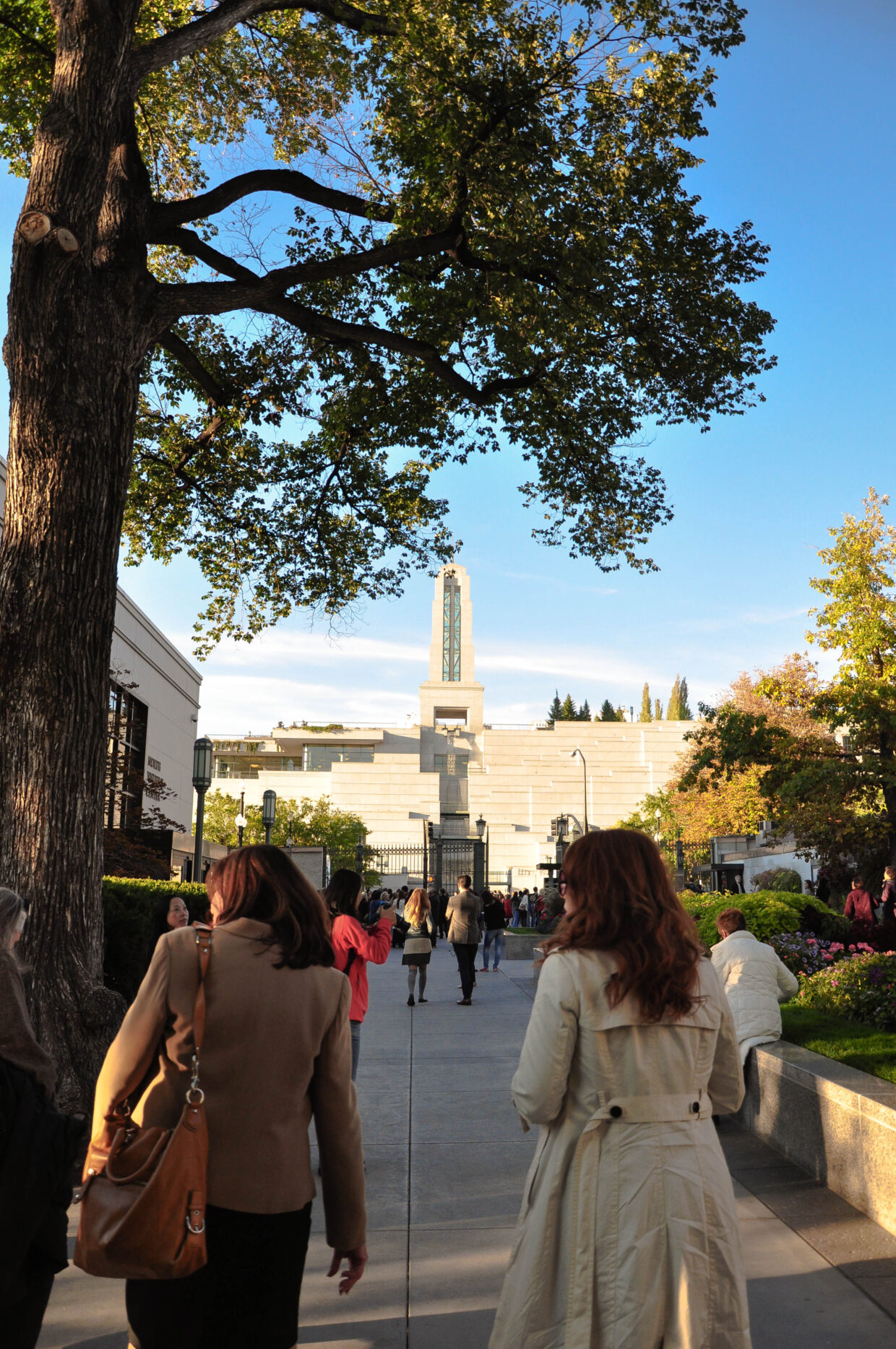
On October 5, 2013, 130 women marched from City Creek Park to Temple Square in Salt Lake City, Utah. Dressed in their Sunday best, the women joined the throng of men and boys waiting in the standby line to secure last-minute tickets to the all-male priesthood session held as part of the Church of Latter-day Saints (LDS) biannual General Conference. One by one, the women waited at the doors of the Tabernacle while boys as young as 12 years old were ushered inside.
And one by one, the women were turned away.
These women were part of Ordain Women, a feminist Mormon organization seeking to grant women full priesthood in the LDS church. Founded by devout Mormon and human rights lawyer Kate Kelly, Ordain Women sought to challenge the fundamental LDS doctrine that only males can be ordained into the priesthood. Because the priesthood makes up the vast majority of leadership positions within the LDS church, this system effectively excludes women from decision-making and authoritative positions within the church.
Ordain Women leadership was extremely careful with the image they presented to the world. In March of 2013, before ever engaging in direct action, they launched the Ordain Women website through which supporters within the LDS community could submit profiles explaining why they supported ordination of women. Like the clothes the women wore to march in, the website had to strike the right tone, with the group enlisting the aid of a graphic designer within the church to create a “Mormon-friendly site design” (Stromberg, 16).
Similarly, the march on the Tabernacle would have “no signs, no banners, and no chanting.” As founding Ordain Women member Lorrie Winder Stromberg put it, “This was not a protest; it was a plea. ‘The ask’ was priesthood” (23). Kate Kelly and other leaders within the Ordain Women movement believed that if they were sensitive to Mormon ideas about womanhood, they would have a better chance of engaging with a wider LDS audience (McDanell, 186).
However, despite these efforts, church leadership still rejected the message of Ordain Women. Six months after their October action, the women would march on the Tabernacle again, and once again they would be denied entrance into the priesthood session. In response to this action, church spokesman Cody Craynor wrote:
“While not all the protestors were members of the church, such divisive actions are not the kind of behavior that is expected from Latter-day Saints and will be as disappointing to our members as it is to church leaders.”
Yet, despite the strong reaction by church leadership, Ordain Women is far from the first Mormon women’s organization to engage in this kind of feminist organizing. Examples of
Mormon women’s activism date from as far back as 1887, when Utahn women formed suffrage organizations in response to the Edmunds-Tucker Act, which disenfranchised polygamous men and all women within the Utah territory. In conjunction, the LDS church disavowed polygamy and began a slow movement to assimilate into American society, adopting more traditional Protestant “family” values which emphasized women’s place as mothers, wives, and homemakers (Brooks, 6).
Mormon women would continue to organize, however. Nearly a hundred years later, a small group of Mormon women formed Mormons for the Equal Rights Amendment (MERA), in protest of the Church’s official opposition to the ratification of the ERA, which would grant equality to men and women under the law. In November of 1980, twenty MERA protestors were arrested after chaining themselves to the gates of a LDS Temple in Bellevue, Washington. For Kelly and the other members of Ordain Women, MERA served as an important touchstone of direct action that was too “bold and brazen for most Mormons” (McDannell, 186).
While Ordain Women attempted to avoid the pitfalls of their activist predecessors by adopting more LDS-friendly tactics, they were still ultimately unsuccessful. Two months after the second march on the Tabernacle, Kate Kelly was excommunicated from the church. The Church’s message was clear: direct action that threatened the authority of the LDS church would not be tolerated (McDannell, 188).
For Kelly, this was not just an organizational setback for Ordain Women, but a deeply personal loss.
“I was in Salt Lake City when I opened the email, and it said that I had been excommunicated. I immediately collapsed, basically on the table. Because for Mormons, spiritual death is worse than physical death. And spiritual death, being excommunicated is eternal.”
Ordain Women hadn’t been the first time Mormon feminists had grappled with women’s ordination. Feminists within the LDS church had begun discussing and writing about women’s ordination as early as the late 1970s. Soon after, in the late 1980s, LDS feminists began forming various groups and forums to discuss feminist issues including women’s ordination within the church. However, following an institutional crackdown in the mid 90s, six prominent feminists and scholars also faced excommunication or discipline by the church (Stromberg, 6).
It wasn’t just church leadership that opposed women’s ordination. A 2011 Pew Research study indicated that nearly 87% of Mormons rejected the idea of women’s ordination. Ordain Women had been up against nearly insurmountable opposition. But this makes the successes they did have even more remarkable. Ordain Women brought the question of women’s place in the LDS church and the priesthood to the forefront of the church’s mind. It forced church leaders to acknowledge the complex relationship between women, priesthood, and church authority, with some within the church openly admitting they weren’t sure why only men could be granted priesthood (Stromberg, 23).
But for Kelly, it wasn’t LDS leadership, but Mormon women themselves that she felt had been most affected by Ordain Women’s activism.
“I don’t have hope that the future of the organization will be inclusive. But women themselves are changing. Women are demanding more. They’re expecting fewer violations of their own autonomy and dignity. And that, I think, is hopeful. And that is the radical change that we will see.”
Works Cited:
Brooks, Joanna. “Mormon Feminism: An Introduction.” Mormon Feminism: Essential Writings, edited by Joanna Brooks, et al., Oxford University Press, 2016.
“Internet Mormons.” Sister Saints: Mormon Women Since the End of Polygamy, by Colleen McDannell, Oxford University Press, 2018, pp. 184 -195.
Stromberg, Lorrie. “The Birth of Ordain Women: The Personal Becomes Political.” Voices for Equality: Ordain Women and Resurgent Mormon Feminism, edited by Gordon Shepherd, et al., Greg Kofford Books, 2015, pp. 3 – 25.