Ziyou Zoey Xu
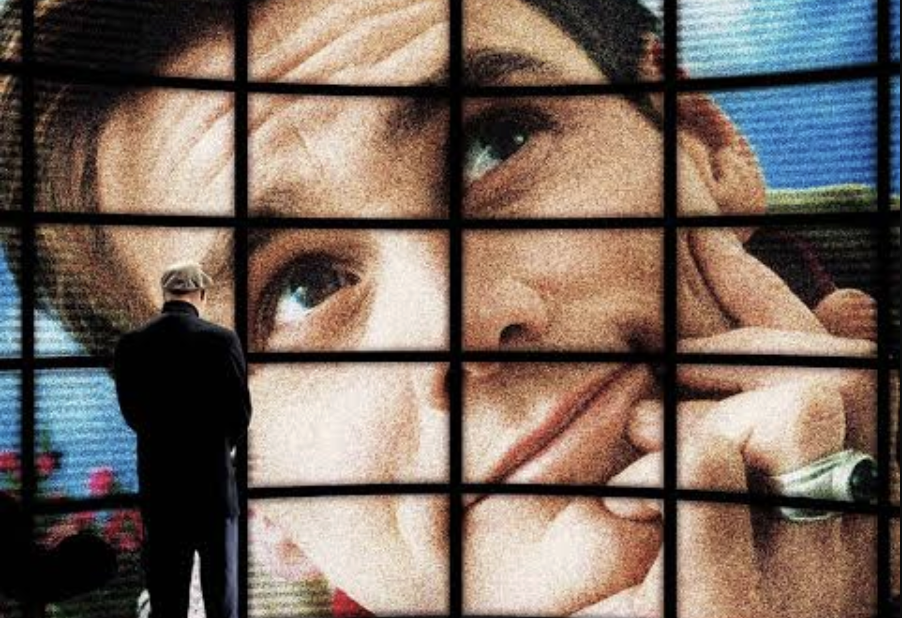
Descriptive interpretation, suggested by Susan Sontag, is a way of perceiving a work of art through what we sense and what we feel, and an approach to appreciating art through direct experience (3). A 1998 satirical film directed by Peter Weir, The Truman Show, powerfully demonstrates the impact of guiding audiences toward a descriptive interpretation of art. As the film’s central character, Truman, gradually realizes that the world around him is fabricated, he decides to resist the cameras that have observed him since the day he was born. Weir carefully designs the dialogue, scenes, and progression of the plot in a way that invites a high degree of audience engagement, conveying messages about human rights, excessive entertainment, and the artificial nature of the constructed reality. The film establishes a direct connection with the audience’s senses and emotions through its form by intentionally incorporating counterintuitive details that capture attention, skillfully orchestrating color palettes, background music, cinematic language to guide the audience’s focus, and deploying effective dialogue. Through these artistic strategies, the film encourages viewers to experience the work through sensation and empathy rather than forcing them to over-interpret hidden meanings behind individual elements based on prior knowledge (Sontag 3). Ultimately, this reflection and emotional resonance not only allow the work to effectively communicate its central themes but also provide the audience with a direct emotional experience, benefiting both the viewers and the artwork itself.
To begin with, as Sontag argues that the interpretation of art should be grounded more in the audience’s experience (10), Weir does not directly encourage audiences to reflect on these themes. Instead, he subtly presents Truman’s daily behaviors, allowing viewers to gradually develop their own emotional responses. As the narrative unfolds, audiences naturally begin to feel growing sympathy for Truman and hope that he can escape from the world that confines him. This effect is achieved through numerous subtle details that reveal how Truman behaves differently from ordinary people, highlighting the peculiar nature of his interactions with the world around him. At the beginning of the film (00:04:01–00:04:14), Truman is shown having a conversation with a radio. The dialogue appears unusually smooth, almost as if the radio MC on the other side of the radio can hear everything Truman says. Once viewers notice this unusual interaction, it creates a subtle sense of discomfort and curiosity about the authenticity of Truman’s surroundings. This moment quietly introduces the possibility that Truman’s world may not be as natural as it first appears. Another example appears at 00:12:49–00:13:00. When Truman is sitting by the sea, the “director” creates artificial rain in order to drive him back home. However, due to a technical malfunction, at first, only a single beam of rain falls directly on Truman and even appears to follow his movement. Most people would likely feel confused or frightened in such a situation. Truman, however, becomes excited and raises his hands to feel the rain. His unexpected reaction creates a striking contrast with normal human behavior and further emphasizes the unusual way in which he experiences the world around him. Additionally, at 00:17:38–00:17:58, Truman is looking at a childhood photograph of himself with his father. When his wife enters the basement, he quickly hides the photo. Treating a simple family photograph as a secret that must be concealed from his wife makes his behavior appear somewhat mysterious and unusual. Through these small yet meaningful details, the film encourages viewers to carefully observe Truman’s life rather than immediately searching for symbolic meanings. While there is no sentence in which Truman explicitly expresses his desire for freedom, the audience can sense it through his loneliness, which drives him to talk to the radio, his sarcastic laugh under a beam of rain, and his sense of insecurity when staying with his family. All these messages come into the audience’s mind, revealing how horrifying it is that the “director” takes away a person’s human rights for profit.
At the same time, as Sontag argues in her essay, “real art has the capacity to make us nervous,” while interpretation that reduces art to symbolic meaning makes the confrontation with real art less overwhelming (5). The Truman Show exposes to the audience the fact that Truman is no longer a “true man”: he reacts strangely to striking phenomena, treats ordinary objects in counterintuitive ways, and positions himself at the center of the world without being aware of it. These unsettling details are so striking that viewers may initially feel tempted to interpret elements such as the sky, the wall, or the boats as symbols. However, the film’s continuous exposure to such details prevents the audience from merely attaching preconceived symbolic meanings to them, because viewers are immersed in the emotional engagement throughout the film. In this way, the film forces the audience back to the sensory form of the artwork itself, leaving them gripped by the sheer intensity of their feelings. As the film progresses, the audience repeatedly becomes aware of the distorted way Truman’s personality has been shaped. Because viewers recognize, through common sense, that one does not normally talk to a radio, and usually panics over a single beam of rain falling on a small patch of land, they feel discomfort toward Truman’s behavior. This discomfort, in turn, leads the audience to long for his escape, and when he finally succeeds, it produces a sense of emotional release and shared pleasure.
In addition to the counterintuitive details, a more direct way that The Truman Show invites audiences to engage with it, confront it, and synthesize it is through multisensory feelings, just essembling what Sontag advocates: “ We must learn to see more, to hear more, to feel more” (10). Weir employs mature cinematic language, utilizes shifting colors, and curates matching background music to convey what is happening directly to the audience’s mind. For example, Truman has PTSD about traveling on the sea because when he was young and sailing with his “father,” his “father” drowned. Before this fact is revealed, the film carefully cushions the emergence of this memory. At 0:08:30-0:08:35, Truman decides to confront his profoundly rooted fear by traveling on a small boat. Before he notices the sunken boat near the shore, the audience is first given a bird’s-eye view of the sea and the boat, and then Truman shows visible body language of resistance. The color of the scene gradually darkens, and the low sounds of the bass and cello rise from soft to loud, like a strong winter wind, creating a gloomy atmosphere and suggesting that something Truman fears is about to happen. When the camera shifts its focus from Truman back to the boat, a larger and clearer image appears, accompanied by a loud drum sound. The audience is reminded that Truman has noticed the sunken boat, and at the same time, they can perceive a heavy and negative emotion from him. This moment functions as a hook that captures the audience’s curiosity and holds them to the form of the art through the emotional transfer between the film and its viewers.
Meanwhile, another example that demonstrates Weir’s proficient use of cinematic language is the contrast in visual clarity between scenes from different perspectives, achieving the goal of “recovering the sense” (Sontag 10). To be specific, when scenes are presented from Truman’s perspective, other characters appear clear and unobstructed. However, when Truman is shown from the actors’ perspective, the shots resemble hidden or surveillance-like camera angles. This contrast becomes particularly evident during Truman’s conversation with his “mother” (0:16:05-0:17:12), reminding the audience that Truman is the only one being observed and filmed. This sense is strengthened when the audiences within the film are shown performing their daily activities freely, such as eating pizza, chatting with friends, and making comments about Truman as if he were a fictional protagonist, with no actors or cameras visible to them. Realizing that Truman is treated as a creature for entertainment further strengthens the viewer’s empathy toward him. This empathy continuously reinforces the idea that Truman needs to escape from the constructed world and embrace true freedom. What the audience primarily receives from the film is therefore a strong emotional impact. As a result, viewers are led to focus on the descriptive interpretation of what appears on screen and the emotions conveyed, feeling from what they see and hear, through which they are able to appreciate the work of art in a more comprehensive and multidimensional way.
Finally, Weir wisely repeats a certain line of dialogue under completely different circumstances at both the beginning and the end of the film. This repetition creates a sense of narrative completion, discourages further over-interpretation of particular elements that might invite what Sontag calls “prescriptive interpretation” (8), and gives the illusion that the audience has gone through the adventure together with Truman. In particular, the sentence “In case I don’t see you, good morning, good afternoon, and good night” appears both at the beginning and at the end of the film. It first appears when Truman happily greets his neighbors at 0:02:48-0:02:55, and it reappears after all the struggles he experiences at 1:34:441:35:00. At the beginning of the film, Truman says this line to his “neighbors,” engraving in the audience a first impression of him as optimistic and kind. At the end of the film, after confronting his fear of the sea and overcoming the tremendous artificial rainstorm created by the “director,” Truman finally escapes the film set. The last sentence he leaves to both the audience within the film and the viewers outside the screen is the same line. The camera focuses on his face at exactly the same angle as in the opening scene, reminding the audience of the cheerful expression he had earlier and inviting a comparison with his now weathered and exhausted face. The audience feels happy for him while simultaneously condemning the behavior of the “director”, which is making profits at the expense of a human being’s freedom and life experiences. What produces this reaction is not symbolic interpretation guided by hidden meanings, but rather the spontaneous empathy that arises between people.
To conclude, by creating a powerful emotional impact on the audience, The Truman Show successfully encourages a descriptive and experiential interpretation of the work of art. Through its carefully crafted details, deliberate use of color, music, cinematic language, and the repetition of key lines, the film conveys its central critique of the commodification of human beings, society’s overreliance on constructed reality, and the consequences of excessive entertainment. When the audience is invited to consider whether these critical ideas are valid, what comes to their minds is not a theoretical argument or the symbolic meaning behind a sunken boat, but rather the deep tones of the bass and cello, the greyish palette of the scenes, and Truman’s visible struggle. In this way, the audience experiences the film through their senses and emotions, touching the core of the work without even being aware of it.
Works Cited
Sontag, Susan. “Against Interpretation.” Against Interpretation, Picador, 1966, pp. 1-10.
The Truman Show. Directed by Peter Weir, performances by Jim Carrey, Laura Linney, and Ed Harris, Paramount Pictures, 1998.