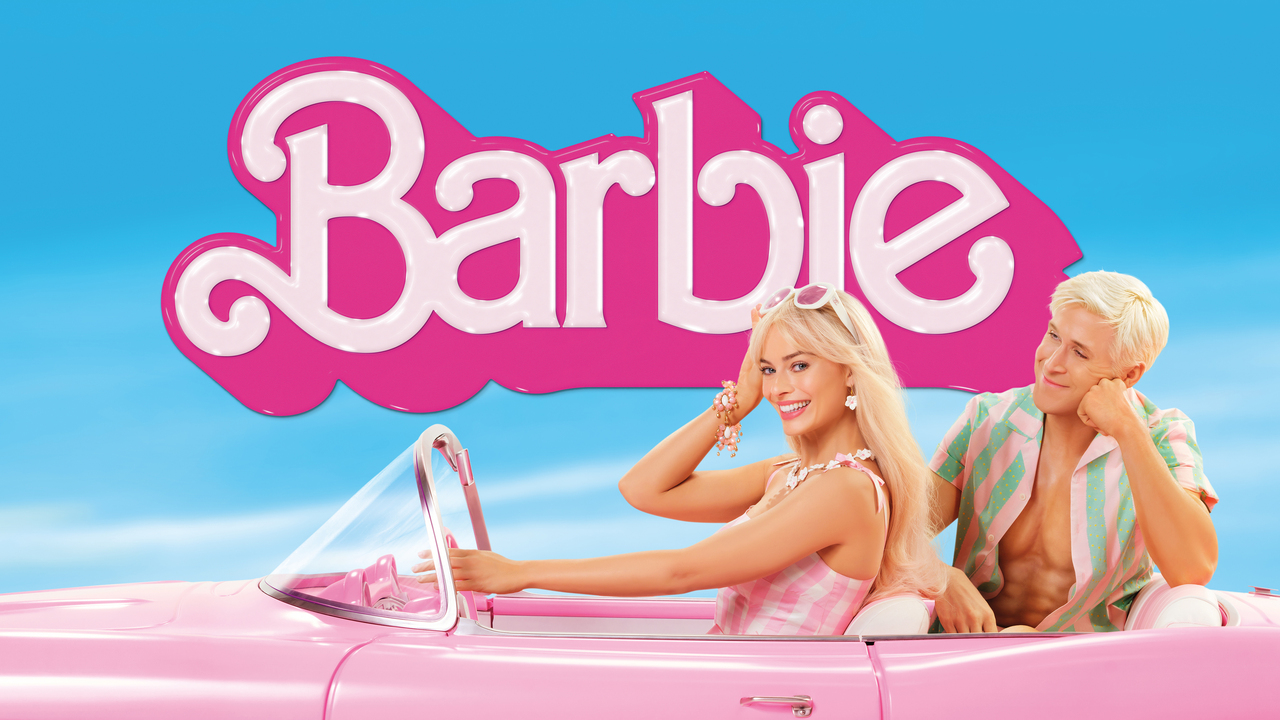
A doll that once represented an ideal image of femininity has become the center of a film that questions what it means to be a woman. In Barbie, the familiar pink world of Barbie becomes a place to explore gender expectations, female identity, and the influence of patriarchy. Gender not only represents an individual’s identity, but also influences how people understand their social roles and personal values. In real life, society typically has different expectations for women and men, and these traditional concepts may affect an individual’s development opportunities and self-identity. Therefore, gender inequality has always been an important social issue in feminist discussions. Movies and other cultural works subtly influence the public’s understanding of gender. They can either challenge traditional concepts or inadvertently perpetuate existing social stereotypes.
Barbie (2023) provides an interesting example for discussing this issue. The film is based on the well-known Barbie brand and uses a humorous plot and satire of real society to discuss patriarchy, female identity, and gender equality. Compared to the traditional Barbie image, this film emphasizes that Barbie can try different things without needing a refined appearance or adhering to specific standards. However, the film itself is closely related to a commercial brand and consumer culture, which creates certain contradictions in its feminist expression. Barbie successfully redefined the traditional Barbie image by challenging patriarchal gender roles and leveraging the familiar Barbie brand to convey feminist ideas to contemporary audiences. However, this commercial approach also linked feminism with consumer culture, creating new tensions that might prevent the film from delving deeply into the social issue of gender inequality.
One way Barbie challenges traditional gender roles is through the contrast between Barbie Land and the real world. In Barbie Land, women hold most positions of power, while Ken initially depends on Barbie for recognition. However, after visiting the real world and encountering male-dominated social structures, Ken brings patriarchal ideas back to Barbie Land. As a result, the Barbies gradually lose their authority and independence.
This plot humorously presents the reversal of gender roles and also reveals how the patriarchal system influences the situation of gender through the social structure. Qian Qian Li pointed out that Ken’s encounter with patriarchy in the real world and his attempt to bring Barbie Land back prove the persistence of the patriarchal system in real society (1520). From a feminist perspective, this plot links the restrictions faced by women with the broader framework of rights. It is not the lack of ability that causes gender inequality, but rather the changes in social systems that have continuously squeezed the positions and public spaces of women.
Furthermore, the speeches in the film about the social situation of women also reveal the contradictions in traditional society’s expectations for women: they are expected to demonstrate their capabilities while not appearing overly assertive; they are expected to pay attention to appearance but not overly emphasize it; they are expected to strive for success while avoiding making others feel neglected. These expectations are often in conflict with each other, trapping women in restrictive circumstances and preventing them from truly being themselves. This speech elevates the issue of stress from an individual level to a societal level and indicates thatthe problems faced by women are never their own flaws, but rather the strict social expectations that require them to constantly adjust their behavior at all times.
Therefore, Barbie demonstrates through the plot that gender roles are not inherently fixed but are instead influenced by subsequent social systems. The film encourages a large number of women to reflect on their social roles and whether they should shape themselves according to traditional gender expectations. This is a significant contribution made by the film in terms of feminism.
In addition to challenging traditional gender roles, Barbie also uses its brand recognition to promote feminist ideas. When it comes to Barbie, viewers will immediately think of a sophisticated and renowned cultural icon. Therefore, the film doesn’t need to create a new female character from scratch. Instead, it makes use of the audience’s existing understanding of this brand to re-examine the concept of female identity. The advantage of doing this is that it can integrate an abstract feminist concept into content that the audience is familiar with, bringing topics such as women’s empowerment and social equality into the public spotlight and triggering broader discussions.
However, using commercial brands to promote feminism can also bring about problems. Robert Goldman, Deborah Heath, and Sharon L. Smith introduced the concept of “commodity feminism” to explain how commercial advertisements transform feminist ideas into symbols that can be associated with products and brands. They pointed out that advertisements can link the goals of independence and professional success with the image of the product. When consumers purchase and use the product, they express their identity and values to some extent (Goldman et al. 336). In the commercial environment, feminism sometimes is transformed into a personal image that can be displayed and consumed.
This theory can help analyze how Barbie simultaneously spreads feminism and maintains its commercial value. The film emphasizes that women can do whatever they want. They can express their thoughts and determine their own lives. These values are linked to the fashion and refined consumption image that the brand has long expressed. Goldman et al.’s analysis of “commodity feminism” also shows that concepts such as “attitude” and “confidence” can be transformed into commercial symbols that are easily recognizable by consumers (348). In Barbie, female empowerment is thus both a social concept and a way to attract viewers and strengthen the brand image. Feminism has its positive significance, but it has also become associated with commercial interests.
The research of Johanna Lauri and Marcus Lauri also provides help in understanding this relationship. After interviewing nine Swedish small business owners who identify themselves as feminists, they found that these entrepreneurs use feminism not merely for increasing sales. Some do indeed hope to spread feminist ideas through the product (Lauri and Lauri 462-63). This finding also indicates that combining feminism with products does not necessarily weaken feminism; it can also be a way to spread one’s own ideas.
The way of spreading ideas is somewhat similar to the way Barbie uses well-known brands to promote feminism. The film provides more opportunities for viewers to engage in discussions about gender inequality and patriarchy through familiar images. Therefore, commercialization does not necessarily mean that feminism is weakened. Instead, commercial brands can also provide broader channels for the dissemination of social issues. The key question is: When feminism needs to gain attention through the commercial market, will it also be limited by market preferences? This is the contradiction that Barbie needs to face.
Although Barbie successfully introduced feminism into popular culture, it has not completely escaped the influence of consumer culture and commercial brands. In the movie, Barbie Land does not provide a detailed depiction of how women work and succeed. Instead, it is a world filled with pink decorations, beautiful clothing and various products. Even though it may seem like a completely free utopia, it is also based on the emphasis on women’s appearance and consumption. The film shows that women can have power and careers, but it still regards beautiful appearance and consumer culture as the key features of Barbie Land. This raises a question: Is the film continuing to uphold the existing consumer culture by using a new discourse of female empowerment?
Just as Sasha’s criticism of Barbie in the movie: Barbie’s existence causes women to develop distorted values. Barbie’s perfect and exquisite appearance makes women feel inferior and makes them overly focus on dressing up. Through the consumer culture filled with praise, it indirectly destroys this planet. The film also acknowledged the inherent problems of the Barbie brand itself. However, the film did not choose to remove these elements of consumer culture from Barbie Land. Whether before or after Barbie stepped into the real world, Barbie Land has always maintained a glamorous and highly commercialized visual image.
Li refers to this contradiction as “performative resistance”, meaning that cultural works, on the one hand, criticize certain oppressive ideologies, while on the other hand, they accept and reproduce these ideologies within their own narratives and world-building (1522). This concept is particularly applicable in Barbie. The film criticized consumerism and traditional female aesthetic standards, but when designing Barbie Land and the character images, it still relied on these elements. When the film expresses progressive feminist ideas, it still retains the system it attempts to criticize. This contradiction prevents feminist criticism from delving into the social structure beneath the consumer culture.
Another limitation stems from the way the film presents social conflicts. Although the film discussed the power struggle between Barbies and Kens, and also satirized the control that Mattel’s management had over the Barbie image, many of the conflicts were resolved in a humorous, exaggerated and light-hearted manner. Li refers to this approach as “aestheticized conflicts”, which means that cultural works present power struggles and social conflicts in a light-hearted and entertaining manner, thereby reducing the severity of these conflicts (1522). For instance, after Ken established a male-dominant system, Barbies regained power by creating jealousy and competition among the Kens. This solution has a comical effect, but it is not feasible in the real world. It portrays the complex struggle for gender rights as a game that can be easily resolved. Li further pointed out that by using a comedic approach, the film transformed the conflict between Barbies and Kens into a farce, which might undermine the audience’s serious understanding of these struggles (1529).
Lauri’s and Lauri’s research also helped explain why this kind of relaxed and positive feminist expression might have limitations. They found that the female business owners who participated in the survey avoided using aggressive methods to promote feminism in order to attract a wider audience and increase their business revenue. However, this seemingly mild approach makes it less likely for more radical and confrontational feminist viewpoints to be recognized (Lauri and Lauri 470-71). Although this article focuses on feminist entrepreneurs rather than Barbie, it provides a perspective that can be used to analyze popular culture: when feminism today needs to maintain an image of being positive, friendly and easily consumable, some more complex social issues may be downplayed.
Therefore, although Barbie encourages women to believe in their own value, its discussion of gender inequality still focuses on personal identity, personal choices and social image. The film makes the audience aware of the existence of the patriarchal system, but fails to fully demonstrate how to solve gender inequality from a deeper social structure. This is also a limitation of commodity feminism.
Some people might think that just because Barbie originated from a commercial brand, its feminist critique must necessarily be limited by capitalist interests. In fact, the film can utilize the influence of commercial culture itself to conduct a more profound reflection and criticism on the system it is in. Barbie not only discusses the patriarchal system, but also through satirizing the control of Mattel’s management over Barbie, shows how commercial institutions influence female images. Therefore, being situated within the capitalist system does not mean that the film cannot carry out meaningful criticism of this system. On the contrary, conducting criticism from within the commercial system can also be an effective form of feminist practice.
I agree that commercial films do not necessarily have to uphold the commercial system they belong to. Barbie’s satire of Mattel’s management truly revealed the commercial interests behind the brand. However, being capable of criticizing the commercial system does not mean that the film can completely escape the constraints of commercial interests. Li pointed out that although the film portrays the Mattel management as the controlling force behind Barbie, these managers eventually demonstrated a gentle and inclusive attitude in Barbie Land, integrating into a relaxed and harmonious atmosphere. It can be seen that even though the film intends to satirize the management, in order to protect the brand’s reputation, it still avoids making the management a repugnant figure (Li 1530). This indicates that although the film did expose the problems of the commercial institutions, it failed to deeply challenge the power behind these forces.
Furthermore, the film itself still relies on Barbie’s commercial value. It can promote feminism through brand recognition, but it also needs to maintain the audience’s interest and loyalty towards the brand. Therefore, the film is both a critic of the commercial system and a part of it. Therefore, Barbie does possess the value of feminist critique, but its commercial context also imposes certain limitations that cannot be completely avoided in this kind of critique.
Overall, Barbie reinterprets the traditional Barbie image, providing a discussion space within contemporary popular culture regarding female identity, patriarchy, and gender equality. The film utilizes familiar brand images and humorous narrative techniques to bring feminist issues into the broader public cultural domain. Its challenge to traditional gender roles is of positive significance and enables viewers to re-examine women’s power, freedom, and self-identity.
However, the film also reveals the unignorable contradictions between feminism and consumer culture. From the perspective of commodity feminism and performative resistance, it can be seen that the concept of empowering women may gradually be linked to brand image, consumption behavior, and personal confidence during its dissemination, while deeper structural gender inequality is easily weakened. Commercial films can criticize the commercial system from within, but this does not mean that they can completely escape their own commercial limitations.
Therefore, the significance of Barbie lies not only in whether it is a feminist film, but also in how it makes us think about how feminism is disseminated in contemporary society and what opportunities and limitations this dissemination may bring. The film successfully drew more people’s attention to gender inequality, but true gender equality still requires going beyond brand image and consumption choices, and further focusing on social systems and power relations themselves.