In the past, artistic works were usually presented in relatively fixed forms such as paintings and sculptures, and people could appreciate their uniqueness by viewing the original works in person. However, with the development of digital technology and artificial intelligence, art is no longer confined to physical objects. AI can continuously generate new images based on data, and viewers can also influence the creative process of art through interaction. In this environment, the authenticity, value of artistic works, and the relationship between viewers and art are all changing.
In The Work of Art in the Age of Mechanical Reproduction, Walter Benjamin discussed how technological reproduction changed the essence of art. He believed that when art works could be continuously replicated and disseminated through technological means, the traditional art’s unique “aura” would gradually disappear. At the same time, the “exhibition value” of art would become increasingly important, as the value of the work began to be more related to the way it was displayed, viewed, and disseminated. Benjamin’s theory not only helps us understand the changes of traditional art in the era of technological development, but also provides an important perspective for analyzing contemporary digital art.
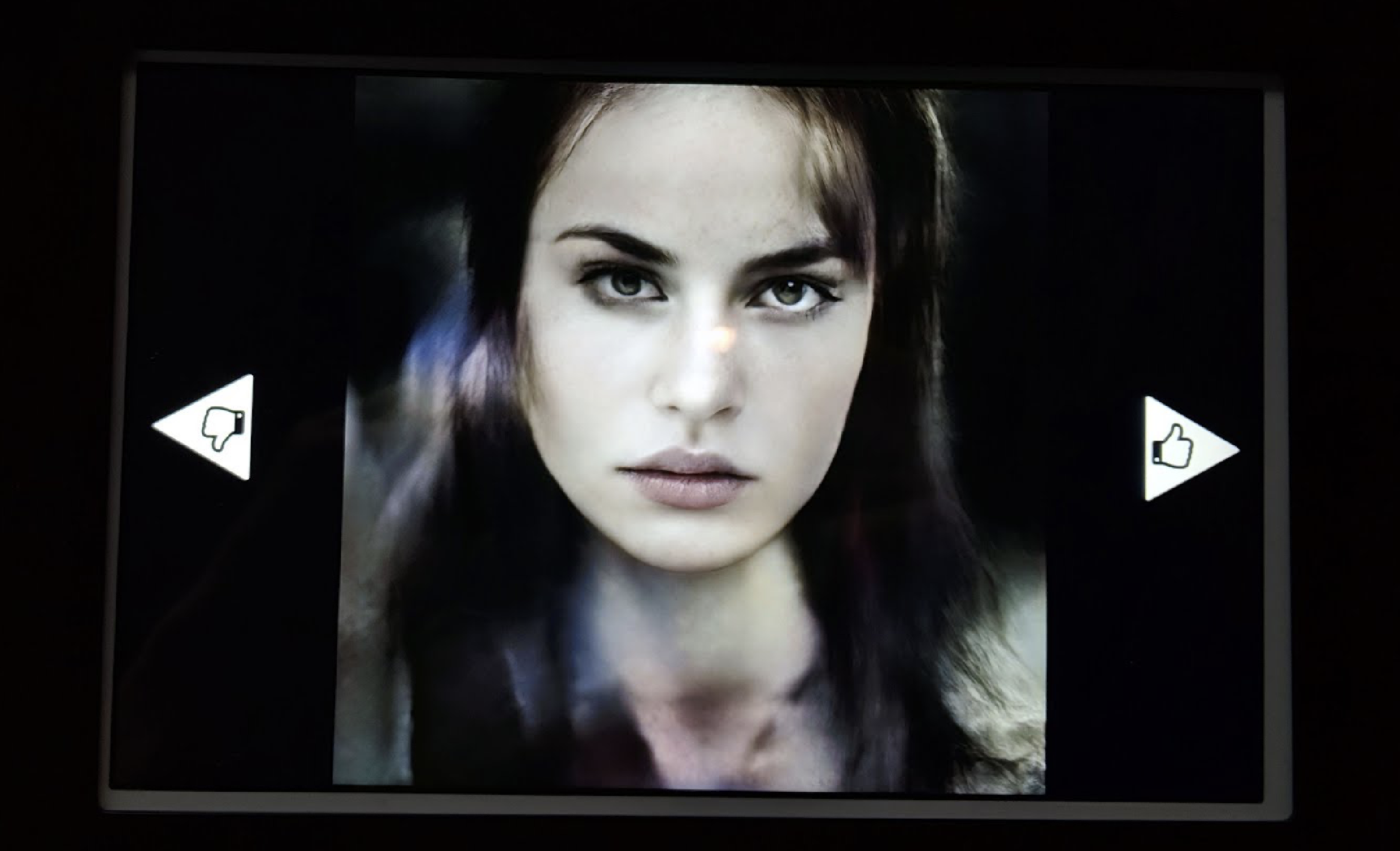
Mario Klingemann’s AI installation Circuit Training is an example that can reflect these changes. This work consists of three modules: Acquisition, Curation, and Creation. It continuously adjusts its generation process by collecting human data, learning the preferences of viewers, and measuring their attention. Viewers are no longer just viewers of the work; they are involved, and their behaviors and feedback also influence the development of the work. Through this interactive and algorithm-driven system, Circuit Training reflects Benjamin’s argument that technological reproduction challenges the traditional aura of art, while also raising new questions about artistic authenticity. The “exhibition value” of art overrides the “cult value”. Its existence meaning entirely depends on the participation, feedback from the audience and the dissemination through social media, thereby politicizing art and revealing contemporary social issues such as the attention economy and algorithm bias.
Firstly, Circuit Training challenges the traditional idea of a unique original artwork through its constantly changing AI-generated images, reflecting Benjamin’s argument that the “aura” of art declines in the age of mechanical reproduction. Unlike traditional paintings which have a stable visual effect, the circuit training, as a system, continuously generates and modifies images. It consists of three modules: Acquisition, Curation, and Creation. In the Acquisition module, the machine learns human visual features and behaviors by collecting information such as facial markers, pose data, and voice samples. Subsequently, the Curation module adjusts the training process of the system based on the audience’s evaluations, while the Creation module presents the images that the machine considers the most interesting at a specific moment. As the system responds to new data and feedback, its visual output will continue to change. Therefore, no single image can fully represent the entire artwork.
Benjamin wrote in his article: “Even the most perfect reproduction of a work of art is lacking in one element: its presence in time and space, its unique existence at the place where it happens to be” (3). This statement emphasizes that even if an art work is reproduced perfectly, the replica still lacks the uniqueness of being in a specific time and space. Benjamin further pointed out that in the era of mechanical reproduction, “what withers in the age of mechanical reproduction is the aura of the work of art” (4).
This theory helps to explain how Circuit Training challenges the notion of the uniqueness of traditional art. In traditional painting, the canvas is typically regarded as the original work, and its unique existence in a specific time and space gives it an aura. However, in Circuit Training the constantly changing images make it difficult to consider any single visual presentation as the final form of the work. Therefore, the identity of the work no longer depends on a single unique image, but rather more on the system that continuously generates the images. In this sense, Circuit Training extends Benjamin’s viewpoint: Just as mechanical reproduction weakens the connection between the uniqueness of the work and its original physical existence, artificial intelligence-generated art also challenges the assumption that the uniqueness of art must exist in a fixed visual object. But this does not mean that the work has completely lost its authenticity. Although its visual output constantly changes, this installation still exists as an independent physical and technical system. Its authenticity may therefore lie not only in a particular image but also in the process through which images are generated.
Secondly, Circuit Training demonstrates how “exhibition value” has become the primary source of value in contemporary art and reveals the connection between art and the “attention economy”. One of the core design goals of this work is to gain more attention by generating images that can capture human interest. It not only generates visual content but also collects the reactions of the audience to this content and continuously adjusts its operation mode based on these reactions.
In the Curation module, viewers can use a mechanism similar to Tinder, sliding left or right to express likes or dislikes for the machine-generated images. Each evaluation will affect the machine’s training process, enabling the system to optimize its output and maximize the attractiveness of the images. In the Creation module, the machine will also observe the audience through infrared cameras, attempting to measure how many people are watching and the average duration they stay. Finally, the machine can publish the generated images to social media platforms such as Twitter or Instagram, collecting platform data to understand the audience’s reaction to the work. These mechanisms indicate that the audience’s attention is not only a natural result of appreciating art but can also be quantified as data that affects the art generation process.
Benjamin pointed out that with the development of technology replication, the “fitness for exhibition” of art works has continuously improved. He wrote: “its fitness for exhibition increased to such an extent that the quantitative shift between its two poles turned into a qualitative transformation of its nature” (7). He also emphasized: “by the absolute emphasis on its exhibition value the work of art becomes a creation with entirely new functions” (7). This indicates that as art increasingly emphasizes display and dissemination, changes not only manifest in the increase in the number of times it is displayed but also in the transformation of the nature and value of the art itself.
The “cult value” in traditional art emphasizes the unique existence, historical significance, or ritualism of the work, while “exhibition value” emphasizes the possibility of the work being displayed and viewed. In Circuit Training, the viewers’ evaluations, viewing time, and participation levels all become important bases for the machine to optimize the generated results. Art is no longer merely an object for appreciation but also a system that attempts to attract attention, collect feedback, and improve its own performance. This mechanism is closely related to the “attention economy” of contemporary society, because in the digital environment, people’s attention can be quantified through various indicators, and these indicators also become important standards for measuring the performance of the content. Therefore, Circuit Training reflects Benjamin’s analysis of “exhibition value”, and at the same time raises an important question: As art increasingly relies on the level of audience participation and attention, is the value of art also increasingly dominated by traffic and data indicators?
Finally, Circuit Training transforms the art form to make art a tool for reflecting on the power of technology and social inequality. In traditional artworks, it is emphasized that the creator of the work should present the meaning of a particular piece. In modern works, especially in Circuit Training, the audience has instead become an important factor influencing the meaning of the work, and has also become a co-creator of this work.
This transformation process coincides with Benjamin’s idea about the changes in the relationship between creators and the public. He wrote: “Thus, the distinction between author and public is about to lose its fundamental character… At any moment the reader is ready to turn into a writer” (12). This statement indicates that with the development of technology, the originally relatively clear boundaries between authors and the public may gradually blur, and the public may also participate in the creation of content.
However, audience participation does not mean that AI systems must be objective or fair. The Acquisition module of Circuit Training not only collects human data but also attempts to analyze and display biases in the data set. For example, the system classifies people based on the degree of facial similarity and attempts to estimate age, gender, and emotional characteristics, while analyzing the distribution among different facial groups and the possible ethnic and gender biases in the data. By collecting data from as many different audiences as possible, the work also amplifies the stereotypes that are inherent in human biases and reflects the widespread stereotypes in society.
Benjamin discussed the relationship between art and politics at the end of the article and wrote: “Communism responds by politicizing art” (20). Although the historical and political environment in which Benjamin discussed this issue was different from that of contemporary AI art, Circuit Training is no longer limited to visual experiences but has become a way to reflect on algorithmic power and technical ethics. Who decides how machines understand humans? How will the biases in the training data affect the results generated by AI? When technological systems increasingly participate in our daily lives, how should we judge and supervise these systems? Therefore, Circuit Training embodies a contemporary possibility of “the politicization of art”, that is, art can not only create aesthetic experiences but also reveal the power relations in technological development and trigger discussions about technical ethics.
Ultimately, Circuit Training reveals that the art works generated by artificial intelligence not only challenge our understanding of traditional art, but also remind us to re-examine creativity, the relationship between humans and technology. The images and information we encounter in our daily lives are all being influenced and reshaped by new technologies. The issues raised by this installation go beyond the realm of art itself. If we only focus on how novel the content generated by artificial intelligence is, we might overlook the data, audience feedback, and how algorithmic decisions affect the creative content and the focus of our attention. These processes raise important questions about the control of creative production and the shaping of visual cultural capabilities. Looking to the future, interacting with artificial intelligence art, merely accepting or rejecting its technology is not enough. We must deeply examine how these systems operate, what perspectives they represent, and what role humans play in the results of their involvement. “Circuit Training” does not provide a clear answer to the authenticity of art, but it leaves us with a more serious question: In a world where machines are increasingly involved in the creative process, how should we understand originality? And who decides what constitutes art?