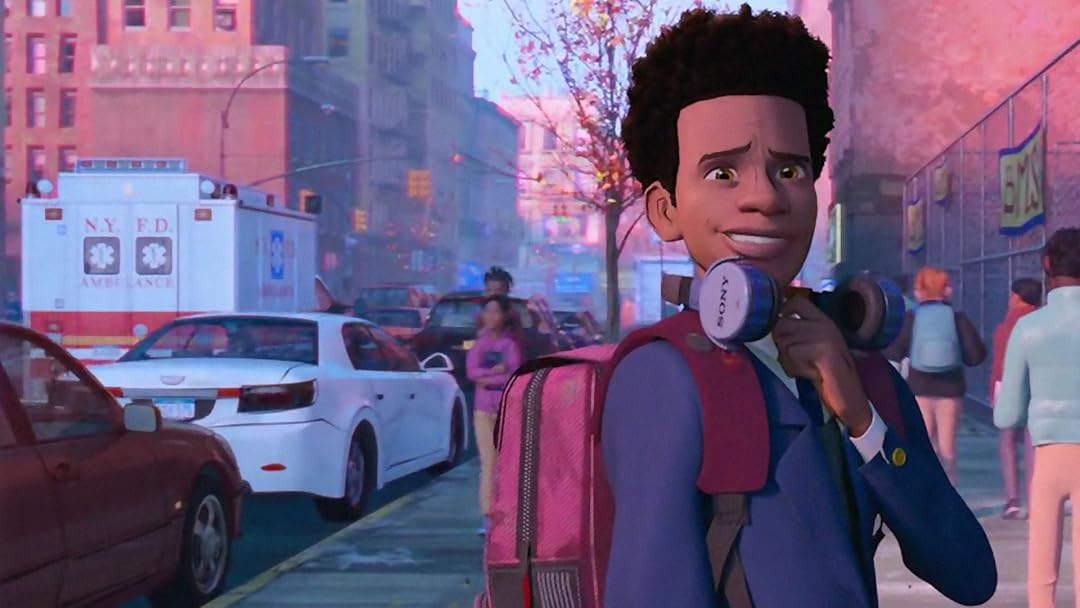
Spider-Man, one of the most beloved heroes in Marvel’s history, was engineered to follow the cookie-cutter makings of a comic book superhero. His character was written so that he would succumb to the strict binary of the white, straight, and cisgender male superhero that America loves to love. His values, sure, are noble, but the infrastructure of his character has strayed from the virtuous intentions of his creators. The Spider-Man comics and the several film adaptations that have been carried out by Marvel or Columbia Pictures have all identically copied and pasted the binary Peter Parker in one way or another. Peter Parker’s origin story doesn’t seem to change much throughout the many film adaptations carried out by actors Tobey Maguire, Andrew Garfield, and Tom Holland, yet the same brown-haired, pale skin has been casted for Spider-Man for the past 20 years–that is until, however, Spider-Man: Into the Spider-Verse was adapted into film. The booming success of Miles Morales’ introduction to the mainstream through animation brought the discussion of what Miles Morales’ character does in the sense of representation for the Black community. Into the Spider-Verse does what the other Spider-Man films don’t: it creates the on-screen representation though Miles’ Latino and Black identities that children of color yearn for. Seeing yourself on-screen is especially important, seeing as there is already a dearth in superheroes of color. Their well done animation and child-friendly nature is what makes Miles’ movies so special; they not only introduce Spider-Man to the idea of the multi-verse, but they also bring diversity of thought and identity as the movies progress.
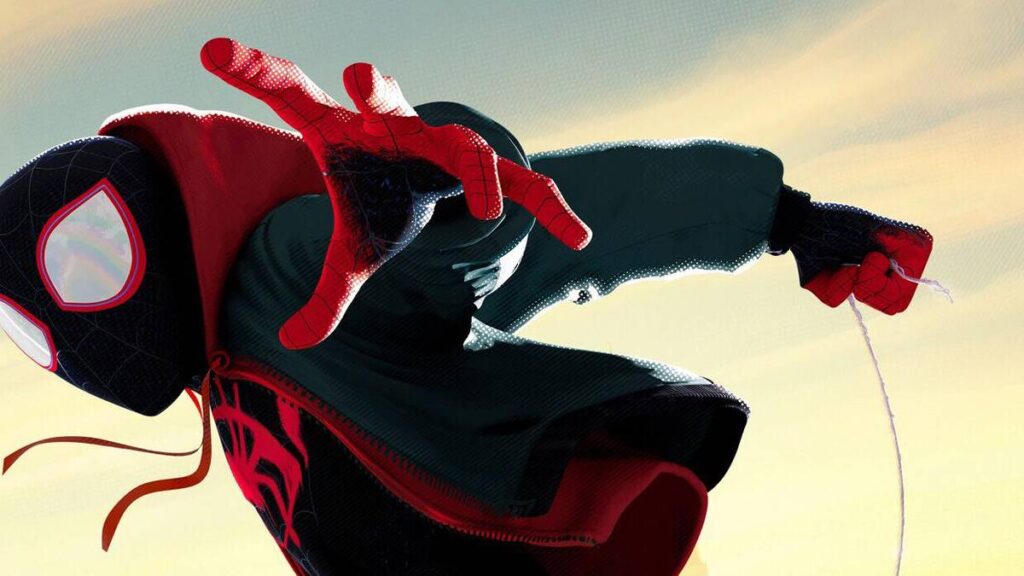
While there are many reasons for the lack of diversity in Marvel’s Spider-Man, one of the main causes of it is the opposition to diversity of character from Marvel fans. The fans are what drives Marvel’s success, especially with it being one of the most successful franchises in the world with some of the highest grossing films in history. This fact, however, only makes it more concrete that Marvel’s fans have somewhat of a control on what type of content Marvel releases. James C. Taylor mentions in his ‘Spider-Man and the Marvel Superhero in the Twenty-First Century’ that, “the Spider-Man trilogy seeks to offer a utopian vision of a multicultural citizenry collaboratively representing the identity and heroism of the US, yet this harmony is tainted by exalting the superhero through narrative and iconic tropes that privilege whiteness” (Taylor 102). Heavy criticism from fans will have the company change certain aspects of some movies, while heavy praise will influence them into creating more of the same content. Within the essay entitled ‘The Paradox of Miles Morales: Social Gatekeeping and the Browning of America’s Spider-Man,’ Brian Montes, the author, touches on this idea, and what has delayed the idea of a newer, more diverse Spider-Man character. He writes, “While many fans of Marvel’s Ultimate Comics Spider-Man series were optimistic concerning the creative direction in which a new and reimagined Spider-Man could take them, others, like Dobbs, questioned the rationale for Spider-Man’s sudden change in race and ethnicity” (Montes 1). The common theme of a distaste for departing from ‘the canon’ and creating a different identity for Spider-Man is what brought up many disputes between fans of whether or not diversity in Spider-Man’s universe should exist. Writers McKenna James Boeckner, Monica Flegel, and Judith Leggatt were quoted in an essay called ‘Anyone Can Wear the Mask’ written by Dru Jeffries, stating that, “complaints about forced diversity come from a position that always sees diversity as forced, never as organic. Those who complain about the invasion of politics into their comic books deny both the political nature of their own identities and the political nature of comic book characters.” (Jeffries 199). The majority of Marvel’s white audience was not quite ready for the change to the canon of the franchise, specifically because they do not recognize their own subtle racism in their opposition to change through diversity.
In addition to claims that surround some fans’ complacency in keeping the unfair representation within the Marvel franchise, the racial representation throughout the many film adaptations of Spider-Man is scarce and performative, often constructing people of color around Peter Parker’s white identity. Contrarily, however, Spider-Man: Into the Spider-Verse uses this blueprint and flips it on its head. Jeffries catches this, denoting that, “we see the opposite phenomenon in Into the Spider-Verse, whose centering of a Black/Puerto Rican superhero in Miles Morales is minimized by inserting additional white characters into the story” (Jeffries 201). In addition, the New York that Marvel depicts for Peter Parker is not the cultural melting pot that it is typically known as. In many issues of the comics, and sometimes in the movies, the New York of Marvel is almost completely white, erasing the rich history and diverse nature of one of the most culturally-diverse cities in the world. Specifically, Montes denotes, “it would only seem fitting that Latinas/os, and more specifically Puerto Ricans, play a prominent role in the storylines surrounding New York’s most beloved crime fighters. Regrettably, they do not” (Montes 271). Miles’ Latino identity, explored both in his comics and his movies, is one of the core aspects of his character, his mother being Puerto Rican and father being African American. Miles takes his Puerto Rican identity very seriously, having it hold much value in his relationship with his mom through their shared Spanish-speaking in their home. Sadly, however, the Latino community is not as often acknowledged in the Spider-Man trilogies, as the familiar white binary does not allow for much diversity of heritage. Montes acknowledges that fact, mentioning that often “excluded from the white spatial imaginary of Marvel Comics, Latinas/os are sentenced to exist within the margins of the panels. That is, while minorities are not actually seen, readers are to believe that they are nonetheless there, residing somewhere in the gutter” (Montes 272). Miles’ creation, while heavily debated upon by long-time fans, brought a Latino story to the forefront of Marvel’s comics, ultimately breaking norms, yet only to the extent of which Marvel allowed it to.
Contrarily, it could be argued that Marvel had no choice but to slowly integrate diversity in order to retain its fans and revenue, all the while, creating Miles Morales’ character was a ploy to appease more diverse audiences and to follow the trend towards more diverse media in pop culture. While this assertion is quite understandable, especially considering the perspective of a CEO or executives who are trying to implement more equitable and diverse practices into their company, this is not the case in this situation. One of the biggest, most hopeful refutations for this argument is the fact that the Marvel fans who are truly seeking the representation of characters like Miles Morales will only fall in love with the material further. Montes acknowledges this, stating that “many fans of Marvel’s Ultimate Comics Spider-Man series were optimistic concerning the creative direction in which a new and reimagined Spider-Man could take them” (Montes 269). These fans, now feeling an affinity for more diverse content from marvel, are more likely to recommend it to more and more of their peers. In addition, many fans had desired more representation since the very first comics. This point is discussed in ‘Anyone Can Wear the Mask’ when thoroughly discussing Spider-Man: Into the Spider-Verse, as Jeffries argues about the method by which “the film has been widely celebrated for its representational inclusivity, its ultimate theme—that “anyone can wear the mask”—legitimizes Miles as Spider-Man while also ensuring his continued subordination in the context of the broader franchise” (Jeffries 195). The meaning behind the term “anyone can wear the mask” loses its validity when the same pale, white face is placed behind it, and it is what created the buildup of structural racism that prevented Miles Morales’ character from being received with the love that he should have received. Without representation in the media, our diverse and vibrant world will not be truly understood or appreciated to its full extent. Already a critical issue in the twenty-first century, empathy (in regards to racial issues and discrimination) is scarce; ignorance is at an all-time high, and comprehension of the tribulations that people of color face is almost nowhere to be found. Media, historically, has been an escape from this madness, but only in recent years has the public been able to entertain themselves with media that represents them in a positive light. Spider-Man: Into the Spider-Verse allows the reader to slip into that peaceful escape, much unlike its predecessors of other Spider-Man movie trilogies. The consistent, cookie-cutter nature of the past movies allow fans who are comfortable in the lack of diversity to blend with their complacency and ignore the true identity of our society (specifically New York): a cultural melting pot. Through movies like Spider-Man: Into the Spider-Verse, we can move forward, into the future; this movie encompasses why “anyone can wear the mask,” no matter who they are, what they look like, or where they come from. It’s what makes Spider-Man who he is: his success isn’t just about his feats, it’s about his valor and his commitment to his community. It’s why he’s known as the ‘friendly, neighborhood Spider-Man:’ he knows exactly where he comes from, and he won’t allow himself to forget it.