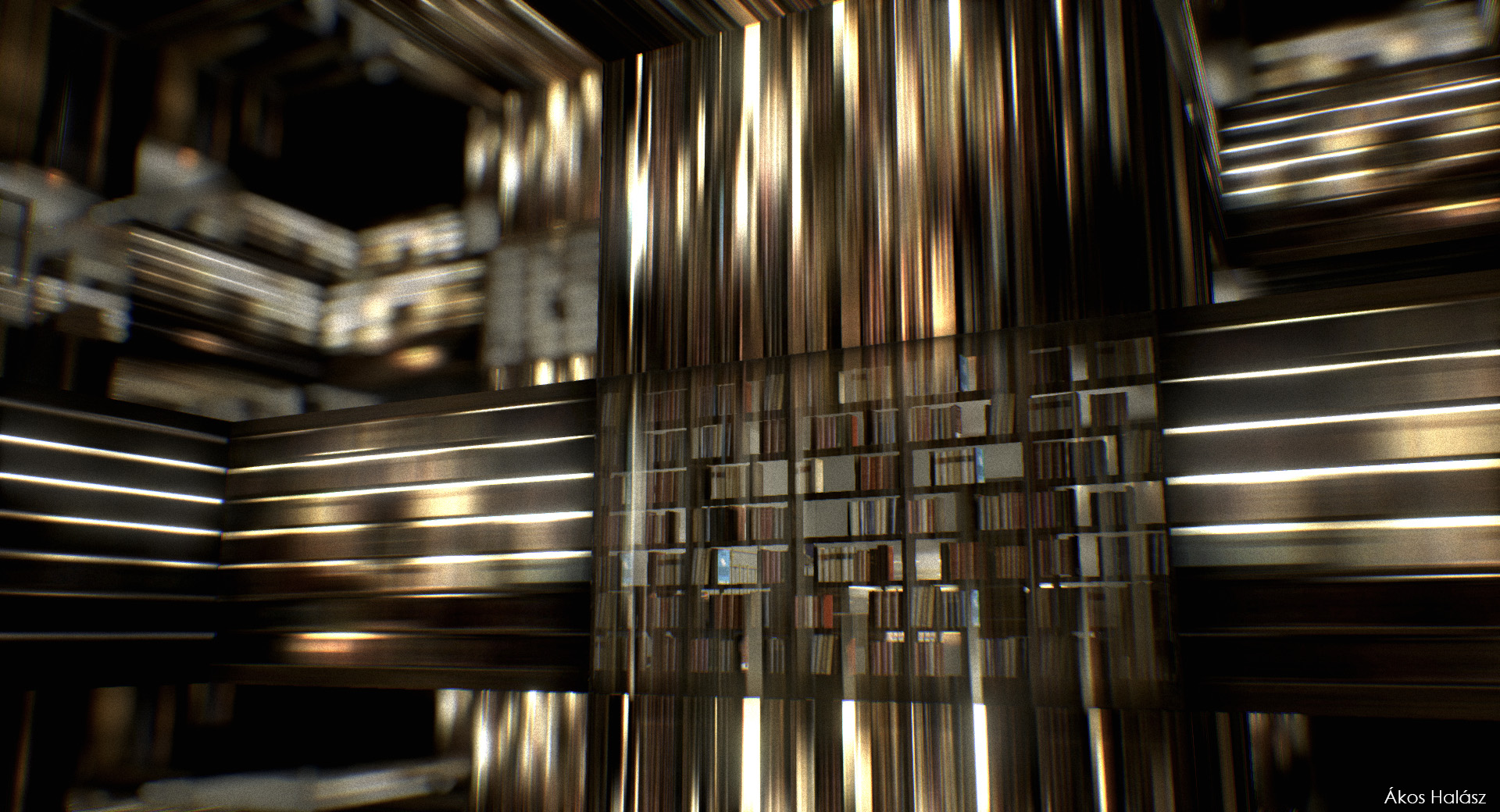
In Christopher Nolan’s Interstellar, there is a moment where the film deliberately stops making sense. Cooper falls into the tesseract as infinite bookshelves, fractured light, and a geometry that the audience can’t understand fill the screen. For a little while, the viewer stop thinking and instead immerses their full body into the scene, allowing them to feel the strangeness and infinite scale of this scene. Then a text appears, reading, “Love, Cooper — love,” and again, the film hands you the answer before you have one.
That moment is exactly what Susan Sontag was writing about in 1964. In “Against Interpretation,” Sontag argues that the critical habit of translating art into meaning — asking what does this represent? Instead of what does this do to me? — is actually a way of making art smaller and safer. Real art should make you nervous; it reaches the senses before your rational brain can understand what is happening. The tesseract scene in Interstellar is one of the recent examples of what she means: the visual structure, the unsteady camera, Hans Zimmer’s organ score — all of it leaves the audience confused at first. What follows the scene proves her point exactly: Nolan spells out the meaning, and by doing so, it weakens what the visuals had originally achieved by doing so. Interstellar is a case study that supports Sontag’s argument: when art interprets itself, it diminishes the sensory experience it had already produced.
The Image Works First
The most important thing about the tesseract sequence is the order in which things happen to you. The disorientation comes before Cooper speaks, before the score reaches full volume, and before any story logic comes back. The bookshelves extend infinitely, and there is no stable view offered to the audience. Sontag writes that “real art has the capacity to make us nervous” (5), and she means nervous physically. The nervousness is physical, not intellectual; it’s what happens when something refuses to be explained and you feel that in your body. The tesseract does this with visuals. The recursive geometry doesn’t symbolize the collapse of linear time, rather, it is collapsed time. And as an audience, you are not watching from a distance; you are inside the scene and your body knows before your brain. This is the distinction Sontag points out. When critics interpret a piece of art, they treat the surface as a metaphor, something always pointing toward a deeper and truer meaning. However, the tesseract isn’t representing anything, and what it brings to the audience is the feeling. There is nothing underneath the fractured bookshelves more real than the bookshelves themselves. Asking what the bookshelves mean is already a way of stopping feeling them by yourself.
When the Film Explains Itself
Nolan is a director who trusts his visuals to an extent, and then doesn’t. This is clearly reflected in the tesseract scene, where it works on its own for most of its runtime, but then the explanation arrives. “Love, Cooper — love.” The film created something overwhelming at first, then immediately explained it with one simple sentence. Sontag has a name for this action. She writes that “sometimes a writer will be so uneasy before the naked power of his art that he will install within the work itself—albeit with a little shyness, a touch of the good taste of irony—the clear and explicit interpretation of it” (5). The artist is unwilling to let the audience experience the scene alone, so they provide the answer. A joke is not funny anymore when it is explained. The dialogue closes what the visuals left open. It is totally fair to explain it, though. Interstellar is a blockbuster that really touches the audience, and it is completely understandable to want the audience to feel something clear alongside an overwhelming scene. But Sontag’s argument doesn’t depend on the director’s intention. When a work explains itself, it does exactly what the critics do — replacing experience with summary.
What the Score Does to Your Body
If the geometry makes the argument with your eyes, Zimmer’s score makes it with your chest. The pipe organ at high volume, with its dense low frequencies, forces you to feel it rather than hear it. You don’t hear the score the way you hear in dialogue — a background sound that implies something. Instead, it hits you physically. This is what Sontag is after when she writes that “in place of a hermeneutics we need an erotics of art” (10). An erotics of art means the body’s encounter with the work comes before the mind’s analysis of it. The score doesn’t imply emotional meaning; it delivers it without permission. This is the difference between art that talks to your mind and art that talks to your body. By the time Cooper’s daughter speaks, the organ has already changed something in the audience, in a place that the dialogue can’t reach. The timing of the score matters here too. The score arrives before the explanation does, allowing the body to react first. And whatever the dialogue says after, it’s saying it to someone who Zimmer’s score has already changed. This is Sontag’s erotics of art working as she described — the senses get there before the intellect has a chance to manage the experience.
Conclusion
When we over-interpret art, we miss what it actually does to us. The tesseract scene is a perfect example: the infinite bookshelves, the wrong geometry, and the score, hitting you before your brain can catch up. But the moment the dialogue appears “Love, Cooper — love,” the experience becomes a puzzle with an answer, and the strange feeling starts to drain out. If we always demand that art explain itself, we stop feeling it. We turn something that lived in our bodies into something that lives in our heads. And in doing so, we lose the only thing that made it matter in the first place — our actual feelings. Sontag’s call for an erotics of art is really just a reminder: the right question to ask is not what does this mean, but what does this do to me. The tesseract already knows the answer. You just have to allow yourself to feel it.
Works Cited
Sontag, Susan. “Against Interpretation.” Against Interpretation, Picador, 1966, pp. 1–10.
Nolan, Christopher, director. Interstellar. Warner Bros. Pictures, 2014.