
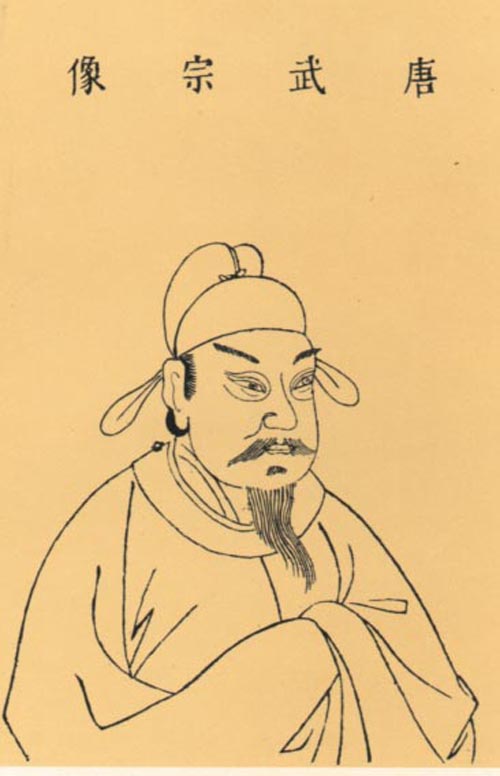
Clash and Collapse: The Legal Interactions between Buddhist and Dynastic Laws in Tang Dynasty
Conger Wang, University of Edinburgh
Conger Wang is a fourth-year undergraduate student at the University of Edinburgh (2022–2026), pursuing an Honours degree in History. Her research interests fall in the global history of ideas generally. She has published peer-reviewed articles in History Society x Retrospect Journal by the University of Edinburgh and Casopis Obscura by the Charles University, with topics ranging from Mussolini’s cult of personality to the Keynes-Hayek Debate. Conger has presented original research at multiple international conferences, including the China Work Group at KU Leuven (June 2025), the Conference on Intelligent Communication in Digital Humanities at East China Normal University (June 2025), the Cracovian Congress of History Students at Jagiellonian University (May 2025), and the online International Undergraduate History Conference hosted by the University of Maryland Global Campus (April 2025). Beyond academia, Conger has worked as an Assistant Curator at the Southern Song Official Kiln Museum and is a professional-level pianist.
It exhausted the empire’s labours in architectures; deprived its wealth in adorning temples; drawing people into the mentorship of its own order, and thus sowed discords between the emperor and his subjects, parents and their children; and separated spouses from each other. Nothing is more harmful than the Buddhist law.
— Emperor Wuzong of Tang
The Decree on the Destruction of Temples and Laicization of Monks and Nuns
勞人力於土木之功,奪人利於金寶之飾,遺君親於師資之際,遠配偶於戒律之間,壞法害人,無逾此道。
— 唐武宗《毀佛寺勒僧尼還俗》1
The statement cited above is extracted from Emperor Wuzong of Tang’s (r. 840–6) decree ordering the persecution of Buddhism in 845.2 This decree worths exploration because it expressed the imperial concern over the rise of Buddhism, and portrayed Buddhism as an aggressively expanding religion possessing the ambition and potential to swallow the resources of the Tang empire, which image diverged dramatically from what was preached in the Vinaya demanding renunciation from desires and observations of the ‘formless world.’3 This essay then seeks to explore how the Buddhist laws transformed into a real source of anxiety for the secular emperor with particular focus on the legal interactions between the dynastic and Buddhist laws.
Wuzong’s persecution against Buddhism is named after his reign as Huichang Persecution (會昌滅佛), which was a wholesale suppression of Buddhism carried out between 840 and 846, culminating in the massive destruction of temples and laicization of monks and nuns in 845.4 It is known as the only one amongst the four persecutions against Buddhism in China that encompassed the entire territory of the empire. The Huichang Persecution has aroused significant scholarly interests. Regarding the motivations of Wuzong, scholars have identified three aspects in general. Scholars such as Yu Furen (于辅仁) emphasizes the political rivalries between Wuzong and Xuanzong (宣宗) and argues that the persecution was mainly triggered by the rumour that Xuanzong was hiding in monasteries.5 Represented by Li Wencai (李文才) and Tang Yongtong (汤用彤), some scholars highlight the role played by Wuzong’s favourite subject, Li Deyu (李德裕), who was subscribed to Daoism and held consistent hostilities against Buddhism.6 Also, a large number of scholars have contended that the major driver of the Huichang persecution was the economic competition between the court and the Buddhist institutions.7
This essay intervenes in the field by introducing the legal aspects into it, attempting to answer the question: how did the legal interaction between the court and Buddhism ultimately lead to Wuzong’s denunciation and persecution of Buddhist laws as ‘the most harmful of all’? It argues that the unfortunate fate of Buddhism during Huichang era was almost an inevitable consequence of the long-term interactions between the dynastic and Buddhist laws. The original laws laid out in Vinaya largely compromised its rigidness and sacredness to accommodate the local society in Tang, which allowed the monastics to engage in secular affairs and build corresponding networks at the expense of the increasingly blurred boundaries between laymen and monastics. Nonetheless, with or without intention, their secular engagement constituted competitions with and posed threats to the court and undermined the legitimacy of the dynastic laws. The long-accumulated tensions ultimately erupted during Huichang.
This essay’s structure closely mirrors the decree cited above. Section I introduces the primary sources. Section II through V each addresses one of the decree’s themes: ‘exhaustion of labours’; ‘deprivation of wealth’; ‘sowing discords’; and ‘separation of spouses,’ before concluding in Section VI.
I: Primary Sources
Despite other fragmentary documents excavated from Dunhuang and Turfan, certain contemporary literatures, and a few epitaphs that this essay may cite from other secondary sources, it mainly draws evidence from four groups of primary sources, which are listed below:
The T’ang Codes with Commentary (《唐律疏議》), the official laws of Tang dynasty, was composed by Zhangsun Wuji (長孫無忌), the brother-in-law of Tang Taizong (唐太宗) between 624 and 653 AD.8 It was a compilation of normative rules regulating people’s behaviours, including the Codes (律), the statute (令), the regulation (格), and the ordinance (式).9 It was still in use during Huichang persecution.
The Old Book of Tang (《舊唐書》) is the official history of Tang dynasty composed during the Later Jin dynasty (936–47AD) under the commission of Emperor Gaozong of Later Jin and the supervision of Liu Xu (劉昫).10 The Essential Records of Tang Dynasty (《唐會要》) was composed in Northern Song dynasty by Wang Pu (王溥) to record the imperial reformations in Tang dynasty in 961 AD.11 The two provided detailed accounts of the politics, culture, and institutions in Tang dynasty, and the large amount of Royal Decrees collected within are particularly relevant to this essay.
The most prominently used Buddhist law during Tang dynasty was the Sifenlv Shanfan Buque Xingshi Chao (《四分律刪繁補缺行事抄》SSBXC hereafter), which is a systematic compilation of Buddhist regulations by Daoxuan (道宣) based on the fifth-century translation of Dharmaguptaka-Vinaya with supplements of many quotations from many other Vinayas and scriptures.12 Because it is still controversial which version of Vinaya was the basis for the original translation, this essay goes to the generally-agreed earliest version, the Pali text Bhikkhu-Patimokkha for reference and comparison.13
The fourth is Ennin’s Diary: The Record of a Pilgrimage to China in Search of the Law (《入唐求法巡禮行記》), which is a travelogue written by Ennin, a Japanese monk who pilgrimaged to Tang China between 838 and 847. It provided a vivid account to observe how Huichang Persecution was carried out.14
II: ‘Exhaustion of Labour’
A. Monks and Nuns
Examining the biography of Li Deyu, one of the most important advocators of the persecution, this essay discovers that he consistently attacked Buddhism throughout his career. His most eloquent speech was delivered in 824, where he claimed: ‘I heard that in Sizhou, if a household has three sons, one will be sent to monasteries to avoid corvee labours and to acquire tax exemption for the household’s assets…if no prohibition against such practices is issued, our emperor will lose sixty thousand labourers in the south of Jiang and Huai.’15 The number was probably not Li’s exaggeration. According to Essential Records of Tang, the total number of laicized monks and nuns reached 265,000.16 Of all the territories under the Tang, imperial persecution was especially intense in the Jiang and Huai regions.17 Given that Li had personally been to Sizhou, this essay regards the number as approximately accurate.
What Li was condemning was the phenomenon that some people took the imperial grant of tax and corvee labour exemption over monastics as a legal loophole to secure advantages for themselves. The sheer number quoted above could demonstrate the severity of this issue. However, noteworthily, the imperial grant of exemption entailed prices for Buddhism. In fact, Buddhist laws largely compromised their independence in exchange for the grant. To a significant degree, they lost their autonomy to admit new inmates because of the exemption. For the exemptions to be granted to a certain individual, the individual in question had to be registered and to some extent, selected by the granter, which was exactly what happened between the Buddhist community and Tang court. The T’ang Code with Commentaries Article 154.1a clearly regulated that ‘in all cases of unauthorized ordainment as a Buddhist Priest, both the person who was ordained as well as the person who performed the ordainment were punishable by 100 blows with the heavy stick.18 Also, the sub-commentary stated that once sentenced to be laicized, one was deprived of the rights of wearing religious clothes, and the violation of this regulation also entailed 100 blows with the heavy stick.19 The certificate issued by the court in expression of the imperial approval to one’s ordinance was named ‘Dudie (度牒).’ The Essential Records of Tang reported that in May 846 the emperor Wuzong issued a Royal Decree to entitle the Department of Ci (祠部) to distribute Dudie when necessary.20 Even the Buddhist laws compiled by Daoxuan were clear about this, as he laid out the initial screening criteria for the ordination as ‘secretly ordaining those without the consent of their parents or the permission of the king’s laws is a serious breach of the Vinaya rules.’21 Therefore, the admission of new monks and nuns was largely regulated by the dynastic, instead of the Buddhist laws, which implied the superiority of the dynastic over the Buddhist laws. This was a dramatic adaptation of the original Vinaya text. As in the section ‘Unqualified Persons,’ the Pali text focused purely on the evaluation of one’s morality, and the religious institutions were responsible for the evaluation.22 Just like Buddha himself, the process of ordainment shall be an enlightenment instead of an examination.23 It is then fair to argue that it was initially a compromise made by Buddhist laws to transfer its right to ordain new inmates in exchange for the exemption.
The transference of the power to ordain new inmates to the secular court became troublesome during and after the Anlushan Rebellion (755–63), since the Court publicly engaged in the business of selling Dudie to enrich the treasury, which meant selling a certificate for the exemption from corvee-labour and taxation.24 For example, during Suzong’s (肅宗) reign (756–62), the court “placed altars in large scale to sell Dudie; those who wished to be ordained had to pay 100 guan of ‘Xiangshui’ money.”25 Since the establishment of the precedents, such practices continued to spread amongst local officials and proved extremely difficult to eradicate despite repeated prohibitions later on.26 70 years later, Wenzong (文宗) was still trying to regulate such practices with Royal Decrees, but with little effect, as the monasteries continued to expand dramatically throughout the century.27 Scholars such as Wei Chengsi has estimated that in the mid-ninth century, the number of the ordained (exempted from corvee-labour and taxation) reached 700,000 whereas the number of households paying taxes was approximately 3,000,000.28
Subsequent compromises within Buddhist law further eroded the boundaries between lay and monastic communities. Due to the apparent pragmatic instead of ideological reasons for people’s ordainment and the limited accommodation capacity of monasteries, the special population of “nuns and monks staying at home” radically expanded until the persecution.29 For example, an epitaph was discovered commemorating a “nun staying at home” named Zhi Zhixian, whose ordainment was out of purely pragmatic reasons, inferring from her quick conversion to Daoism immediately after the persecution.30 Such practices drastically diverged from the original doctrine, as the Pali text rigidly demanded the physical isolation between monastics and laymen as laid out in the section ‘Boundary (Sima).’31 Therefore, the rapid expansion of Buddhism before the persecution was more a reaction towards the dynastic legal practices than an intentional aggression, and the expansion entailed the cost of blurred boundaries between the monastics and laymen.
Through the process of granting Dudie to those qualified for corvee-exemption, the dynastic laws established superiority over their Buddhist counterparts. The provisional laws legalizing the selling of Dudie facilitated the drastic expansion of Buddhist communities and to some extent forced the gradual dissolvement of boundaries between laymen and monastics. Therefore, the enlargement of the number of monastics was essentially the outcome of the aggression of the dynastic laws and the compromise of Buddhist laws.
B. Dependents
In a decree issued in 843, Wuzong announced that he had forced the laicization of approximately 265,000 monks and nuns, and about 150,000 slaves, which were to be enrolled into tax-rolls.32 This was a rather awkward expression, because neither the Buddhist laws nor the dynastic laws defined these people as ‘slaves.’ The only reference this essay could find in the original text denoting the monastics’ use of servants was in the passage “The training precept on the king,” in which the symbol of the secular world, a robe sent by the king, had to be transferred to the monastics via the hands of a veyyavaccakaro (steward) or a kappiya-karaka (servant).33 Probably extended from this exception, Daoxuan’s SSBXC allowed the monastics to use the labour of two groups of people: Jingren (pure persons) and Jiaren (family)—both were lay workforce of the Buddhist monastery—though in none of his writings did he define them.34 The reasons behind the permission was that though monastics were prohibited by Vinaya rules to approach activities or stuffs which were “unpure,” these activities or stuffs would be necessary in real life, and thus certain laypeople could be employed to do the ‘dirty works’ for the monastics.35 Though scholars generally agree that the status of those individuals in monasteries was parallel to secular slaves, rarely if ever, did the word ‘slaves (nubi, 奴婢)’ explicitly appear in documents produced by monastics themselves.
The problems arose again from the legal interactions between Buddhist and dynastic laws. The T’ang Code divided the population into three legal statuses: commoners, personal retainers, and slaves, with clear boundaries set between them.36 Clearly, monastic institutions used some secular slaves as servants. As the 843 decree announced, the persecuting authorities returned some slaves to their original masters or, if those masters were no longer alive, turned them over to the government for sale.37 However, a great number of evidence demonstrates that prior to the persecution, monasteries made use of not only slaves but also commoners and personal retainers as jingren and jiaren. For example, in 840, when Bai Juyi was building the Sutra-Collection Hall of Xiangshan Temple, he recorded his encounter with 7 Jingren who voluntarily dedicated themselves to monasteries.38 The word ‘voluntarily’ indicated that they were commoners before entering the monastery. Despite the fact that the court was clearly aware of the mixture of commoners and slaves amongst the population of jingren and jiaren, Wuzong’s decree simply adopted the word ‘slaves’ to refer to the jiaren and jingren in monasteries, which revealed the fact that the nature of the services provided by those people was regarded as equal to slavery. It also reflected an implicit anxiety of the emperor over the blurred boundary between the three different legal statuses in the monasteries that were in close contact with the secular society, as he himself could not think of a more appropriate word to characterize the dependent population.
The threats posed by the monasteries’ practices of recruiting jingren and jiaren to the court were thus twofold: firstly, the commoners who might have served as corvée-labours and taxpayers instead became dependents of monasteries, offering their labour in return for the livelihood and protection from the monasteries, thereby depriving the court of potential opportunity to extract revenues from them; secondly, the monasteries’ recruitment of jingren and jiaren disrupted the legal hierarchy of identities established by The T’ang Code. Therefore, to adapt to Tang society, Buddhist laws made major compromises by recruiting large numbers of laymen as servants, blurring the boundary between monastics and laity. This undermined the secular legal order by hindering the emperor’s ability to mobilize his subjects and disrupting the status hierarchy established by The T’ang Code.
III: ‘Deprivation of Wealth in Adoration of Temples’
The economic motivations were nonnegligible in driving the persecution. Ennin in his diary recalled a decree issued by Wuzong in the tenth month of 842 highlighting that all properties of those refusing to be laicized would be confiscated.39 At that time, the cultivatable lands owned by the Buddhist community reached the size of 40,000 hectares (4% of the total cultivatable lands of the empire).40 Also, scholars estimate that the annual expenditure of a small temple was roughly 200,000 wen; a large temple’s annual expenditure constituted no more than 1/3 of its cash reserve.41 Therefore, the seizure of monastics’ properties meant large enrichment of the treasury.
However, despite the economic gains acquired through enlistment into tax-rolls and confiscations, the Court had one particular concern: the acquisition of the precious metals worked to decorate temples.
A brutally vivid image of destruction was depicted in Ennin’s diary entry of the sixteenth-day-of-the-eighth-moon in 845: “they have peeled off the gold from the Buddhas and smashed the bronze and iron Buddhas and measured their weight. What a pity!” Before that, on the twenty-eighth-day-of-the-sixth-moon, he recorded witnessing an imperial order’s arrival ordering all the bronze and iron Buddhas to be smashed, weighed, and handed over to the Salt and Iron Bureau.42 The swift enforcement of the Order was probably because it had been planned long before the persecution. The Essential Record of Tang collected a Royal Decree issued in 824, declaring that all activities of melting coins to build Buddhist images shall receive the same punishment as privately minting coins.43 According to Tang Code 391.1a, the punishment was life exile for 3,000 li.44 Therefore, instead of a purely lucrative plunder, the Huichang confiscation of temple gold should be understood as an outcome of a long-standing tension between the court and Buddhist monasteries over precious metals.
The early text set clear prohibitions against monastics handling precious metals. As regulated in ‘The Training Precept on Silver’: if any bhikkhu should take gold and silver, or should have it taken, or should consent to it being deposited for him, this involved expiation and with forfeiture.45 When Daoxuan compiled the SSBXC in the seventh century, Buddhism had been rooted in China for centuries.46 At that time it had become evident that practices of handling precious metals had flourished amongst monastics, and Daoxuan, though dissatisfied with such practices, amended the text by expressly acknowledging the monastery’s collective ownership of precious metals—a form of recognition that has no identifiable parallel in the Pali text examined in this essay.47
S.E. Grafton has noted the sacred and immortal qualities of gold in religious literature around the world to explain the almost universal phenomenon of golden decoration of religious items.48 However, in the Tang dynasty, the lavishness of golden temples had another specific reason—the numerous imperial patronages.49 A great number of artifacts were excavated from the underground palace of Famen Temple in today’s Xi’an in 1987, and a stone monument at its entrance recorded a series of imperial donations made before 874, amongst which 129 were made of precious metals.50 At the heyday of Tang’s economic strength, the court formulated a friendly relationship with the Buddhist community. Empress Wu (r.690–705) even openly proclaimed herself as cakravartin (universal Buddhist sovereign).51 Also, in 818/819, Xianzong(宪宗) held a grand ceremony to receive another Buddha’s relic, which he claimed had blessed him a victory.52 It is then fair to conclude that throughout the Tang dynasty before the persecution, imperial donations of precious metals and patronage over constructions of grand images were prominent, and in most ceremonies, the most high-ranked monastics had to be present to pay respect to the crown. In response to the imperial generosity, the monastic law further compromised its sacredness, placing itself at an even more inferior position. A Xuzhou Official named Wang Zhixin, proposed to build a lavish altar in celebration of the birthday of the newly crowned emperor Jingzong to apply for funding.53 Such practices further undermined the rigidity of Buddhist laws by blurring the boundary between laymen and monastics.
Clearly, the second charge levelled against Buddhism by Wuzong referred to the massive wealth possessed by the monasteries, especially the numerous precious metals used in adoration of temples which the court desperately needed. Nonetheless, turning back the clock, the Buddhist laws largely compromised their rigidity to accommodate the Tang society, particularly in their interactions with the imperial court. The reworked texts acknowledged the practice of monasteries collectively possessing precious metals; monks accompanied secular rulers to receive holy relics; and officials sometimes proposed to build Buddhist altars to celebrate an emperor’s birth. The massive imperial patronages and involvement in building and adorning the temples illustrated that the lavish decoration of the temples at the time of Huichang was more an outcome of the monasteries’ inevitable interaction with the imperial power than their intentional agenda. However, the reasonings mattered for historians, not for Wuzong; the gold, silver, and bronze on Buddha’s bodies were sufficiently attractive for him to persecute.
IV. ‘Sowed Discords between Emperor and his Subjects, Parents and their Children’
The third accusation put against Buddhism by Wuzong cited above referred to the monastic role in education. Because Huichang was an imperial persecution, this section centres on unravelling the process of how Buddhist laws ‘sowed discords between the emperor and his subjects.’
The original Pali text indeed intensively discussed Buddhist education, but most of the discussions referred to the teachings of sutra recital strictly within monasteries, from senior to young monks.54 There was only one exception mentioned in the introduction implying that possibly on some specific days, the monastics would assemble to teach the laity about the Buddhist doctrines.55 Such rigidness had largely disappeared in the Buddhist laws in Tang dynasty. Probably because since Buddhism arrived in China it had shouldered some charitable responsibilities, in the text translated in the fifth century (Sifenlv四分律), the Buddhist laws compromised to allow monastics to take orphans into monasteries as ‘crow-chasers (quwu 驱乌)’ to perform the lightest menial tasks.56 It is generally agreed among scholars that the practices of admitting ‘boys (tongzi 童子)’ and ‘practicants (xingzhe 行者)’ during Tang dynasty evolved from this tradition.57 The two were together called postulants who stood halfway between the sacred and secular: they could keep their hairs; they observed the laymen’s Five Rules instead of the novice’s Ten Rules; but they lived in monasteries, received Buddhist education, and provided services for the monasteries.58 The requirement for them to be accepted as a novice was the minimum of one-year service for the monasteries.59 Daoxuan’s attitude towards such practices was ambiguous, because despite the clear presence of such practices before the seventh century, his SSBXC did not mention them. It was only in the late eleventh century that the statuses of these groups were clarified.60 Given the fact that Daoxuan expressly condemned some other “corrupted behaviours” of the monastics, his silence over this issue may imply his acquiescence, which itself manifested a legal compromise of Buddhism.
Due to the early age of some postulants, the monasteries had to provide not only the classic Buddhist education, but also some basic literary education. An abundance of writing exercises were found in Dunhuang (e.g., P3114, S5491, S2703 in Appendix) based on the copy of ‘One Thousand Characters’ (qianziwen 千字文), which was known as an early education textbook in China.61 The affordable and high-quality education provided by the monasteries attracted many lay students, who had no intention to be ordained but wished to be taught in the monasteries. Some name-lists found in Dunhuang suggested that a large proportion of ‘students’ in Tang monasteries remained laypeople throughout their lives, which phenomenon dramatically intensified since the ninth century.62 A Chinese scholar, Yan Gengwang (严耕望) conducted a detailed research on the biographies of Tang celebrities, and he listed more than 200 instances in which individuals who would later become prominent generals, poets or administrators declared that they had studied in Buddhist monasteries in early years.63 For example, Li Zhi (李騭), who later became the imperial courtier, had spent 3 years in Huishan Monastery at Wuxi around 830.64 Noteworthily, in his biography, he claimed that he had studied not only the Buddhist doctrines and literary skills, but also some Confucious classics, including Shiji (史記), Hanshu (漢書); Zhuangzi (莊子); Han Feizi (韓非子), and Li Sao (離騷). Up until then, the monastics’ practices not only compromised the Buddhist laws, but directly contradicted it, since they were actively teaching and advocating secular writings rather than merely receiving them.
The monastic engagement with secular education was indeed an extremely dangerous practice, and signalled a threat to the Tang court. Firstly, the monastic education was in direct competition with the state-sponsored institutions—Xiangxue (鄉學) in local regions. Two ninth-century Buddhist biographies for Niu Yun (牛雲) and Chang Jue (常覺) explicitly mentioned that the two monks became ‘boys’ because they despised the education of Xiangxue and wanted to quit it.65 Such open competition undoubtedly aroused worries for the court. Secondly, the monastic involvement in education challenged the core value and essential principle of the dynastic laws. In Chapter 1 of The T’ang Code, the phrase “governmental teachings” appeared simultaneously in the beginning (1a) and in the end (11b) of the first five pages laying out the guiding principles.66 In another words, the entire Tang Code started by stating that ‘no penal laws were promulgated except in accord with the moral teachings concerning government,’ and ended by declaring that ‘virtue and ritual are the basis of governmental teaching; punishment and chastisements are the instruments of governmental teaching.’ The T’ang Code thus made it crystal clear that governmental teaching was the core of the entire dynastic legal system. The laws were nothing more than instruments to educate people to be qualified subjects of the imperial government, which was deemed to be the prerogative of the secular world and had to be controlled by the court. The monastic involvement then undoubtedly triggered significant imperial anxieties.
Proceeding from the above two points, most importantly, the engagement with education allowed the monasteries to cultivate political networks and intervene in secular politics. Yan’s list of more than 200 prominent individuals who had studied in monasteries was striking because he only counted those significant enough to have their own biographies, which meant that a large portion of important politicians had been influenced by Buddhist education, and thus it was legitimate for the Crown to worry about potential monastic manipulation of secular politics, especially if he himself was not subscribed to Buddhism. One of the triggers of the persecution was the rumour that Wuzong’s rival, Xuanzong, was hiding in monasteries, given that Xuanzong had frequently visited scenic monasteries in his youth (at that time, this was synonymous to having received certain monastic education).67 No matter whether the rumour was true or not, the important fact is that Wuzong regarded it as possible, which meant that monastics had clearly forged threatening political networks at that time. For now, they had diverged dramatically from the doctrinal text demanding isolation from the secular world.
All of this began with Buddhist laws’ compromise and acquiescence. It began probably as a pragmatic or charitable effort to secure a foothold in the local society for Buddhist monasteries to shelter and educate lay orphans; this practice gradually grew beyond control, developing into formulations of vast educational networks capable of manipulating politics. Via education, Buddhist laws posed fundamental threats to the dynastic laws, and the latter then relied on the ultimate source of power in a traditional society—the imperial power—to destroy its enemy. The Huichang persecution was the last domino to fall after prolonged hostilities.
V. ‘Separation of Spouses’
The last accusation fell on the role played by Buddhist laws to destroy marriages, which was easy to understand at first sight, because Buddhist laws were well-known for advocating celibacy. Placed as the third of the eight precepts, a monastic ‘abandons non-celibacy… abstaining from the sexual vulgar act.’68 Nonetheless, Wuzong referred to not only this, but also that the refined Buddhist laws accommodated an alternative option for women in the Tang dynasty, which largely undermined the authority of the dynastic laws and the “governmental teachings.”
In Daoxuan’s reworked version of Vinaya, monks were allowed to provide deathbed comforts and funerary services for laymen, which provision this essay did not find a parallel in the early text. As laid out in SSBXC’s Chapter on ‘Attending to the Sick and Caring for the Dead,’ he specifically detailed two burial approaches described in the Vinaya: cremation (fire burial) and forest exposure.69 This was problematic since it directly contradicted The T’ang Code, which regulated that ‘if a corpse is burned, the punishment is three years of penal servitude.’70 The more problematic issue was that such Buddhist laws attracted a group of prominent women, and their embracement of the burial-approach according to Buddhist laws entailed their refusal to be buried with their husbands, which violated one of the fundamental values underlying the dynastic laws: the reinforcement of the harmony between Yin (wife) and Yang (husband).71 A large corpus of epitaphs commemorating deceased women from the Tang dynasty reveals that these women explicitly expressed a desire to have their bodies separated from their husbands in burial, citing their belief in Buddhist law.72 For example, in the ‘Epitaph Inscription and Preface for the Lady Magistrate Du, Warehouse Official in the Leading Guard in the Great Tang’ were the following words: As a Buddhist devotee, his wife refused the traditional Confucian couple burial, but chose the Buddhist stupa burial… People moved the grave to the side of the stupa in accordance to her will.73 Such practices aroused significant resentment. For example, Bai Juyi, writing in the mid-eighth century, authored enormous poems to reinforce the Confucious tradition of couple-burial, such as “(Me and my wife) Alive are intimate roommates; dead are dusts in the same tomb.”74
For this essay’s purpose, it is then fair to establish that given the prominence of the women’s identities and the flourishment of such practices, the practices of women’s burials according to Buddhist laws constituted a disruption to traditional marriage practices and corresponding dynastic laws, which probably was the foundation of Wuzong’s last charge against Buddhist law, though the refined Buddhist law itself was initially a result of interactions with the local society.
Section VI: Conclusion
Through an in-depth analysis of the implications behind the words of Wuzong’s Decree on persecuting Buddhists, this essay finds that throughout Buddhist law’s interactions with the local societies and dynastic powers in Tang dynasty, the Buddhist aws largely compromised their rigidity and sacredness with the boundary between laymen and monastics largely blurred. Daoxuan reworked the Vinaya to accommodate the imperial intervention into ordainment, to allow the de-facto employment of slaves, to legitimize the monasteries’ collective ownership of precious metals, to shelter and educate laypeople, and to provide funerary services to secular individuals.
Unfortunately, the more efforts the Buddhists put into adapting their laws, the more threatening they were in the court’s eyes because the secularization of Buddhist laws entailed growing challenges to dynastic laws’ authority. Over time, Buddhist law increasingly positioned itself in comprehensive competition with dynastic law, with some provisions largely undermining the authority of the latter. The Huichang Persecution was an eruption of the prolonged tensions arising from the interactions between two incompatible legal systems. The dynastic laws relied on imperial power to eliminate their religious rival.
Bibliography
Bai, Juyi. “Records in Building Xiangshan Temple.” Gushiwen. Accessed 31 October 2025. https://www.gushiwen.cn/shiwenv.aspx?id=e591ee6e67f.
Cao, Lvning. “Lun Li Deyu yu Huichang Miefo zhi Guanxi—Du ‘Suitang Fojiao Shigao’ Zhaji.” [The Role Played by Li Deyu in Huichang Persecution—Comments on “The History of Buddhism in Sui and Tang Dynasty”]. Journal of Qinghai Normal University (Philosophy and Social Sciences Edition) 3 (June 1989): 55–8. https://doi.org/10.16229/j.cnki.issn1000-5102.1989.03.012.
Dalby, Michael. T. “Court Politics in Late T’ang Times.” In The Cambridge History of China. Edited by Denis C. Twitchett. Cambridge: Cambridge University Press, 2008.
Daoxuan. Sifenlv Shanfan Buque Xingshi Chao. [Dharma-gupta-vinaya Rules]. T. No. 1804.
Dong, Xiaojia. “Baizhanting Huihuai Shengxiang Yundong yu Tang Wuzong Huichang Miefo Yitong Chutan.” [A Comparison Study of the Iconoclasm in Byzantium and the Demolishing of the Buddhism during the Hui Chang Period in Tang Dynasty]. Journal of Mianyang Normal University 29, no.12 (December 2010): 49–52. Http://doi.org//10.16276/j.cnki.cn51-1670/g.2010.12.008.
Ennin. Ennin’s Diary: The Record of a Pilgrimage to China in Search of the Law. Translated by Edwin O. Reischauer. Ronald Press Company, 1955.
French, Rebecca Redwood and Mark A. Nathan. “Introducing Buddhism and Law.” In Buddhism and Law: An Introduction. Edited by Rebecca Redwood French and Mark A. Nathan. Cambridge University Press, 2014.
Gethin, Rupert. The Foundations of Buddhism. Oxford University Press, 1998.
Hung, I-Fang. “Lun Famensi Tangdai <Yiwuzang> zhong de Geti Liangci.” [Individual Classifiers in a Tang Dynasty “Articles Tablet” at Famen Temple]. Chinese Studies 24, no.2 (December 2005): 135–70.
Jiang, Aihua and Lang Lang. “The Buddhist Impact on the Last Testament of Women in Medieval China.” Religions 13, no. 11 (November 2022): 1076–89. https://doi.org/10.3390/rel13111076.
Johnson, Wallace. “General Principles of the T’ang Code.” In The T’ang Code Volume I: General Principles, edited and translated by Wallace Johnson. Princeton University Press, 1979.
Knaller, Regina and Florian Ströbele. “The Heritage of Tang Dynasty Textiles from the Famen Temple.” Studies in Conversation 59, no. 1 (2014): S62–S65. https://doi.org.eux.idm.oclc.org/10.1179/204705814X13975704317912.
Li, Wencai. Suitang Zhengzhi yu Wenhua Yanjiu Lunwen Ji. [Collected Essays of Li Wencai on the Social and Cultural Study of Sui and Tang]. Edited by Wang Mingsun. Huamulan Wenhua Chubanshe: 2015.
Liu, Yimin. “Local Perspectives on Monastic Practices in the Jianghuai Region during the Mid-to-Late Tang Period: Ordination Altars, Social Networks, and the Cult of Sengqie僧伽.” Religions 16, no. 6 (June 2025): 781–802.
Natatusita, Bhikkhu. Analysis of the Bhikkhu Patimokkha. Buddhist Publication Society, 2014.
Pu, Chengzhong. “Slaves (nubi奴婢) in Daoxuan’s Vinaya Writings.” Studies in Chinese Religion 2, no. 1 (2016): 18–44. https://doi.org/10.1080/23729988.2016.1153291.
Smith, Grafton Elliot. Human History. Jonathan Cape, 1934.
Sokolova, Anna. “Building and Rebuilding Buddhist Monasteries in Tang China: The Reconstruction of the Kaiyuan Monastery in Suzhou.” Religions 12, no. 4 (April 2021): 253–67. https://doi.org/10.3390/rel12040253.
The T’ang Code, Volume I: General Principles. Translated by Wallace Johnson. Princeton University Press, 1979.
The T’ang Code, Volume II: Specific Articles. Translated by Wallace Johnson. Princeton University Press, 1997.
Tang, Yongtong. Tang Yongtong Quanji Volume II. [Collected Essays of Tang Yongtong Volume II]. Edited by Wang Shuhua, et. al. Hebei Renmin Chubanshe, 2000.
Wang, Fu. Essential Records of Tang. Chinese Text Project. Accessed 31 October 31 2025. https://ctext.org/wiki.pl?if=gb&res=243258&remap=gb.
Wei, Chengsi. “Tangdai Jinji he Fojiao Xingshuai.” [The Tang Economy and the Fluctuations of Buddhism]. The Voice of Dharma 4, no. 4 (1988): 4–9. http://doi.org/10.16805/j.cnki.11-1671/b.1988.04.001.
Weinstein, Stanley. Buddhism Under the T’ang. Cambridge University Press, 1987.
Yan, Gengwang. Tangshi Yanjiu Conggao. [Draft of Research on Tang History]. New Asia Institute of Advanced Chinese Studies, 1969.
Yang, Jie. “Tang Wuzong Miefo yu Fojiao de Bentuhua Yanjiu.” []. Journal of Handan University 29, no. 2 (June 2019): 78–83. http://doi.org/CNKI:SUN:SZHD.0.2019-02-012.
Yao, Ping. “A Nun Who Lived Through the Huichang Persecution of Buddhism.” In Chinese Funerary Biographies: An Anthology of Remembered Lives. Edited by Patricia Buckley Ebre, Ping Yao, and Cong Ellen Zhang. University of Washington Press, 2019.
You, Li. “Lun Anshizhiluan he Huichang Miefo dui Tang Youzhou Fojiao de Yingxiang—Yi <Datang Yunju Si Gu Sizhu Lv Dade Shendao Beiming Bingxiu> wei Zhongxin” [The Impact of the An Lushan Rebellion and the Huichang Suppression of Buddhism on Buddhism in Youzhou during the Tang Dynasty: A Study Centered on the Stele Inscription and Preface for Vinaya Master, Former Abbot of Yunju Monastery of the Great Tang]. Chinese Social History Review 16 (2015): 1–21.
Yu, Feren. “Tang Wuzong Miefo Yuanyin Xintan.” [A New Exploration of the Reasons behind Wuzong of Tang’s Persecution against Buddhism] Yantai University Journal (Philosophy and Social Sciences Edition) 3 (1991): 53–60. http://doi.org/10.20063/j.cnki.cn37-1452/c.1991.03.010. Zürcher, Erik. Buddhism in China: Collected Papers of Erik Zürcher. Edited by Jonathan A. Silk. Brill, 2013.
- Wang Pu, Essential Records of Tang 47.20, in Chinese Text Project, accessed 31 October 2025, https://ctext.org/wiki.pl?if=gb&chapter=603417&remap=gb#p21. ↩︎
- Yang Jie, “Tang Wuzong Miefo yu Fojiao de Bentuhua Yanjiu” [The Study On The Destruction Of Buddhism By Tang Wuzong And the Localization Of Buddhism], Journal of Handan University 29, no. 2 (June 2019): 78. http://doi.org/CNKI:SUN:SZHD.0.2019-02-012. ↩︎
- Rupert Gethin, The Foundations of Buddhism (Oxford University Press, 1998), 116–8. ↩︎
- Stanley Weinstein, Buddhism Under the T’ang (Cambridge University Press, 1987), 118–35. ↩︎
- Yu Furen, “Tang Wuzong Miefo Yuanyin Xintan,” [A New Exploration of the Reasons behind Wuzong of Tang’s Persecution against Buddhism], Yantai Normal University Journal (Philosophy and Social Sciences) 3 (1991): 53–60. http://doi.org/10.20063/j.cnki.cn37-1452/c.1991.03.010. ↩︎
- Li Wencai, Suitang Zhengzhi yu Wenhua Yanjiu Lunwen Ji [Collected Essays of Li Wencai on the Social and Cultural Study of Sui and Tang] ed. Wang Mingsun (Huamulan Wenhua Chubanshe, 2015), 506–15; Tang Yongtong, Tang Yongtong Quanji Volume II [Collected Essays of Tang Yongtong Volume II] eds. Wang Shuhua, et. al., (Hebei Renmin Chubanshe, 2000). ↩︎
- Michael T. Dalby, “Court Politics in Late T’ang Times” in The Cambridge History of China, ed. Denis C. Twitchett (Cambridge University Press, 2008), 3: 667—9; Cao Lvning, “Lun Lideyu yu Huichangmiefo zhi guanxi” [The Role Played by Li Deyu in Huichang Persecution: Comments on Drafts on Buddhism in Suitang], Journal of Qinghai Normal University (Philosophy and Social Science Edition) 3 (June, 1989): 55–8. https://doi.org/10.16229/j.cnki.issn1000-5102.1989.03.012. ↩︎
- The T’ang Code, Volume I: General Principles, trans. Johnson Wallace (Princeton University Press, 1979), 8–10. ↩︎
- Ibid. ↩︎
- Liu Xu, et. al, Jiu Tangshu, [The Old Book of Tang], in Chinese Text Project, accessed 31 October 2025, https://ctext.org/wiki.pl?if=gb&res=456206&remap=gb. ↩︎
- Wang, Essential Records of Tang, in Chinese Text Project. ↩︎
- Daoxuan, Sifenlv Shanfanbuque Xingshichao (Dharma-gupta-vinaya Rules, T. No.1804); Chengzhong Pu, “Slaves (nubi 奴婢)’ in Daoxuan’s Vinaya Writings,” Studies in Chinese Religions 2, no.1(2016): 19. https://doi.org/10.1080/23729988.2016.1153291. ↩︎
- Bhikkhu Nanatusita, Analysis of the Bhikkhu Patimokkha (Buddhist Publication Society, 2014). ↩︎
- Ennin, Ennin’s Diary: The Record of a Pilgrimage to China in Search of the Law, trans. Edwin O. Reischauer (Ronald Press Company, 1955). ↩︎
- Liu, The Old Book of Tang, 178.19. ↩︎
- Wang, Essential 84.34. ↩︎
- You Li, “Lun Anshizhiluan he Huichang Miefo dui Tang Youzhou Fojiao de Yingxiang—Yi <Datang YUnju Si Gu Sizhu Lv Dade Shendao Beiming Bingxiu> wei Zhongxin,” [The Impact of the An Lushan Rebellion and the Huichang Suppression of Buddhism on Buddhism in Youzhou during the Tang Dynasty: A Study Centered on the Stele Inscription and Preface for Vinaya Master, Former Abbot of Yunju Monastery of the Great Tang] Chinese Social History Review 16 (2015): 10. ↩︎
- The T’ang Code, Volume II: Specific Articles, trans. Wallace Johnson (Princeton University Press, 1979), 128. ↩︎
- Ibid., 128–9. ↩︎
- Wang, Essential, 49.7. ↩︎
- T. No. 1804, 40–3: 149c22–24. ↩︎
- Nanatusita, Analysis, xcii. ↩︎
- Rebecca Redwood French and Mark A. Nathan, “Introducing Buddhism and Law,” in Buddhism and Law, ed. Rebecca Redwood French and Mark A. Nathan (Cambridge University Press, 2014), 3. ↩︎
- Wei Chengsi, “Tangdai Jingji he Fojiao Xingshuai” [The Tang Economy and the Fluctuation of Buddhism], The Voice of Dharma 4, no. 4 (1988): 7. http://doi.org/10.16805/j.cnki.11-1671/b.1988.04.001. ↩︎
- Song Gaoseng Zhuan: Shenhui Zhuan, cited in Wei, “Tangdai,” 7. ↩︎
- Ibid. ↩︎
- Ibid., 8. ↩︎
- Ibid. ↩︎
- Ping Yao, “A Nun Who Lived through the Huichang Persecution of Buddhism,” in Chinese Funerary Biographies: An Anthology of Remembered Lives, ed. Patricia Buckley. Ebrey, Ping Yao, and Cong Ellen Zhang (University of Washington Press, 2019), 76. ↩︎
- Ibid., 76. ↩︎
- Nanatusita, Analysis, ixxxix–xci. ↩︎
- Wang, Essential, 84.34. ↩︎
- Nanatusita, Analysis, 129. ↩︎
- Pu, “Slaves,” 28–9. ↩︎
- T. No. 1804, 40–2: 81c10, 82c5–16.32. ↩︎
- The T’ang Code, Volume I, 28. ↩︎
- Weinstein, Buddhism Under the T’ang, 119. ↩︎
- Bai Juyi, ‘Records in Building Xiangshan Temple,’ in Gushiwen, https://www.gushiwen.cn/shiwenv.aspx?id=e591ee6e67f1 (accessed 31 October 2025). ↩︎
- Ennin, Ennin’s Diary, 382–3. ↩︎
- Dong Xiaojia, “Baizhanting huihuaishengxiangyundong yu Tangwuzong Huichangmiefo Yitong Chutan” [A Comparison Study of the Iconoclasm in Byzantium and the Demolishing of the Buddhism during the Hui Chang Period in Tang Dynasty], Journal of Mianyang Normal University 29, no.12 (December 2010): 50. Http://doi.org//10.16276/j.cnki.cn51-1670/g.2010.12.008. ↩︎
- Ibid. ↩︎
- Ennin, Ennin’s Diary, 373. ↩︎
- Wang, Essential, 89.24. ↩︎
- The T’ang Code, Volume II, 457. ↩︎
- Nanatusita, Analysis, 145. ↩︎
- Yao, ‘A Nun,’ 75. ↩︎
- T. No. 1804, 40–2: 55c26–28, 57b18–19, 57c6–7, 57c19–20. ↩︎
- S.E. Grafton, Human History (London Jonathan Cape Ltd, 1934), 313–4. ↩︎
- Anna Sokolova, “Building and Rebuilding Buddhist Monasteries in Tang China: The Reconstruction of the Kaiyuan Monastery in Sizhou,” Religions 12, no.4 (April, 2021): 253. https://doi.org/10.3390/rel12040253. ↩︎
- Regina Knaller and Florian Ströbele, “The Heritage of Tang Dynasty Textiles from the Famen Temple,” Studies in Conservation 59, no.1 (2014): S62. https://doi.org.eux.idm.oclc.org/10.1179/204705814X13975704317912. ↩︎
- Hung I-Fang, “Lun Famensi Tangdai M <Yiwuzhang>zhongde Getiliangci,” [Individual Classifiers in a Tang Dynasty “Articles Tablet” at Famen Temple], Chinese Studies 24, no.2 (December 2005): 139. ↩︎
- Liu, The Old Book of Tang 15.61. ↩︎
- Liu Yimin, “Local Perspectives on Monastic Practices in the Jianghuai Region during the Mid-to-Late Tang Period,” Religions 16, no.6 (June 2025): 783. https://doi.org/10.3390/rel16060781. ↩︎
- See Nanatusita, Analysis, 78, 170–3, 353. ↩︎
- Ibid., 4. ↩︎
- T. 1428 (sifenlv) 810.c, cited in Erik Zürcher, Buddhism in China: Collected Papers of Erik Zürcher, ed. Jonathan A. Silk (Brill, 2013), 307. ↩︎
- Ibid., 309. ↩︎
- Kenneth Ch’en, Buddhism in China (Princeton University Press, 1964), 245. ↩︎
- Ibid. ↩︎
- Zürcher, Buddhism in China, 308. ↩︎
- Ibid., 314–8. ↩︎
- Ibid. ↩︎
- Yan Gengwang, Tangshi Yanjiu Conggao [Draft of Research on Tang History] (New Asia Institute of Advanced Chinese Studies, 1969), 374. ↩︎
- Zürcher, Buddhism in China, 329. ↩︎
- Ibid., 323. ↩︎
- The T’ang Code, Volume I, 49, 54. ↩︎
- Weinstein, Buddhism Under the T’ang, 137. ↩︎
- Nanatusita, Analysis, 64. ↩︎
- T. No. 1804, 141: a14—b10. ↩︎
- The T’ang Code, Volume I, 271–2. ↩︎
- Ibid., 14. ↩︎
- Jiang Aihua and Lang Lang, “The Buddhist Impact on the Last Testaments of Women in Medieval China,” Religions 13, no.11 (2022): 1080. https://doi.org/10.3390/rel13111076. ↩︎
- Ibid., 1079. ↩︎
- Ibid., 1083. ↩︎