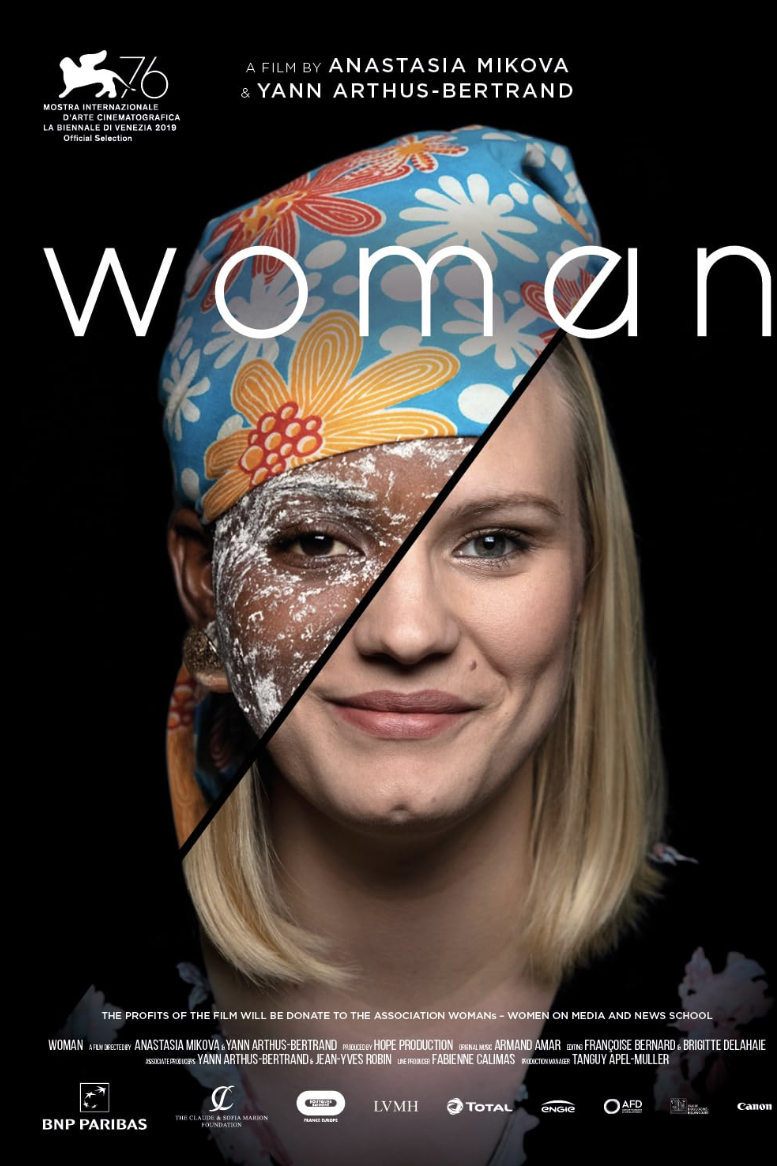
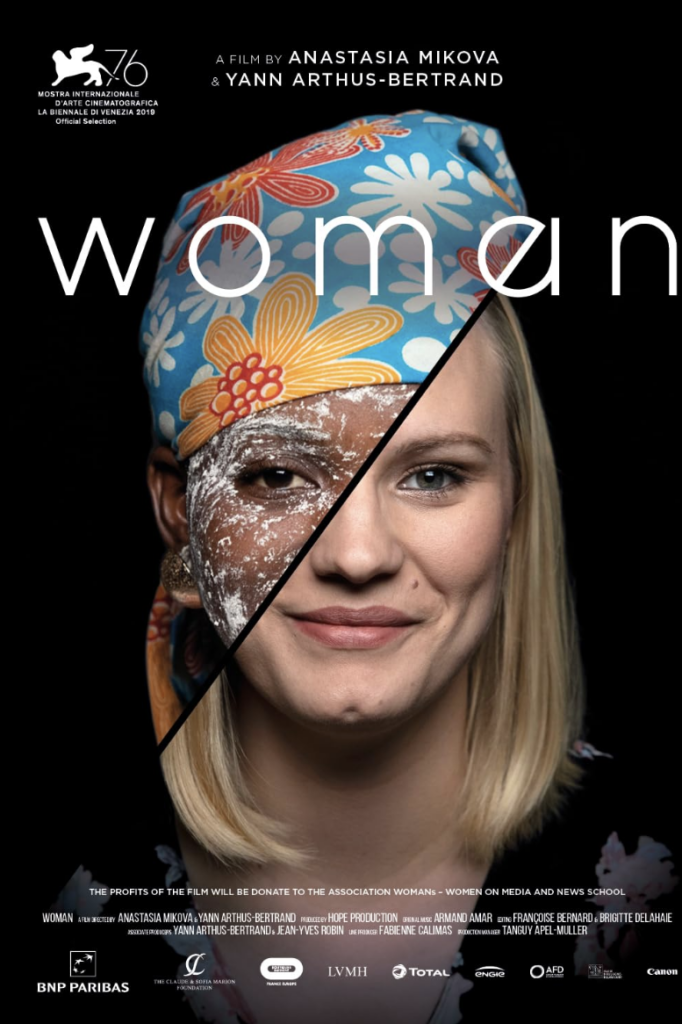
The documentary prioritizes direct, first-person testimonies, allowing women to speak for themselves rather than being explained by an external narrator. This shift enables women to move from being objects of representation to active subjects who control their own stories. In Women, the documentary employs a black backdrop, basic lighting, and a subdued, minimalist style to create a calm and intimate environment, giving the impression that the narrator is speaking directly to the audience. For instance, at the beginning, a female athlete who broke the Guinness World Record in a triathlon chokes up as she recounts her decision to speak openly about her past trauma. This narrative highlights the safe space the documentary provides for women: within this environment, she can openly express her most private and painful experiences without fear of judgment or media exploitation. The narrator articulates her experiences on her own terms, rather than having them transformed into a scripted story by someone else. In this way, the documentary’s content reflects exactly what she chooses to share, demonstrating her agency and voluntary participation, rather than portraying her merely as a victim, which often occurs when a narrator becomes the conduit for information and frames her experience on her behalf.
Unlike traditional female-centered films, which often dramatize women’s experiences of injustice to elicit sympathy; for example, depicting sexual assault through acted scenes, emphasizing the victim’s fear and the perpetrator’s cruelty, Women allows survivors to tell their own stories. As Klaus Rieser argues, first-person documentary understands subjectivity as something constructed through narrative and relational processes rather than as a fixed identity (144-145). In other words, women are not defined by a fixed identity but are able to shape and redefine themselves through the act of narrating their own experiences. By doing so, women retain narrative authority over their unequal experiences and become active narrators, rather than existing solely as objects for the audience’s emotional response, thereby realizing true subjectivity.
Through its use of personal narratives, Women not only conveys individual experiences but also reveals broader, transnational patterns of gendered social norms and structural inequalities, including menstrual stigma, marriage expectations, reproductive labor, and employment discrimination. In Women, the documentary presents a diverse range of female subjects from different countries, ethnicities, and cultural backgrounds, featuring interviews with approximately 2,000 women. The rapid succession of portraits emphasizes that each personal story is not an isolated incident but reflects broader societal and cultural structures. For example, when a Chinese girl describes how her family could only afford to educate one child and chose her brother over her, audiences can empathize with her personal struggle while recognizing the broader pattern of gender discrimination prevalent in her cultural and historical context. This movement from individual experience to structural understanding is not incidental. In fact, as Allen and Cutts demonstrate in their cross-national study, women are more likely than men to attribute gender inequality to structural factors rather than individual circumstances(481). This suggests that female viewers, in particular, may be more inclined to interpret personal narratives as reflections of broader structural conditions, allowing empathy to extend beyond individual experience toward a more critical awareness of systemic gender inequality. While this finding highlights a broader tendency to interpret inequality in structural terms, it also helps contextualize how the personal narratives in Women can be understood not as isolated stories, but as reflections of wider social and institutional inequalities, allowing empathy to extend beyond individual experience toward a more critical awareness of systemic gender inequality.
The documentary also uses close-up shots and bodily representation to highlight shared female experiences. Close-ups of breasts, surgical scars, age-related changes, fat, and freckles allow viewers to directly perceive the physical realities of women’s bodies, while simultaneously emphasizing the social and biological risks they bear. For instance, a Black woman recounts needing to be mindful of her posture in public spaces to avoid being perceived as “overly sexual” and attracting danger; at the same time, at the same time, the accounts of female genital mutilation in African contexts evoke a strong sense of resonance, as women narrate their own experiences in the first person and describe what they have witnessed other women endure. This visual strategy not only reinforces the immediacy of individual experiences but also connects different bodily experiences across subjects, transforming them from isolated personal stories into a broader, cross-cultural condition. Therefore, through personal narratives, Women not only presents individual experiences but also exposes structural gender inequalities experienced by women worldwide. While audiences empathize with each story, they are also prompted to recognize the cultural and institutional conditions underlying these experiences. By allowing women to speak for themselves, the documentary positions its subjects as active narrators of their own lives, while simultaneously encouraging viewers to move from emotional engagement toward a critical understanding of structural gender inequality.
Beyond granting women narrative authority and using personal experiences to reveal structural inequality, Women also challenge traditional modes of spectatorship by exposing that viewing is not a neutral act but one shaped by social identity and power relations. As Columpar argues, “Feminist film theory has, for the most part, taken shape around the notion of the male gaze, and while early formulations of this concept facilitated a sustained engagement with questions regarding the impact of gender on one’s relationship to the act of looking, they often failed to account for other key determinants of social power and position.” (26) This suggests that spectators do not engage with images from an objective or detached standpoint, but rather bring their own social positions and experiences into the act of viewing. Within this theoretical framework, Women does not simply make women visible; it reconstructs the relationship between the speaker and the viewer. The women in the film frequently speak in the first person and establish a direct, face-to-face connection with the audience through their gaze and testimony. As a result, the viewer is no longer positioned as a distant observer but is instead placed in a position of being directly addressed. This shift in viewing transforms a one-sided act of visual consumption into an interaction that carries emotional and ethical implications. This transformation disrupts the conventional structure in which the viewer holds control. In many traditional films, audiences can observe women’s bodies and experiences from a position of detachment, evaluating or even consuming them without consequence. In Women, however, the directness of the testimonies and the intensity of the experiences—particularly those involving violence, the body, and social inequality—make such detachment difficult to maintain. Viewers are compelled to confront their own position and reflect on how they interpret, respond to, and potentially participate in broader systems of inequality.
Some may argue that Women’s reliance on personal narratives makes it overly subjective and too emotionally driven to function as a strong critique of structural inequality. Because the documentary focuses on individual experiences rather than statistics or explicit analysis, it may seem to lack the kind of distance often associated with more “objective” arguments. In addition, the film’s emphasis on painful and intimate testimonies—especially those involving violence—could be seen as encouraging a kind of emotional consumption, where audiences engage with suffering in a passive or even voyeuristic way.
Ultimately, Women demonstrates that the significance of documentary film lies not only in the stories it tells, but in how those stories are told and how they position both subjects and viewers. By allowing women to speak for themselves, the film challenges traditional forms of representation and reveals how personal narratives can expose broader structural inequalities. At the same time, it unsettles the assumption that viewing is a neutral act, instead placing audiences in a position that demands reflection and ethical engagement. In doing so, Women shows that documentary storytelling has the power not only to make marginalized experiences visible, but also to reshape how those experiences are understood and how viewers relate to them.
Work Cited
Woman. Directed by Yann Arthus-Bertrand and Anastasia Mikova, Hope Production, 2019.
Rieser, Klaus. “First-Person Documentary Film and Self-Life Narration.” Journal of the Austrian Association for American Studies (JAAAS), vol. 1, no. 1, Jan. 2019, pp. 144–47. EBSCOhost, https://doi.org/10.47060/jaaas.v1i1.75.
Rieser examines the role of first-person narration in documentary film and argues that subjectivity is not a fixed or pre-existing identity, but something constructed through narrative and relational processes. Rather than treating documentary subjects as stable or transparent representations of reality, he suggests that the act of self-narration actively shapes how individuals understand and present themselves. In this sense, first-person documentary is not simply a mode of representation, but a process through which identity is formed and negotiated.
Although Rieser’s discussion is not specifically focused on gender or the documentary Women, I use his theoretical framework to analyze how subjectivity is constructed through first-person testimony. In my essay, his argument helps explain how the women in Women are able to shape and redefine their identities by narrating their own experiences. This allows them to retain narrative authority over their stories and positions them as active subjects, rather than passive objects of representation or emotional consumption.
Allen, Peter, and David Cutts. “Women Are More Likely than Men to Blame Structural Factors for Women’s Political Under‐representation: Evidence from 27 Countries.” European Journal of Political Research, vol. 58, no. 2, May 2019, pp. 465–87. EBSCOhost, https://doi.org/10.1111/1475-6765.12292.
Allen and Cutts examine how individuals explain women’s underrepresentation in politics across 27 European countries. They distinguish between individual explanations, which attribute inequality to women’s own choices or abilities, and structural explanations, which locate the causes of inequality in broader social, cultural, and institutional factors such as discrimination, political culture, and gender norms. Their findings show that women are more likely than men to attribute gender inequality to structural factors rather than individual circumstances, highlighting how perceptions of inequality are shaped by social position and lived experience.
Although the primary focus of this study is on political representation rather than documentary film, I use its findings to support a structural understanding of gender inequality in my analysis of Women. In my essay, this research helps explain how personal narratives can be interpreted as reflections of broader social and institutional conditions rather than isolated individual experiences. It allows me to connect individual testimonies in the documentary to wider patterns of systemic gender inequality and to emphasize how such narratives can lead to a more critical awareness of these structures.
Columpar, Corinn. “The Gaze As Theoretical Touchstone: The Intersection of Film Studies, Feminist Theory, and Postcolonial Theory.” Women’s Studies Quarterly, vol. 30, no. 1/2, 2002, pp. 25–44. JSTOR, http://www.jstor.org/stable/40004635. Accessed 12 Apr. 2026.
Columpar examines the concept of the “gaze” as a central theoretical framework in feminist and postcolonial film studies. She argues that while early feminist theory focused primarily on the male gaze, this approach is limited because it does not fully account for other dimensions of power such as race, culture, and social position. Instead, she proposes a broader understanding of spectatorship in which acts of looking are shaped by multiple forms of power and identity. In this framework, viewing is not a neutral or objective process but is influenced by the viewer’s social position and the larger structures in which they are embedded.
Although Columpar’s analysis is not specifically focused on the documentary Women, I use her concept of the gaze to analyze how spectatorship operates in the film. In my essay, her argument helps explain how Women challenges the idea of detached viewing by disrupting the traditional distance between viewer and subject. Through first-person testimony and direct address, the documentary repositions the audience, transforming viewing from a one-sided act of visual consumption into a more engaged interaction shaped by emotional and ethical implications.