Stollwerck’s Sammel Album No. 2

This set of Stollwerck trade cards from 1898 carries the title “Muenchhausen’s Adventures”. It shows, from left to right: The Snow-Covered Village, Carried Away by a Fock of Ducks, Catching a Fox, The Thirsty Horse, Riding a Cannonball, and Out-tricking a Bear.

The cards were not attributed to any particular German artist and were likely produced “in house”.
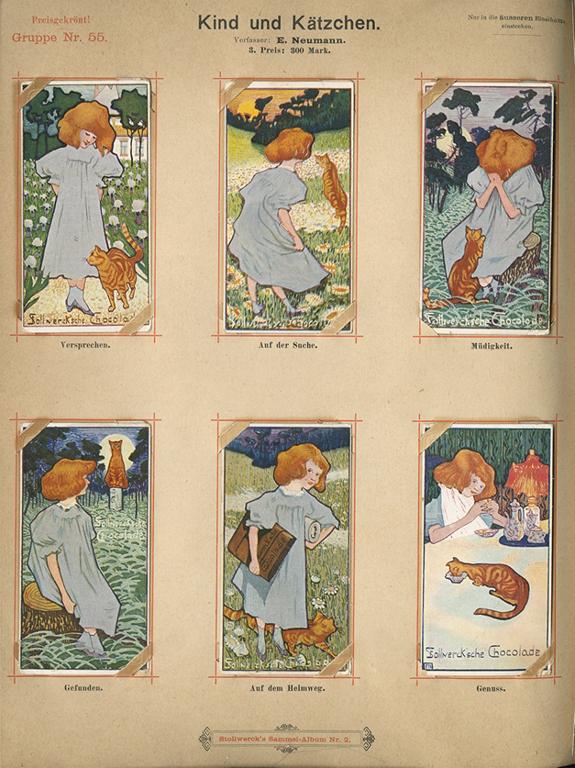
Stollwerck’s Sammel Album No. 2

This set of Stollwerck trade cards from 1898 carries the title “A Child and Her Cat”. It shows, from left to right: The Promise, On the Lookout, Exhausted, Found, Going Home, A Moment of Enjoyment.

The cards were designed by the German artist E. Neumann who won third place in one of the Stollwerck prize competitions. The pictures were created in the modernist style.

Stollwerck’s Sammel Album No. 2

This set of Stollwerck trade cards from 1898 carries the title “Popular Fairy Tales”. It shows, from left to right: Little Red Riding Hood, Snow White, Sleeping Beauty, The Ruebezahl, The Goose-Girl, and Father Death.

The cards were designed by the German artist F. Philipp Schmidt who won third place in one of the Stollwerck prize competitions. The style of these pictures is more traditional, although the use of colors and technique betrays a nascient modernist tendency.

Stollwerck’s Sammel Album No. 2

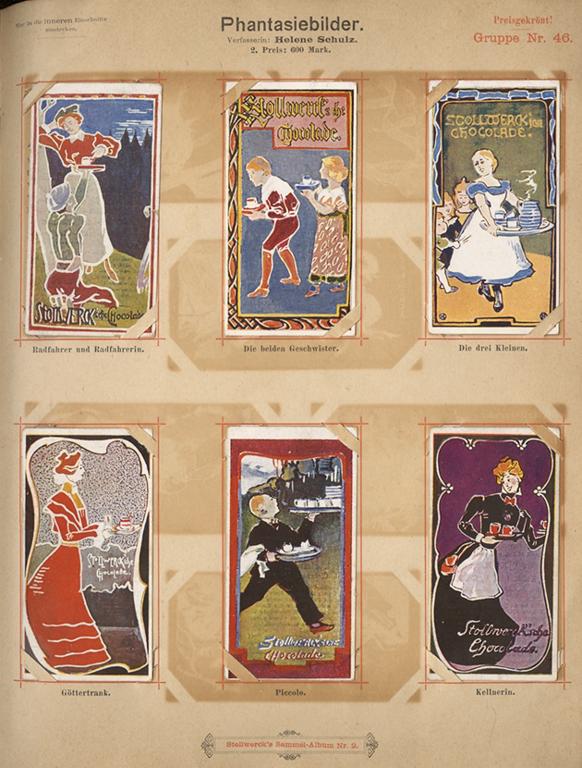
This set of Stollwerck trade cards from 1898 carries the title “Imaginative Images”. It shows, from left to right the following motifs: Two Bicycle Riders, Two Siblings, Three Little Children, Nectar of the Gods, A Small Coffee, and A Waitress.

The cards were designed by the German artist Helene Schulz who won second place in the prize competition to design cards for Stollwerck. The pictures on the cards reflects the new decorative trend in art called “Art Nouveau” or, in German, “Jugendstil”.

Stollwerck’s Sammel Album No. 2

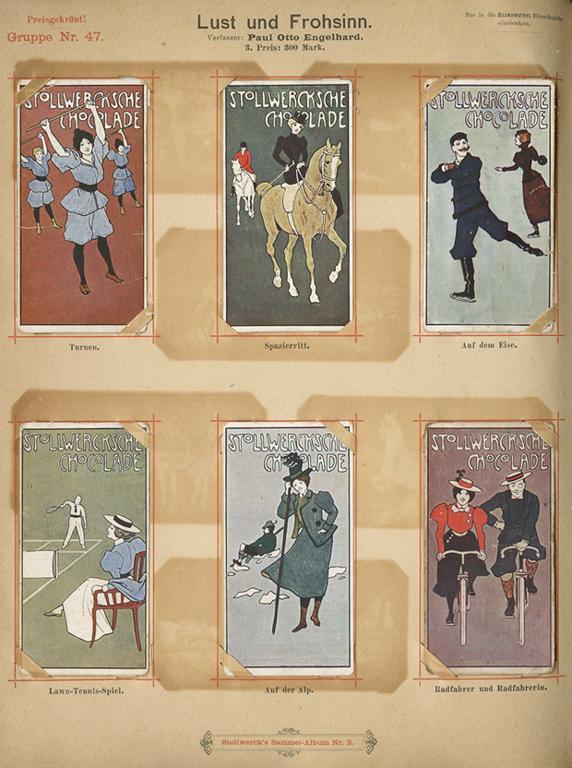
This set of Stollwerck trade cards from 1898 carries the title “Things that Make Us Happy”. It shows, from left to right: Exercising, Riding a Horse, Ice Skating, Lawn Tennis, Hiking Up a Mountain, and Bicycle Riding.

The cards were designed by the German artist Paul Otto Engelhardt who won third place in the prize competition to design cards for Stollwerck. The lettering and design show the hallmark of a modern style, while the figures engaging in the various activities can be identified by their clothing as middle- and upper-class citizens of the time.

Die Sitten der Volker, Volume 3

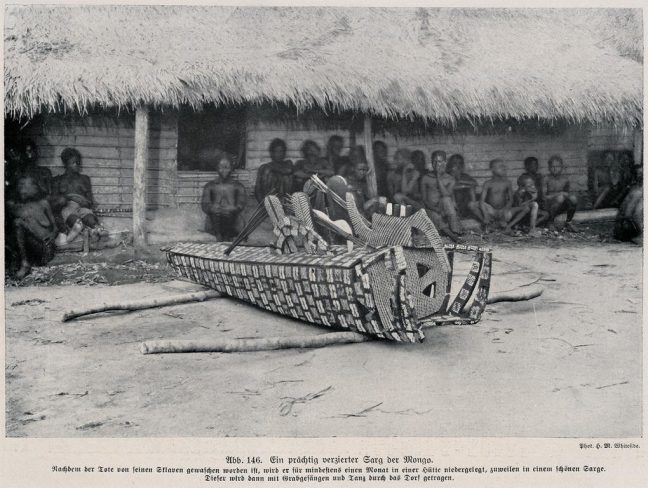
Pictured here is a highly decorated casket used by the Mongo tribe of the Congo region of Africa. After the deceased has been washed by family members or slaves, the body is kept in a hut for at least a month. Then, the body is placed in the decorative casket and paraded through the village, accompanied by song and dance.