Deutschlands Ruhmeshalle im Neunzehnten Jahrhundert (Germany’s Hall of Fame in the Nineteenth Century)

Shown here is the cover of the two-volume book Deutschlands Ruhmeshalle im neunzehnten Jahrhundert, published around 1900. The cover is a representative example of traditional German book art covers of the Imperial period (1871-1914). It shows an angel in knight’s armor with a laurel wreath on its head. The decorative frame around the title and picture are indicative of pre-modernist tendencies in book cover art of the time around 1900.

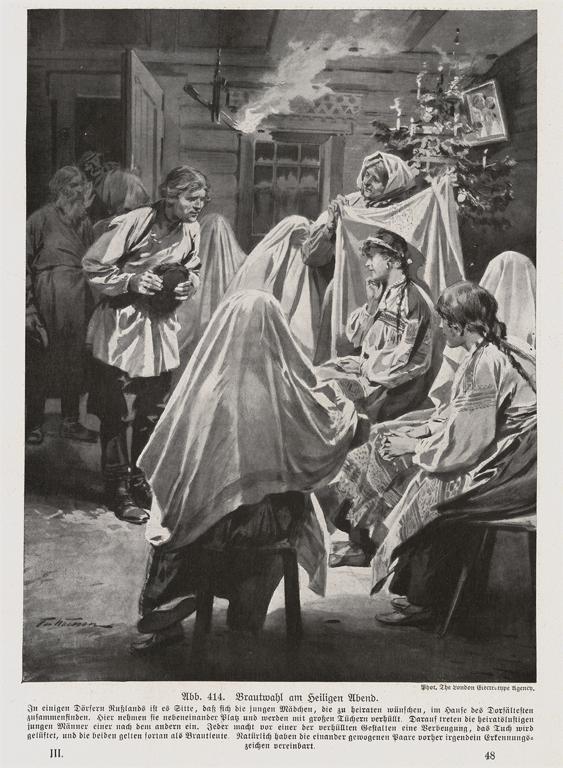
Die Sitten der Volker, Volume 3

This picture is titled “Choosing a Bride on Christmas Eve”. The text reads: “In some Russian villages it is a custom, that young women who wish to marry go to the house of the oldest person in the village on Christmas Eve. They all take a seat next to one another and are covered with a large cloth. Then, the young men of the village who wish to marry enter the house one at a time. If they bow before one of the young women, the elder raises the cloth and the young couple are considered engaged. However, the young couples usually arrange a sign of some sort in advance, so that the young man can recognize the women he wishes to select before the veil is raised.”

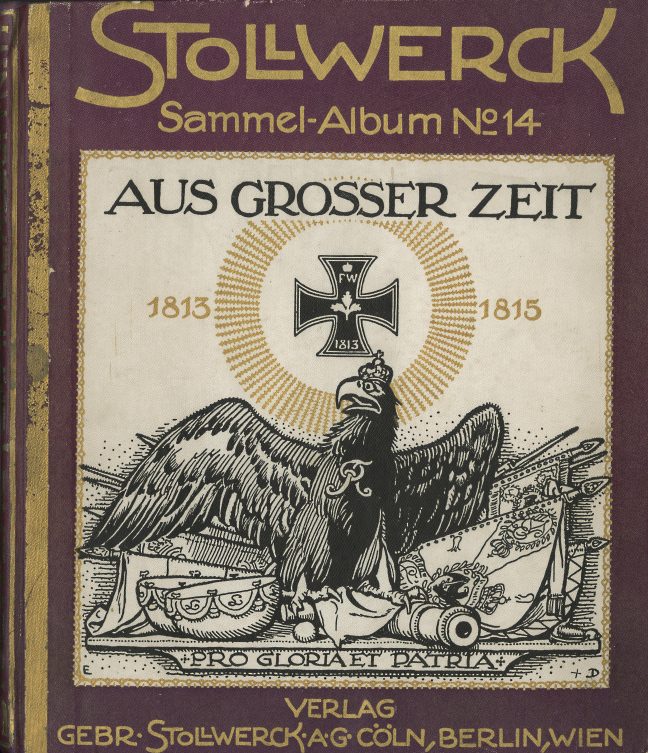
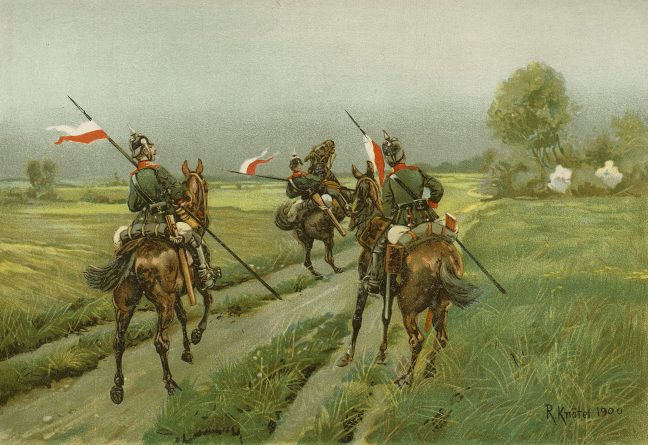
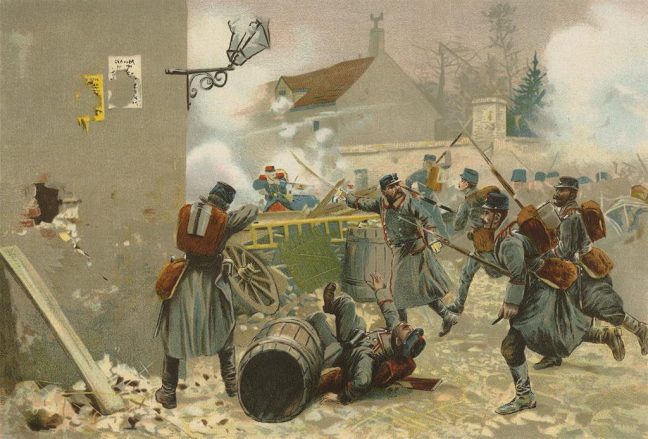
Stollwerck Sammel-Album No. 14, Aus Grosser Zeit (From Greater Times)

The Stollwerck Chocolate Company was one of the first German companies to use trade cards — picture cards inserted in the wrapping of their chocolates — as a means of advertising. However, having produced thousands of different images usually in distinct sets of six cards each, the company presented a panorama of German society in the late 19th century through popular motifs that customers found attractive.

Some of the most common motifs in the German trade cards of the late 19th century were of a military and nationalistic nature, while others reflected artistic trends of the time. In fact, the Stollwerck Company ran a number of competitions for artists to design their trade card sets.

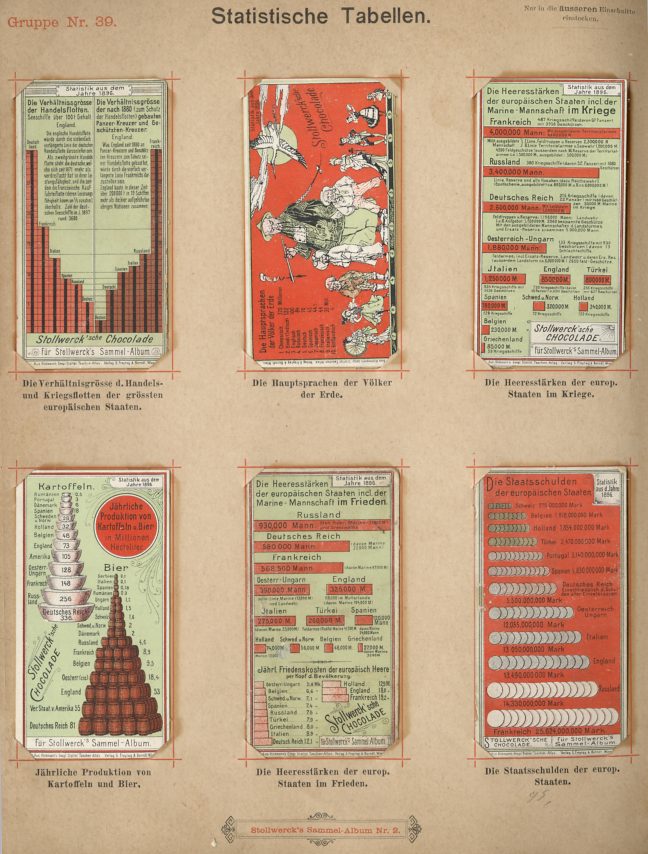
Statistische Tabellen (Statistical Tables)

In the potpourri of topics that are included in the early Stollwerck trade card albums, some were of a more serious nature, such as the cards pictured here that show (from the left): A Comparison of the Relative Size of the Commercial Fleet of Each Major European Nation; The Languages with the Most Native Speakers (German is fifth on this list); The Size of Each European Army During Times of War; The Yearly Production of Potatoes and Beer in the Major European Nations (incl. The U.S.); The Size of Each European Army During times of Peace; and The National Debt of the Major European Nations.