Die Nachkriegszeit 1918-1934 (The Postwar Era 1918-1934)

Transitions: From the Old Order to the New 1890-1930
GER 297 | Fall 2018

The German 50 pfennig coin was issued between the end of the First World War and the beginning of severe hyperinflation in 1922.
The motto on the other side of the coin reads ” Sich regen bringt Segen”. It means “Moving yourself brings blessings”.
However, a more appropriate translation might be “Hard work brings its own reward”. This is an old German proverb, and was commonly used as a motto by the Weimar Republic.
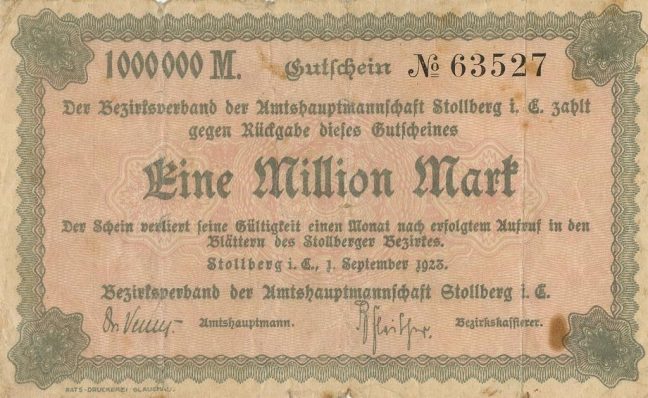
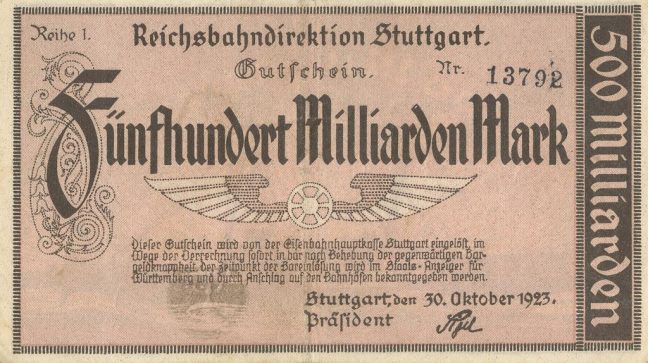
When the value of the German Mark fell after the First World War, the German economy began a downward spiral that culminated in the period of hyperinflation in 1923.
Germany created a new government called the Weimar Republic but it was unable to stabilize the country, since they had to pay reparations for the war.
As such, Germany printed a lot of money which lost its value from day to day. This section shows some of these inflation notes in ever-increasing denominations.
During the hyperinflation, the Reichsbank issued more and more banknotes as the economy plummeted. The notes were produced and circulated in large quantities, although this did not help the economy survive.

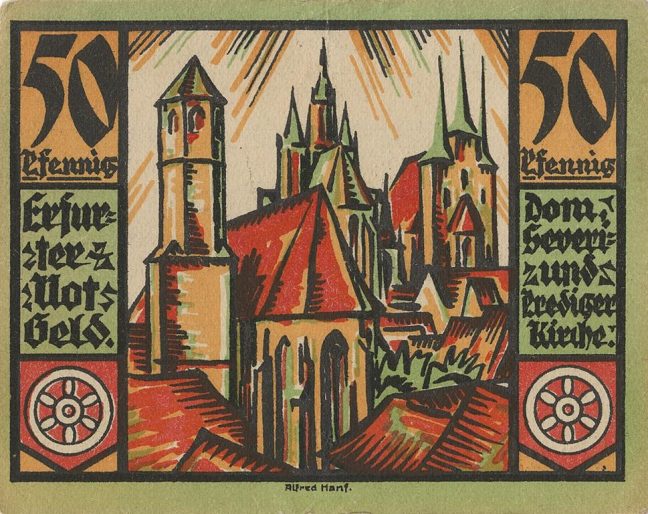
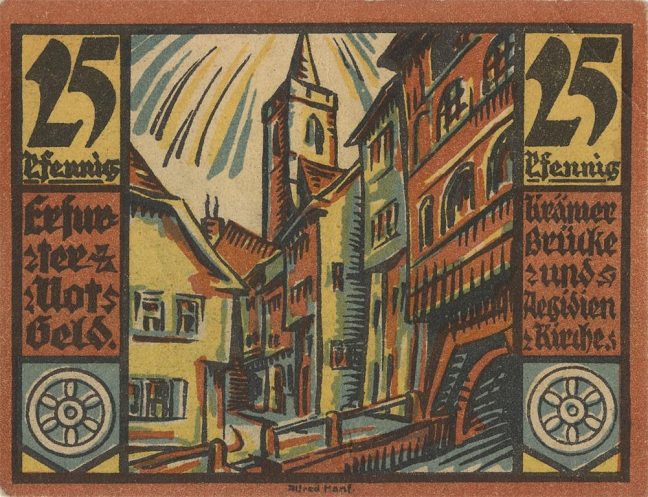
Emergency Money (Notgeld in German) is usually issued by a company during a period of financial crisis. Companies did not need permission from the government. They only distributed money when the state money was not enough or not available.
The money was an alternative form of payment in different regions and places. But most of the time, emergency money was convertible coupons at the businesses that distributed them.
If a civilian could not afford a pack of cigarettes with state money, he can trade in his emergency money
After the First World War, the people were left impoverished. They could not afford much, which affected commerce. As a result, companies passed out Emergency Money to the people so that they could redeem it as needed.