Chemical analysis of art historical objects provides insights into the object’s physical history, furthering our interpretations. Although often treated as incredibly separate, art and science are collaborative disciplines, and only through the intersection of art and science can we generate inclusive engagement.
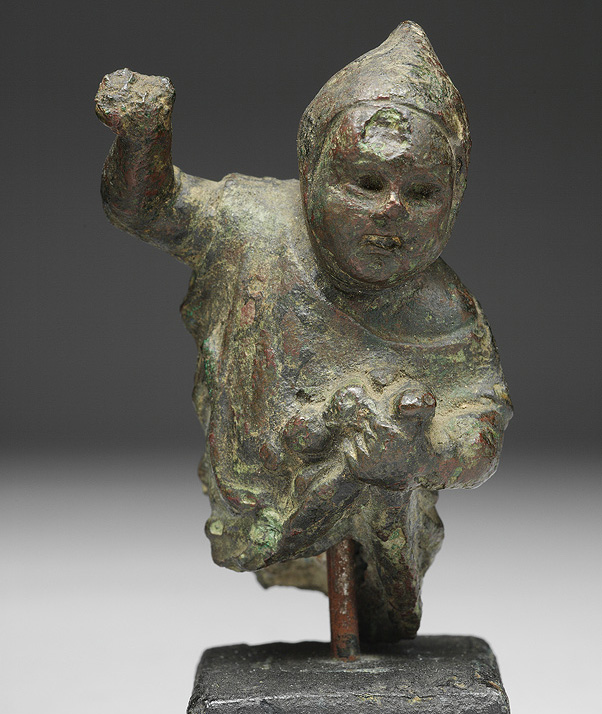
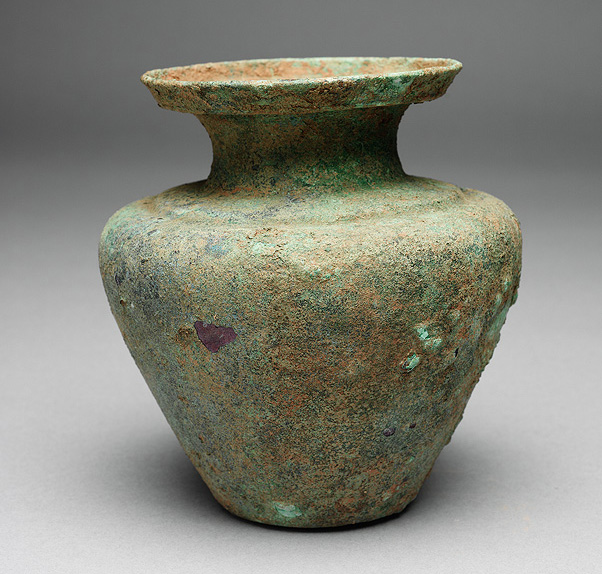
Explore 1st-Century Greco-Roman bronze artifacts through interdisciplinary approaches (and the buttons below). Utilizing art historical and chemical approaches, we can articulate meaning through materiality.
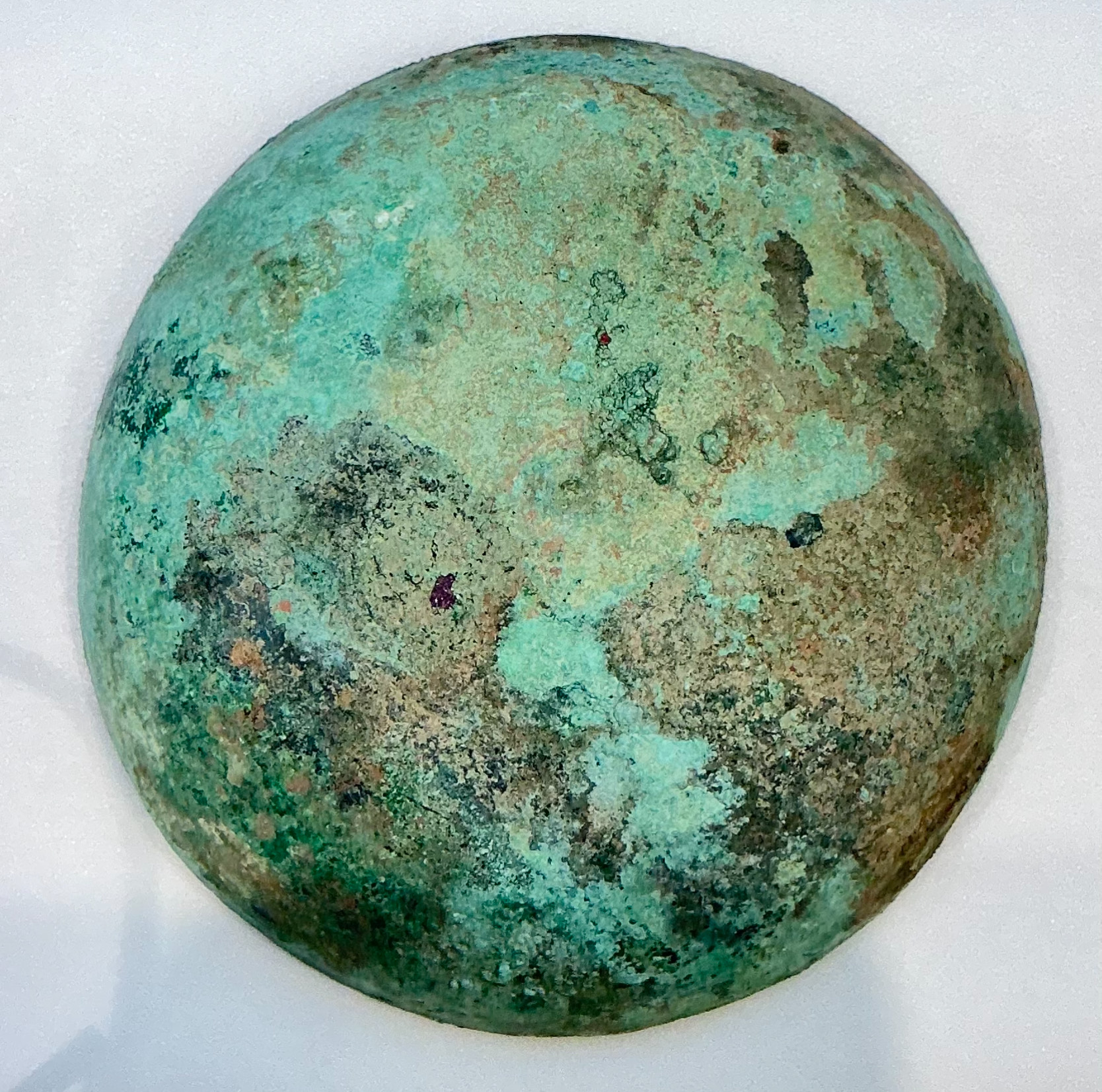
Most bronze artifacts in museums catch your eye from the bright expanse of colorful greens and blues—corrosion that tendrils across the surface. Little of the shining bronze that would have been seen by Greeks and Romans 3,000 years ago remains, as the green climbs, grows, and embeds, revealing the object and the life it has undergone.
Using chemical techniques, surface analysis, and chemical composition can start to piece together the life that this object has undergone, and the path it has traveled to be seated in front of you. Art history informs us of its background, of the potential creation of the object, who owned it, and the social environment in which it existed. This is crucial to our understanding of the object and relation to it, but how do we begin to answer questions about the object with missing historical information? Through the intersection of art and science.