In this deeply reflective essay, Samantha Rauh critically examines the image of the beloved female detective not as an icon of proto-feminism, but of colonial whiteness and patriarchy. Through an original and detailed breakdown of the cover of The Hidden Staircase, Rauh argues that Drew’s neat appearance and conformity to white beauty standards contradict the very gender transgression she purportedly represents. Reflecting on her own idolization of Drew, Rauh carefully places the classic series in a new frame—one rooted in misogyny, white supremacy, and settler colonialism. –Sophia Jerome, ‘27
Feminist Fumble: Nancy Drew in a Colonizer Context
Samantha Rauh ’29
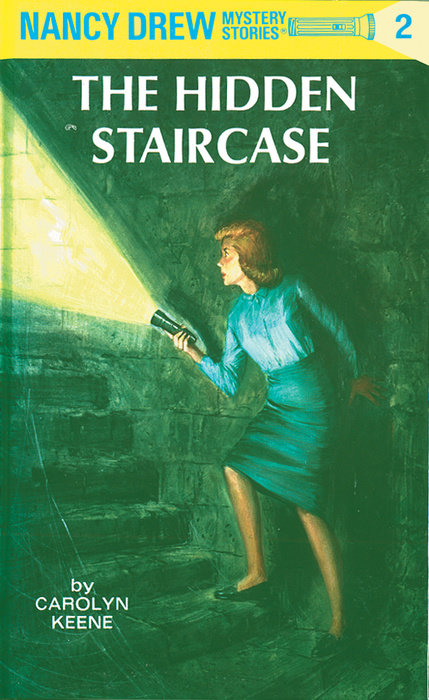
Mystery stories—from Agatha Christie novels to Encyclopedia Brown to the Hardy Boys—are ubiquitous in American imagination, capturing the attention and admiration of countless children and adults over generations. Perhaps no fictional detective looms larger over American society, however, than Nancy Drew. First published in 1930, but condensed and rewritten in 1959 into the yellow-and-blue hardcover novels readers know today, the books center on Nancy, a fearless, sharp-witted, 18-year-old detective (“Nancy Drew Mystery Stories”). In each book, she investigates a mysterious goings-on in (or sometimes away from) her suburban town of River Heights, often acting on a desire to help her friends, family, or strangers. Nancy’s detective work and investigative persistence draw her out of mid-century gender roles, despite fitting into them through her appearance—elements of her character that seem to contradict one another, but are both deeply rooted in Western hegemony. Though Nancy Drew appears to empower women and seek justice for the wronged, the cover art of The Hidden Staircase, the series’ second book, reveals that her transgressive gender role is acceptable because she embodies ideals of whiteness and settler colonialism.
On the surface, Nancy Drew breaks gender stereotypes of her time, a fact that yields a complicated public perception. Throughout the mid-1900s, wealthy, white women were expected to stay home, take care of children, and stay out of traditionally “men’s work” such as science, business, and law. Thus, by investigating local criminals and working alongside the police, Nancy informally breaks through the professional block imposed by the patriarchy. She solves crimes that stump men in power and involves herself in exciting adventures—adventures society might deem “too dangerous” for women. These stories certainly inspired me as a young girl, as well as many others. In fact, female Supreme Court trailblazers Sonia Sotomayor, Ruth Bader Ginsburg, and Sandra Day O’Connor have all cited Nancy Drew as a personal influence, demonstrating her clout among mainstream feminist crusaders (Murphy). Despite this, Nancy’s appearance still reflects 1950s gender roles. On the Hidden Staircase cover, a product of the 1959 rewrites, slim, light-skinned Nancy wears a collared, button-up, long-sleeved blue dress that reaches her knees, and her dark blond hair is neatly curled at the bottom and top. Her shoes are plain black loafers (Keene). This conservative dress suggests that despite her ventures outside the home and guerilla investigative prowess, Nancy still adheres to the traditional, modest dress of the time rooted in gendered Western ideals.
The question then remains: does Nancy Drew actually transgress the patriarchy? No. Nancy’s gender role juxtaposition exists in a Western epistemology that promotes whiteness and colonial power above all else. In Gender, C. Riley Snorton articulates the idea that “a symbolic ordering to articulate colonial rule shifts ‘the primacy of the anatomical model of sexual difference . . . to that of the physiognomic model of racial/cultural difference,’ such that encounters between different genders in this context are as much, or perhaps more, marked by the colonial rubric of racial domination as mere sexual (anatomical) difference” (Snorton 90). Indeed, the Hidden Staircase cover reveals not just Nancy’s gender presentation but the “colonial rubric of racial domination” in which she exists. She aims a bright yellow flashlight beam up a set of stairs of which she stands at the bottom. She has her back against the wall, one hand on the wall behind her, and one foot on the first step in a slightly crouched position, as if she is about to ascend the stairs. Her face is in a side profile and her expression is serious and determined—her visible eye is wide open and looking up the stairs, and her mouth is slightly open. The top of the stairs are out of frame, and the wall, staircase and floor surrounding Nancy are a more muted grayish-green than her clothing (Keene, cover image). The image’s focus on the figure of Nancy, as well as the position of her body, conveys Nancy as not just a detective stringing together clues, but also as an explorer venturing into unknown territory. This “explorer” position implies Western traditions of manifesting destiny and uncovering “new” places and people (even if they already had been there for a long time). Furthermore, the contrast between Nancy’s brightness and her dark background as well as her flashlight call to mind European explorers forcing societies they see as “savage” into European civilization, a transition often associated with movement from the darkness of savagery into the light of civilization, from darkness to lightness, from blackness to whiteness.
Additionally, Nancy’s influence among women at the highest levels of American bureaucracy implies an embrace of “feminist” coloniality that values individual women climbing corporate and political ladders in pursuit of power, rather than the cross-class, transnational well-being of all women. In her book The Trouble With White Women, Kyla Schuller debunks “the contemporary ideal of the optimized woman” (221) to whom striving for perfection is “a hallmark of liberation” (222). Schuller describes Facebook executive Sheryl Sandberg’s “lean in” philosophy, which recommends that women stop blaming others for their unhappiness and go after high-powered leadership positions. However, the “lean in” philosophy is insidious because it seemingly advocates feminism, but really only perpetuates present wealth inequality (222-23). It is also a worldview that allows a figure such as Nancy Drew to exist. As a childhood Nancy Drew fan, part of her appeal for me was her ability to flawlessly fill multiple roles at once—her traditional dress and hairstyle remain neat, stylish, and modest at the same time that she fearlessly explores and investigates. In this way, she is a kind of mid-century, Sandberg-esque “optimized woman,” embodying a specific type of individualistic feminism that elevates white women of means by subordinating lower-class women of color. Thus, while her gender role-transgressive persona may appeal to women and girls seeking strong female role models, and ascribe to a circumscribed type of white feminism, Nancy fails to embody an anti-colonialist feminist perspective that embraces flawed women as worthy and capable.
Namely, while Nancy’s blond-haired appearance matches the author’s description of her in the Hidden Staircase text, her features vary in other stories. The syndicate authorship named Carolyn Keene often writes in other Nancy Drew books that Nancy is “titian-haired,” “titian-blond,” “reddish-blond,” or “strawberry blond.” The illustrator mostly portrays her hair as red-blond, sometimes lining up with the description in the book, but not always. Describing Nancy’s hair as reddish-blond gives her the stand-out quality of having red hair, another trait that implies she is a transgressive trailblazer. However, preserving a measure of blondness also preserves her white femininity. In The Hidden Staircase specifically, Nancy’s blondness whitens her, attracting potential readers to an ideal woman that doesn’t consistently exist even in the Nancy Drew literary universe. Illustrating Nancy as blond may even enhance her femininity as her clothing does. Snorton writes in Gender that “gender […] [is] disarticulated for black and indigenous people in an American grammar produced by settler colonialism and chattel slavery” (90). In contrast to de-gendering people of color, whitening Nancy emphasizes her feminine traits within a gendered framework. If gender is “disarticulated” for people of color, as Snorton writes, then, conversely, it is emphasized for white people. One way that Nancy’s illustrators emphasize her femininity, and thus her whiteness, is by portraying her as blond to a wide audience. Furthermore, returning to the cover’s background and color scheme, they further situate her in a gendered framework by representing her as an explorer, as patriarchal sentiment neatly fits into the colonial model. The power that colonizers and imperialists assert over land is analogous to—and may even overtake—the power men assert over women and gender minorities. Given these power dynamics, any of Nancy’s traits that might push her out of traditional gender roles pale in comparison to her broader role in the framework of gendered whiteness.
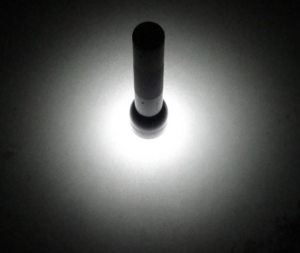
For me, the idea that Nancy Drew might not be a feminist heroine is a difficult conclusion to reach. As a kid, I likely read all fifty-six Nancy Drew books at least twice; I spent countless summer afternoons at the library poring over one hardcover after another. I still have a collection of the first five books plus a few on my bookshelf at home that I haven’t read in years but can’t bring myself to donate. I idolized Nancy for her fearlessness, kindness, instincts, beauty, boyfriend, and willingness to help others. She seemed like one of those people who did everything perfectly. One effect of a system of capitalist white-supremacist patriarchy is an insidious expectation of perfect consistency in all parts of one’s life—the expectation of an “optimized woman.” Though I may have internalized those lessons from Nancy as a child, I can now critically engage with a new one—that seemingly feminist media may still reinforce patriarchy, white supremacy and settler colonialism. And although reexamining my childhood heroine may be uncomfortable, it is key to creating a world that values all women, not just “perfect” ones.
Works Cited
Cover image. Carolyn Keene. Nancy Drew and the Hidden Staircase. Simon & Schuster, 1959. https://www.amazon.com/Hidden-Staircase-Nancy-Mystery-Stories/dp/0448095025
Gruesz, Kristen Silva. “America,” in Keywords for American Cultural Studies, Second Edition, edited by Bruce Burgett and Glenn Hendler, NYU Press, 2014, pp. 21-25. JSTOR, https://www.jstor.org/stable/j.ctt1287j69.8?seq=4
Jronaldlee, maglight flashlight. Photograph. Flickr, CC BY 2.0 license. https://openverse.org/image/6f241e4e-9985-414f-ace6-ae68c14f8f67?q=flashlight&p=25
Keene, Carolyn. Nancy Drew and the Hidden Staircase. Simon & Schuster, 1959.
Murphy, Mary Jo. “Nancy Drew and the Secret of the 3 Black Robes,” The New York Times, May 30, 2009, https://www.nytimes.com/2009/05/31/weekinreview/31murphy.html
“Nancy Drew Mystery Stories: The Secret of the Old Clock.” CSUN University Library, March 29, 2022, https://library.csun.edu/sca/peek-stacks/nancy-drew
Schuller, Kyla. “Leaning in or Squadding Up” in The Trouble With White Women (New York, NY: Bold Type Books, 2021).
Snorton, C. Riley. “Gender,” in Keywords for African American Studies, edited by Erica R. Edwards, Roderick A. Ferguson and Jeffrey O.G. Ogbar. NYU Press, 2018, pp. 90-92. JSTOR, https://www.jstor.org/stable/j.ctt1287j69.8?seq=4
Recent Comments