In this incisive analysis of Jackie Sibbles Drury’s 2018 play Fairview, Sadie Shapiro illuminates how the dramatic transformation of a family meal parallels the intrusion of white voices which distort and displace Black narratives and lived experiences. As increasingly extravagant and strange dishes dominate the dinner table, white intruders warp this domestic scene into something more digestible to them, sidelining both the meals and subjectivities of the Black characters. Ultimately, Shapiro sees in this play both a challenge to a white audience to make space for authentic, Black stories and a demonstration of how Black characters can refuse to “digest” white narratives. –Talia Beckhardt ’27
White Digestibility: Fake Food and Black Stories in Fairview
Sadie Shapiro ’29
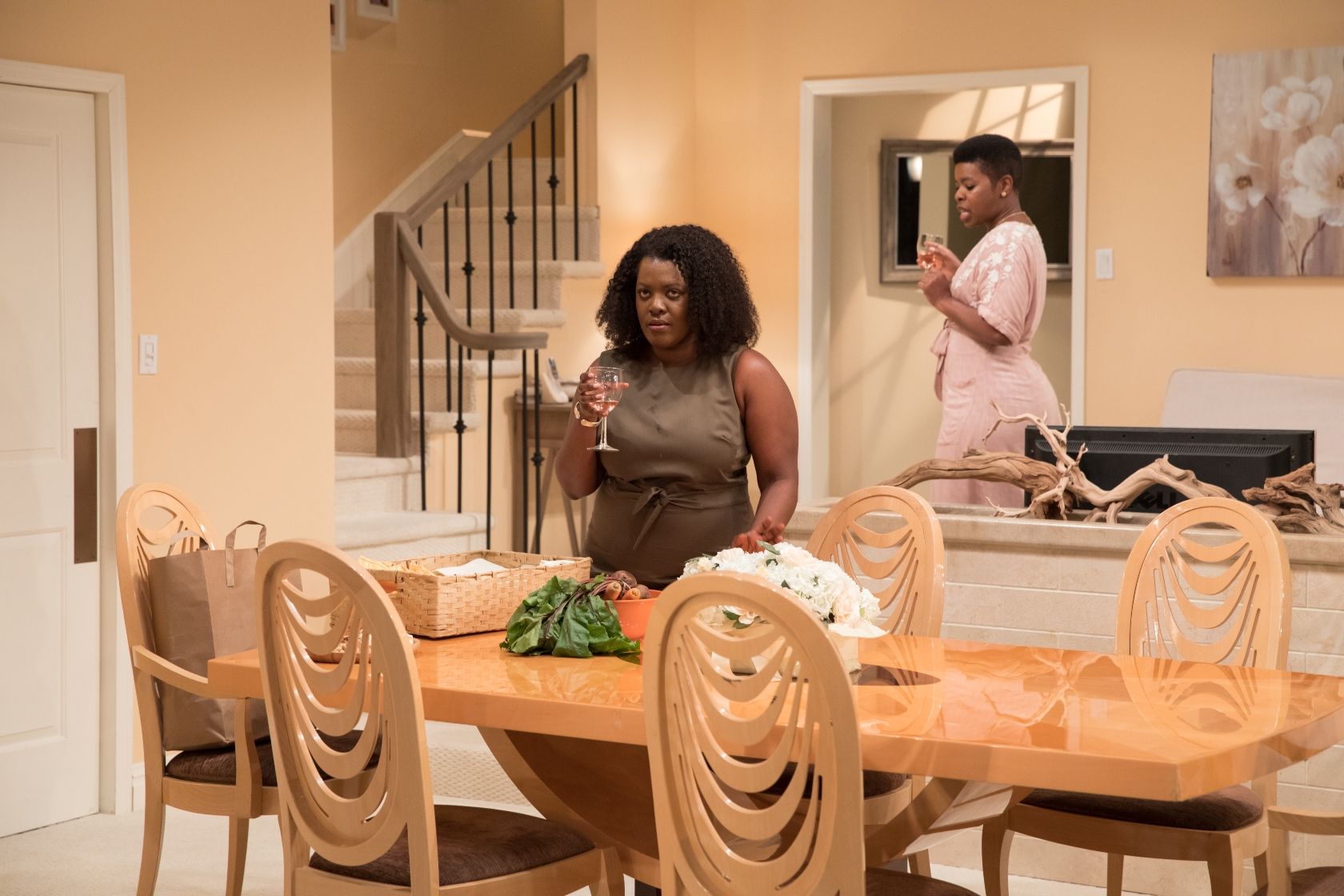
“If I don’t finish chopping these carrots,” says the Black character Beverly Frasier from the play Fairview, “I am going to lose it” (Drury 29). Jackie Sibblies Drury’s genre-defying work opens with a scene that an audience has seen a thousand times: a mother preparing for a dinner party. As the play progresses, it fools us just long enough, but begins disrupting the actions of the central family with the slowly-increasing presence of white people. In Arleigh Rogers’ essay “Ending, Leaving, Remaining: Young Women and Trauma in Fairview and How I Learned to Drive,” she observes that “to banish the White characters from the set cannot satisfy the foundational issue of their initial physical presence and biased thinking”— or, it does not matter that the play begins with exclusively Black characters; white perspectives and biases will make it into the story regardless (Rogers 134). The dishes we watch Beverly prepare are simple and wholesome, but as the white characters’ voices become overpoweringly loud, the Black family sets the table with an extravagant meal that is visibly made of plastic. The presence of prop food in Fairview works as a visual representation of white voices intruding on the story, taking control of an environment that is not theirs; it embodies an uninformed vision of a Black family through the eyes of white people.
Throughout the first act of Fairview, Beverly tries to remain laser-focused on her carrots; this is her attempt at stability and safety against disruption, ensuring that nothing can possibly go wrong so long as dinner is prepared and the integrity of her family’s storyline remains intact. “If I don’t chop these carrots, who’s gonna chop them?” she asks, refusing outside help, insisting on holding everything together (Drury 29). She takes responsibility for the entire night, and wants her preparation to go as flawlessly as it can, thus proving that a perfect evening is possible. If she stops chopping carrots, we come to understand, the events of the entire play will go off the rails. In a way, she is correct: Beverly fainting and dropping her carrots on the floor marks the end of the family drama of Act One and the beginning of the voice-overs of Act Two. The moment she relinquishes control, even by accident, her entire family loses their power, quite literally silenced by white people. These new intruding characters take advantage of her one moment of weakness, talking over Beverly’s perfectly-planned story, and replacing the care and precision of her meal with the decadent grandiosity of their opinions. The real food both crashes and burns in the form of carrots and cake, and from then on, we are not able to see how the Frasiers’ night would truly play out; we are only able to see the version that becomes completely rewritten by those who do not make an effort to understand them.
As the family brings food to the table, food they did not prepare, a fake meal that becomes “stranger and stranger,” the visuals make the audience uncomfortable despite the joy on stage— although Fairview is a work of fiction, we understand that even within the fictional world, this dinner is not real (78). The first explicit appearance of fake food in the script occurs when the Frasiers are setting the table, and their dialogue, if there is any, is silenced by a long, egotistical, nearly manic monologue spoken by Jimbo, who acts as the ringleader of the white group of friends; his voice alone becomes a physical presence on stage. Rogers states in her essay that “the items onstage maintain only the semblance of reality,” informing the audience from the start that something is inherently wrong (Rogers 136). The discomfort of the scene is only heightened by Jimbo’s frenzied demand for attention, and the visuals become more chaotic and crowded as his monologue becomes louder and more hysterical. He insists that everyone “just shut the fuck up and listen,” and he is not just speaking to his bickering friends (Drury 68). Jimbo is speaking to the audience, trying to dominate the stage with his own privileged voice, and he is speaking to the Frasiers, who dare to live in a way outside of his perception of how they should live. The fake food on stage represents Jimbo’s point of view as he forces himself into their dinner party, talking over their story so loudly that his self-centeredness begins to manifest in it. “Every other person, or race, or whatever… they’re all rooting against me… I know that, and I love it,” he says after several minutes of ranting; he does not care about taking up anyone’s space so long as it means they are paying attention (Drury 72). In Nancy Jones’s essay “Jackie Sibblies Drury’s Fairview: Affect in Three Acts,” she refers to this speech as “a horrifying declaration of power,” and it is certainly very powerful (Jones 167). Just by talking, Jimbo and the other white characters gain total control, making each scene appear exactly how they want it to, despite how falsified it begins to appear. It is the celebratory dinner of a Black family, as seen through the single-minded, skewed perception of a white person— ironically, for the white characters, the faker the food gets, the more digestible it becomes.
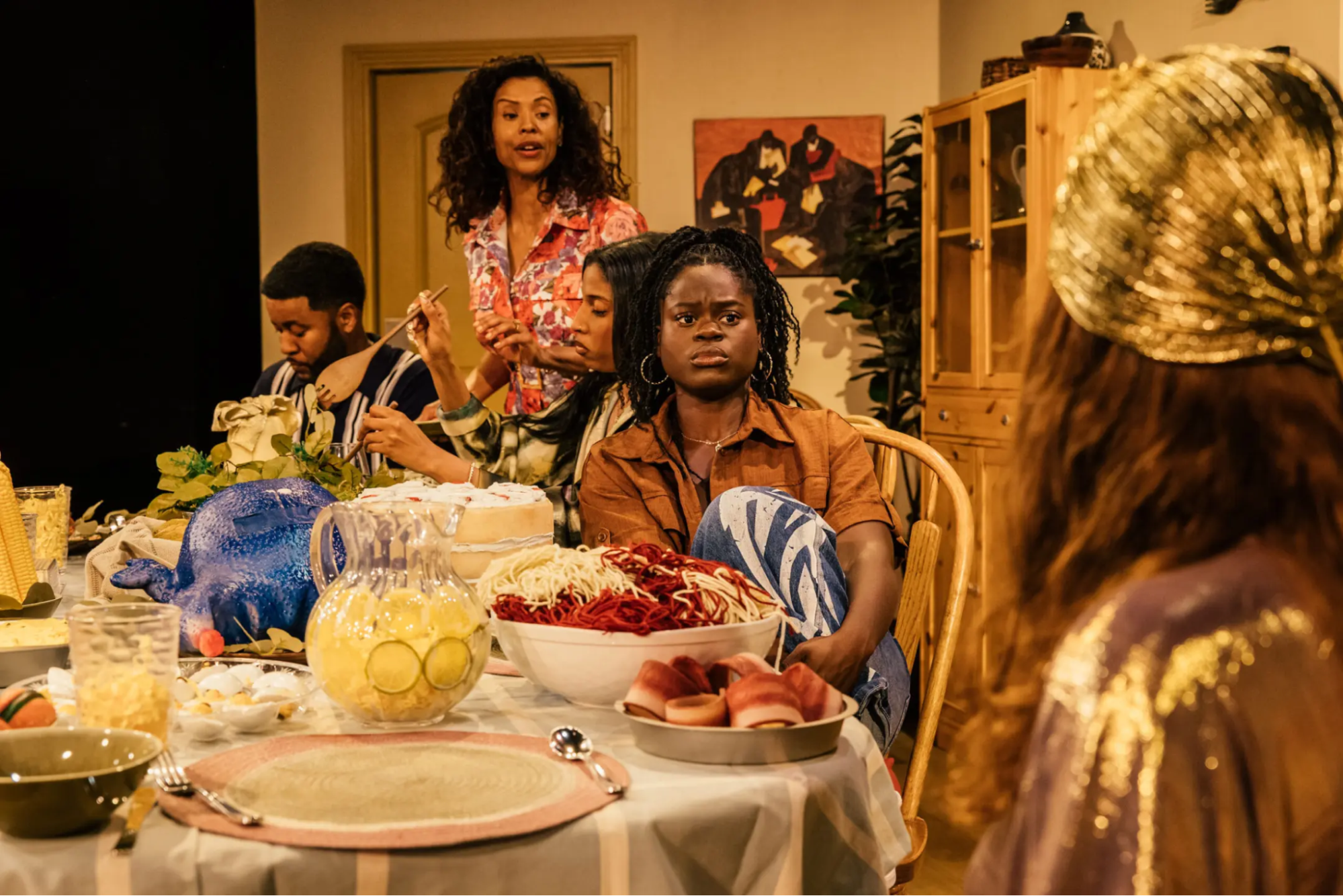
When the reader, or the audience, takes note of the extravagant, imposing meal of props, they can’t help but wonder where it is coming from; the only foods we watch Beverly prepare, and in fact the only food she repeatedly mentions, are side dishes and appetizers—her root vegetables, charcuterie boards, and “real carrots” do not hold a candle to the falsified magnificence of the fake meal (7). Black stories almost always receive less general attention than white stories, and Beverly’s family is suppressed by an overwhelming surplus of white voices, both real and symbolic. Beverly puts her heart and soul into her efforts to present perfect carrots, cheeses, and desserts, but her dining room ends up full of a meal she did not cook, and which “threatens to overflow the table” (78). Even in a story that is supposed to be about a Black family, their efforts are barely visible on their own dinner table; they can only contribute crumbs to what was supposed to be a banquet. The vagueness of the stage directions when describing the meal means that the reader does not even get to learn what all of the fake food is—only that it is grand, imposing, and theoretically impressive, much more impressive than the modest authenticity of Beverly’s carrots. Despite the fact that the central characters are Black, the white characters are granted “dominance in shaping the narrative,” and their ignorance does not stop them from pretending they know best (Jones 163). Much like Beverly’s side dishes in comparison to the never-ending presentations of fake food, the Black story is merely an appetizer to the main event: long-winded, uninformed, biased arguments about race from the mouths of white people, who do not think twice about completely taking over a space that is simply not for them.
The white characters reach a state of absolute control, and the play a state of absolute chaos, when they use their newly-acquired space on stage to start a food fight, asserting their power over the Frasiers in any desperate, aggressive way they can. They have spent the third act entering and masquerading as part of the family, creating petty, out-of-character arguments based on what they believe occurs inside Black households: in movies, Black teenagers have been teenage parents, so Keisha must be pregnant; Black characters have neglected to pay their mortgage, so the Frasiers must be losing their house. Both the verbal and physical violence are out of the Black characters’ hands—the stage directions assert that “Jimbo, Mack, Bets, and Suze are the aggressors, for the most part” (98). The quaint household and professional stage that had once belonged to Black characters are now under the thumbs of white people, who dominate a story they are not a part of by creating a state of destruction with their own fake food. By now, there is very little real food left on stage, if any; the only props available to throw are the strange food-shaped objects the white characters have forcefully manifested onto the dinner table. Fairview is presented from the opening as a play about a dinner party; the intruders are using the Black characters’ stories against them, projecting their own ideals into the play and then both figuratively and literally throwing their power back in the family’s faces.
The only Black character who actively breaks the fourth wall is Keisha, the teenage daughter searching for her own place in the world; she is also the only character who refuses to eat dinner, seeing past the props into the worrisome intrusion of voices that should not be telling her story. She notices the foreign presence on stage immediately upon Suze’s first entrance, and understands, no matter what her family says, that this white woman is not her real grandmother. Rogers notes that Keisha’s family “mingles within this artificial-feeling environment and therefore remains unaware of Keisha’s feelings of unease”—they are quick to accept the new member of their family, unaware, or choosing to be unaware, of the fact that she does not belong (Rogers 136). Keisha does not join in as the others all “pretend to eat,” and says directly to the audience, “I just feel like something is wrong” (Drury 82). She will not buy into the image of the fake meal; she does not want to partake in an extravagant dinner party that she had no true role in preparing. Her family members, going through the motions of eating dinner, let themselves be corrupted by biased, self-interested voices. Although Keisha cannot articulate exactly what is wrong right away, she knows that her space is being taken over; she wants a space for her family’s story and for Black stories in general. If she allows the white characters to take over the set without a hint of resistance, the story of Fairview will become a story told by white people, misrepresenting the authenticity of their real lives—and of the real dinner they never got the opportunity to serve.
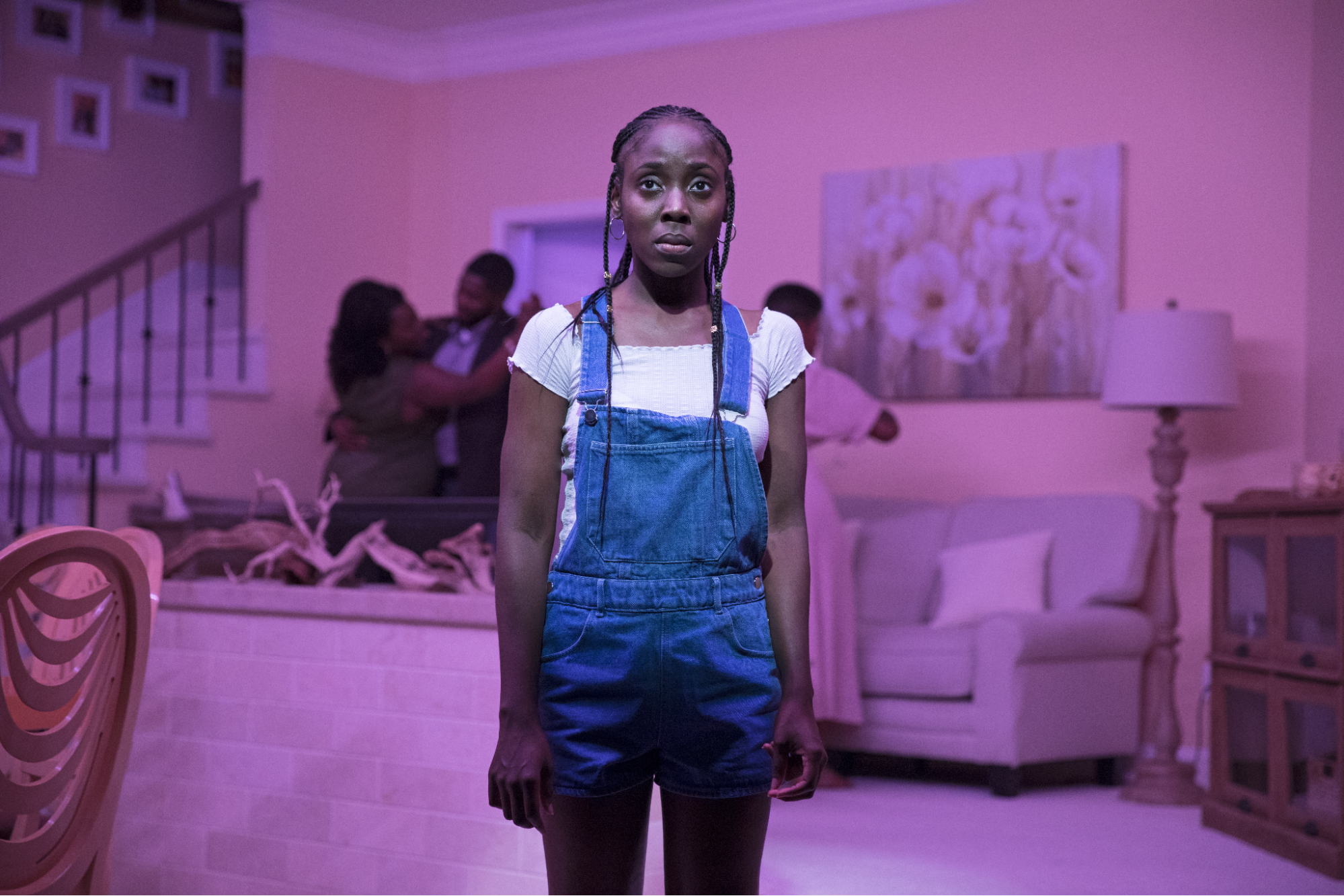
Through Keisha’s voice, and throughout the entirety of Fairview, Jackie Sibblies Drury pleads with her white audience to make space for Black stories, and to allow those stories to be told authentically without forcing stereotypes or misguided points of view into them. Beverly’s real carrots are an act of resistance—making sure they are peeled perfectly is a way of making sure that the Frasiers’ story will be preserved and legitimate, the result of genuine effort as opposed to the falsified banquet presented through the voices of the white characters. In Keisha’s final monologue, where she speaks directly to the audience and requests that the white observers switch places with the Black characters for one moment, she suggests that we “make ourselves a plate” (Drury 102). White people should be putting in the effort to understand Black stories instead of forcing their blind perceptions onto people who are not like them; if they are able to switch places with the characters and make themselves a plate, they might understand the story on which they have intruded. Keisha requests “space to think” from Suze as she poses as her grandmother (Drury 100). We as an audience may reach the true story of the Frasiers by leaving them space to think, space for uncorrupted conversations, and space to host a completely authentic dinner party; fake food has no place in their real lives.
Works Cited
Cervantes, Julieta/ Soho Rep. “In Fairview a respectable African American family prepares for a big dinner. But we slowly learn there’s something off about Keisha (MaYaa Boateng) and her relatives.” Photograph. 14 July 2019.www.npr.org/2019/07/14/739057321/the-pulitzer-winning-play-fairview-is-about-being-watched-while-black.
Fairview. Soho Rep, 9 Dec. 2022, www.sohorep.org/shows/fairview/.
Jones, Nancy. “Jackie Sibblies Drury’s Fairview: Affect in Three Acts.” Comparative Drama, vol. 59, no. 1-2, Mar. 2025, pp. 157–177, muse.jhu.edu/article/962006, https://doi.org/10.1353/cdr.2025.a962006.
Lorch, Jeff. “Marco Martinez, from left, Marie-Francoise Theodore, Jasmine Ashanti and iesha m. daniels in Fairview at Rogue Machine.” Photograph. 25 March 2026. www.latimes.com/entertainment-arts/story/2026-03-25/pulitzer-winner-fairview-theater-review-jackie-sibblies-drury-rogue-machine.
Martin, Michel. “The Pulitzer-Winning Play Fairview Is About Being Watched While Black.” NPR, 14 July 2019, www.npr.org/2019/07/14/739057321/the-pulitzer-winning-play-fairview-is-about-being-watched-while-black.
McNulty, Charles. “Pulitzer Prize-Winning Fairview Comes In a Little Cloudy in its L.A. Premiere at Rogue Machine.” Los Angeles Times, 25 Mar 2026, www.latimes.com/entertainment-arts/story/2026-03-25/pulitzer-winner-fairview-theater-review-jackie-sibblies-drury-rogue-machine.
Sibblies Drury, Jackie. Fairview: A Play. Theater Communications Group Inc, 2019.
Rodgers, Arleigh. “Ending, Leaving, Remaining: Young Women and Trauma in Fairview and How I Learned to Drive.” Comparative Drama, vol. 59, no. 1-2, Mar. 2025, pp. 131–156, https://doi.org/10.1353/cdr.2025.a962005. Accessed 5 Apr. 2026.
Recent Comments