Special Collections’ holdings related to the struggle for women’s ordination are strong, and many collections offer insight into the movement and individual figures involved in it. The exact meaning of “ordination” differs between religious groups and communities, but generally refers to the formal elevation of an individual to a ministerial/pastoral position. Throughout the twentieth century, activists built a wide movement advocating for women’s entrance to the clergy, which represented official recognition of women’s equality in their faith communities. In Christianity, for example, whether or not women were permitted to enter sacramental ministry became a shorthand way to assess their equality in any particular denomination.1
In the United States, most publicity surrounding the issue focused on Christian denominations. However, the push for women’s ordination was present in a wide range of religious traditions, many of whom have now regularly ordained female religious leaders for decades. In Special Collections, most material related to women’s ordination focuses on Christian faiths. Several notable themes present in these documents include the movement’s focus on reforming existing institutions, as well as the use of satirical protest to boost publicity.
Pushing for Acceptance Within the Church
The struggle for ordination was focused on asserting women’s belonging in pre-existing religious spaces. Unlike leadership efforts that focused on breaking away from institutional religions, activists for ordination saw the best path toward equality as one that remained tied to traditional faiths. This is an obvious but crucial distinction, and one that shaped advocates’ rhetoric, strategies, and priorities.
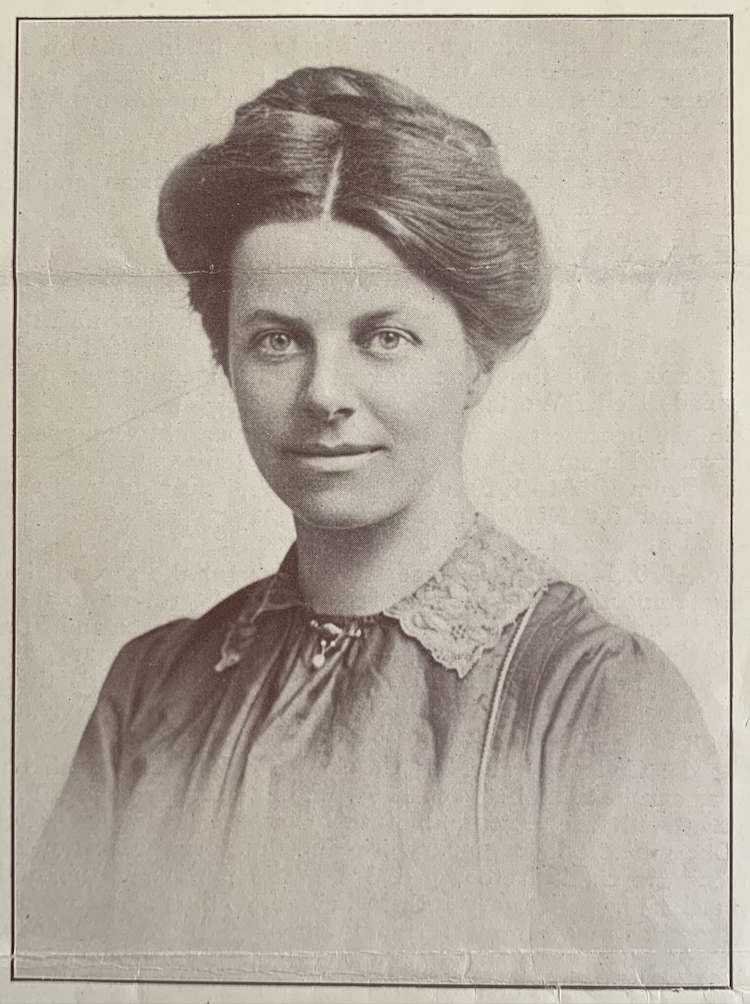
Within Special Collections, there are several collections that highlight notable figures within the history of women’s ordination efforts. For example, Margaret Brackenbury Crook (1886 – 1972) was an early advocate for women’s leadership within Protestant Christianity. In 1917, she entered the ministry of the Unitarian and Christian Liberal Churches in the United Kingdom. When she took over the Octagon Chapel in Norwich, she became the first English female minister to have sole charge of a large church.
In 1921, Crook came to the United States and began teaching at Smith in the religion department. Throughout her time at the college, she published essays and articles advocating for women’s equality in religious leadership, and spoke out about the right of women to participate fully in ministry.3 Crook’s life and work offer insight into the struggle for women’s leadership and ordination in the early twentieth century, and how advocates worked for entry into leadership structures.
In the latter half of the century, advocates pushed religious feminist organizations to focus explicitly on women’s ordination. One such organization was St. Joan’s International Alliance, whose U.S. section campaigned for women’s ordination in the Catholic Church. They viewed ordination as a crucial component of achieving equality in both religion and larger society. A recruitment flyer from the seventies proclaimed “We are feminists BECAUSE we are Catholic,” fundamentally linking these identities in their struggle for agency.4 This framework shaped their petitions to the Church that women be admitted to the diaconate and priesthood under the same terms as men.5
For many individuals and groups, feminist leadership in religious life could not be separated from traditional religious institutions, even if these institutions actively dismissed them. Their established faith remained too emotionally or culturally significant, so they redefined what it meant to be a participant in it rather than reject institutionalized religion entirely.
Studying the History of Women’s Ordination in the Episcopal Church in Special Collections
This denomination is by far the most well-represented religious tradition in Smith’s archive. One of the most helpful resources for researching women’s ordination is the Heather Huyck papers. Although Huyck was a historian and not a religious leader, her dissertation “To Celebrate Whole Priesthood: The History of Women’s Ordination in the Episcopal Church” provided a helpful overview of the subject, included interviews with Episcopal women, and discussed the many resources produced by female clergy to assist each other.
To read more about several individual ordained leaders and their materials in Special Collections, see Feminist Leaders.
Satire as Activism
Beyond formal campaigns and petitions, some activists participated in radical protests designed to publicly protest sexism in religious life and support feminist leaders. Special Collections holds materials related to several such events, which highlight some of the satirical strategies of feminist activists.
In 1974, the reproductive rights organization Catholics for a Free Choice (now Catholics for Choice) held an event to commemorate the one year anniversary of the Supreme Court’s Roe v. Wade decision. On the steps of St. Patrick’s Cathedral in New York City, they declared activist Patricia McQuillan the first female pope. McQuillan had helped found the organization the previous year, and they primarily focused on building a vocal pro-choice Catholic base.6 Within this work, they pushed for the expansion of women’s authority in the Church. During this event, McQuillan wore vestments designed to mimic a pontiff’s iconic white cassock and pellegrina, along with a stained glass Venus symbol pendant used to represent the feminist movement. She delivered a speech condemning the Vatican’s all-male hierarchy and its continued oppression of women, with a focus on abortion rights.7
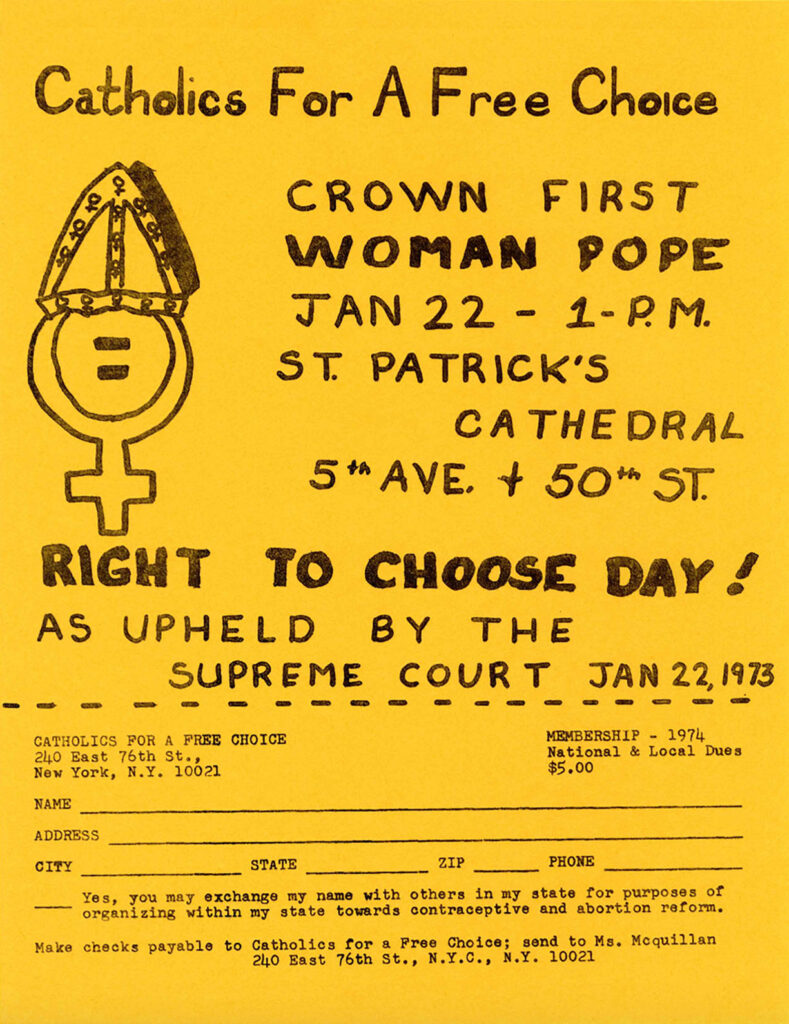
Flyer for McQuillan’s Papal Inauguration event, 1974.8
“We, the female Church hierarchy today, uphold the Supreme Court’s decision on abortion and support it as the moral, humane and supreme law of the land.”
Pat McQuillan, during CFFC’s event at St. Patrick’s9
By satirically claiming for herself a position of authority within the Church, McQuillan’s protest centered women’s ordination as a central component of equality in religious life. The event generated widespread publicity for Catholics for a Free Choice, and motivated them to continue with their advocacy.
In 2005, another important group organized a protest that demonstrated the role of satire in religious feminism. Jewish Women Watching (JWW), a completely anonymous activist organization active throughout the early 2000s, distributed a fake press advisory at a Jewish Theological Seminary event about the ordination of women into the Conservative rabbinate. Although the Conservative movement had ordained female rabbis since the early 1980s, this fake press release stated that the Theological Seminary had committed to requiring egalitarianism in all Conservative synagogues by 2010. JWW’s fake statement promised to close the pay gap between male and female clergy and ordain queer rabbis.
During the event, audience members expressed support for the plan, which required the Theological Seminary to publicly admit that they were not actually implementing these goals. JWW used this to call out the Conservative movement for their failure to achieve equality for ordained women, and for all women participating in religious life.10
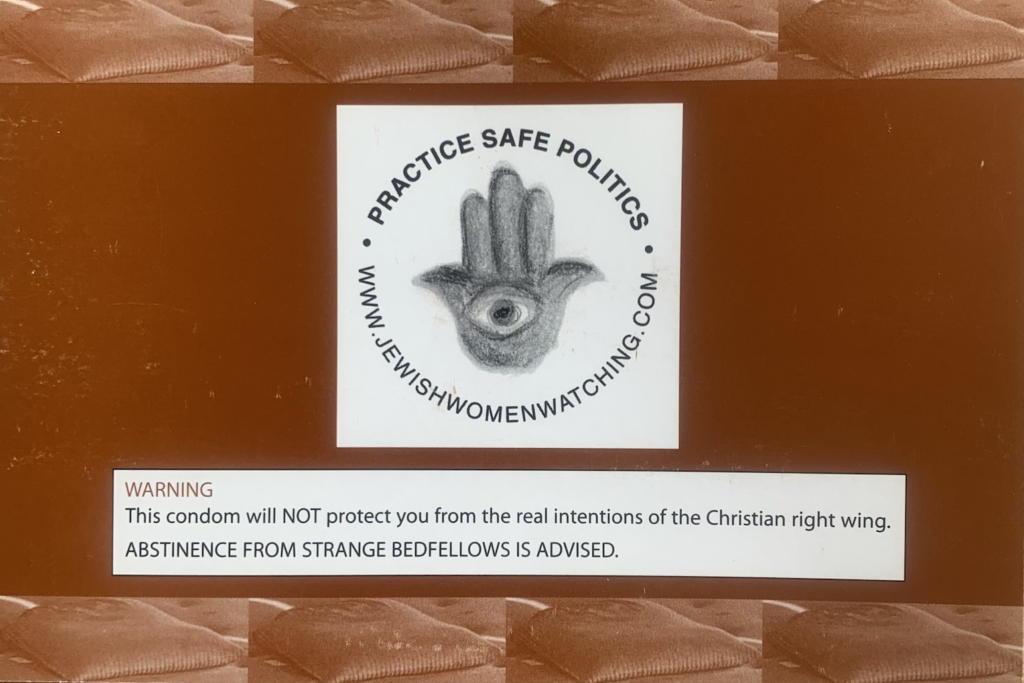
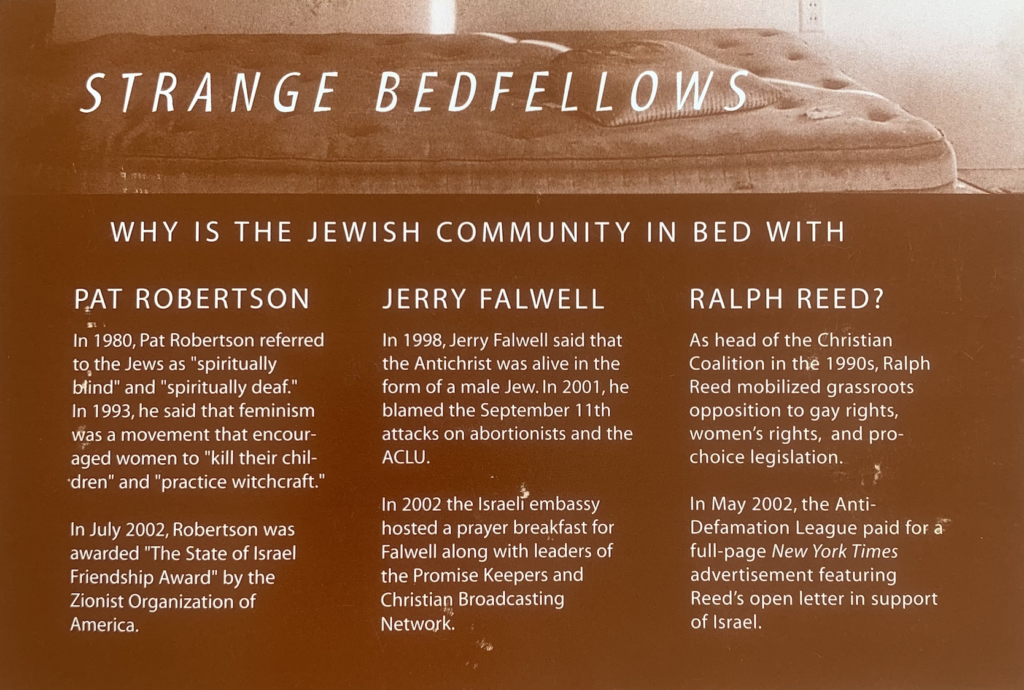
These protests are just a few examples of the role of satire in the religious feminism movement, to highlight the activist work that can be explored within Special Collections. To see a list of collections related to women’s religious leadership, see Collections at Smith. For other helpful resources, see Secondary Sources.
- Rita Gross, Feminism and Religion (Beacon Press, 1996), 41. ↩︎
- Speaking Engagement flyer, 1921, Margaret Brackenbury Crook Papers, Smith College Archives, CA-MS-00051, Smith College Special Collections, Northampton, Massachusetts. ↩︎
- Ringfield Sunday Republican Clipping, 1923, Margaret Brackenbury Crook Papers, Smith College Archives, CA-MS-00051, Smith College Special Collections, Northampton, Massachusetts. ↩︎
- Mary J. Henold, Catholic and Feminist: The Surprising History of the American Catholic Feminist Movement (University of North Carolina Press, 2008), 83. ↩︎
- Saint Joan’s International Alliance, U.S. Section records, Sophia Smith Collection, SSC-MS-00631, Smith College, Northampton, Mass. https://findingaids.smith.edu/repositories/2/resources/1158 Accessed April 28, 2026. ↩︎
- For more on this, see the Reproductive Rights page of this site. ↩︎
- Patricia Miller, Good Catholics: The Battle Over Abortion in the Catholic Church (University of California Press, 2014),67. ↩︎
- Flyer, 1974, Catholics for Choice records (SSC-MS-00742), Sophia Smith Collection, Smith College Special Collections, Northampton, Massachusetts. ↩︎
- Miller, Good Catholics, 69. ↩︎
- Steven Kaplin, “Jewish Women Watching,” Jewish Women’s Archive, June 23, 2021, https://jwa.org/encyclopedia/article/jewish-women-watching#pid-15742. ↩︎
- Mailing, nd., Jewish Women Watching records, Sophia Smith Collection, SSC-MS-00738, Smith College Special Collections, Northampton, Massachusetts. ↩︎