Mission Possible: Adapting Water Inquiry for the Preschool Age Group

In late spring, I was given the opportunity to partner with the Smith College Museum of Art to create and facilitate a water inquiry exploration for preschool-aged children, inspired by Maya Lin’s “Mappings” collection.

Photo Gallery
Background / Context

I spent my formative years at Seattle Country Day School, an inquiry-based school serving gifted students aged kindergarten through eighth grade. Since leaving, I have sought out similar inquiry-based programs elsewhere. These experiences, combined with my background as a preschool teacher and nanny, sparked a curiosity in how inquiry could be implemented for younger ages, and I was thrilled to partner with Carol Berner to expand the Water Inquiry Project to younger audiences.

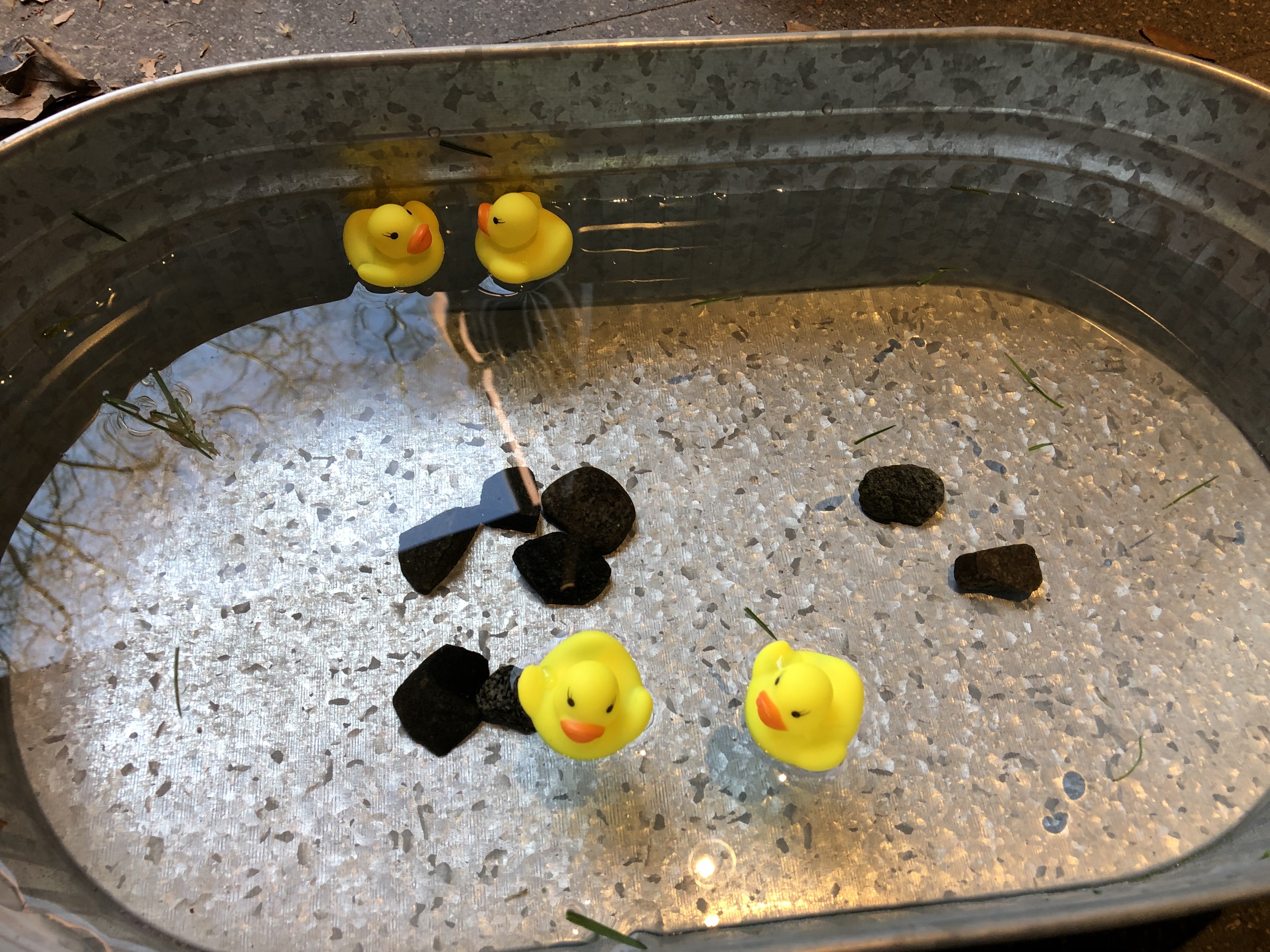
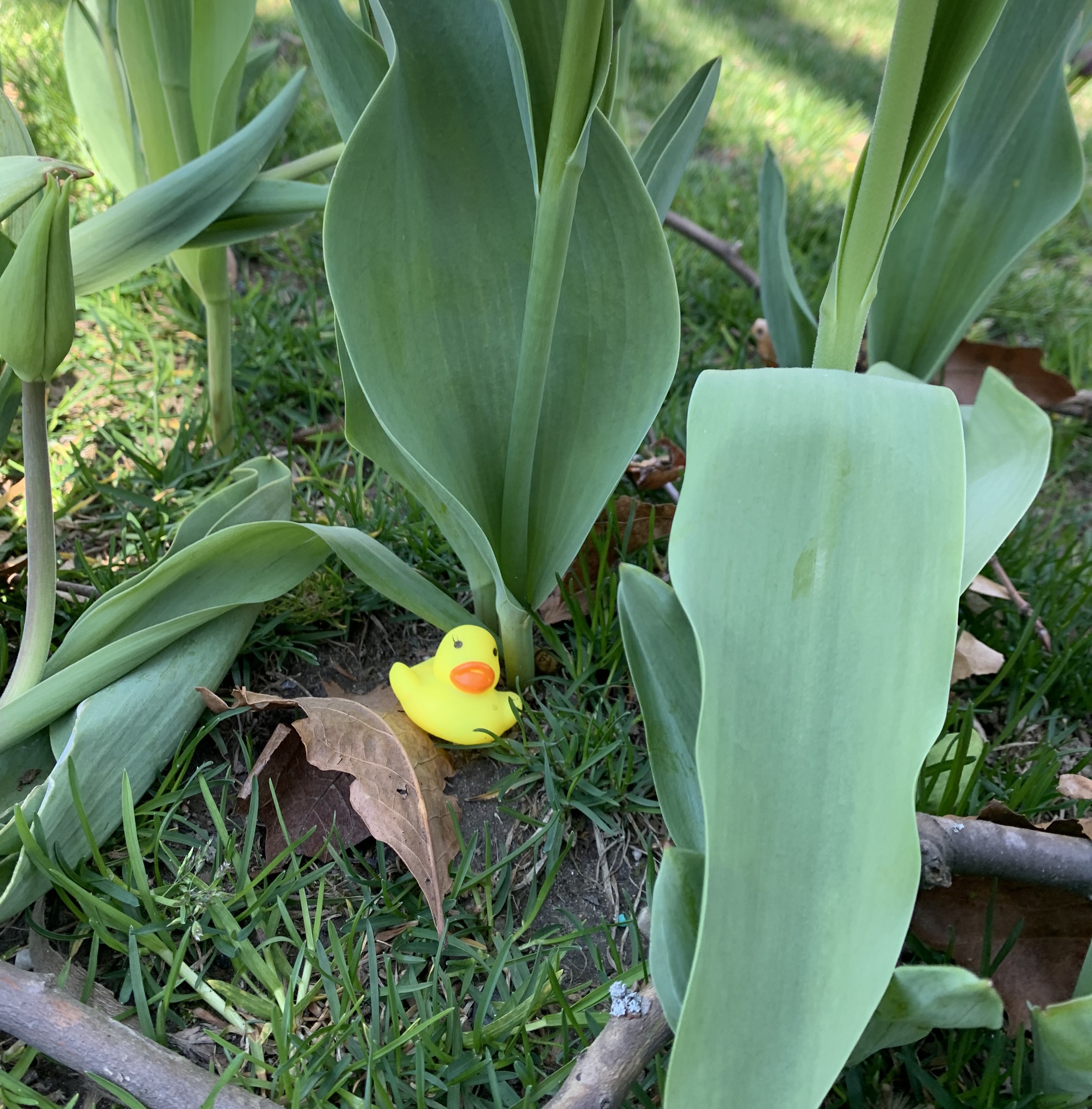
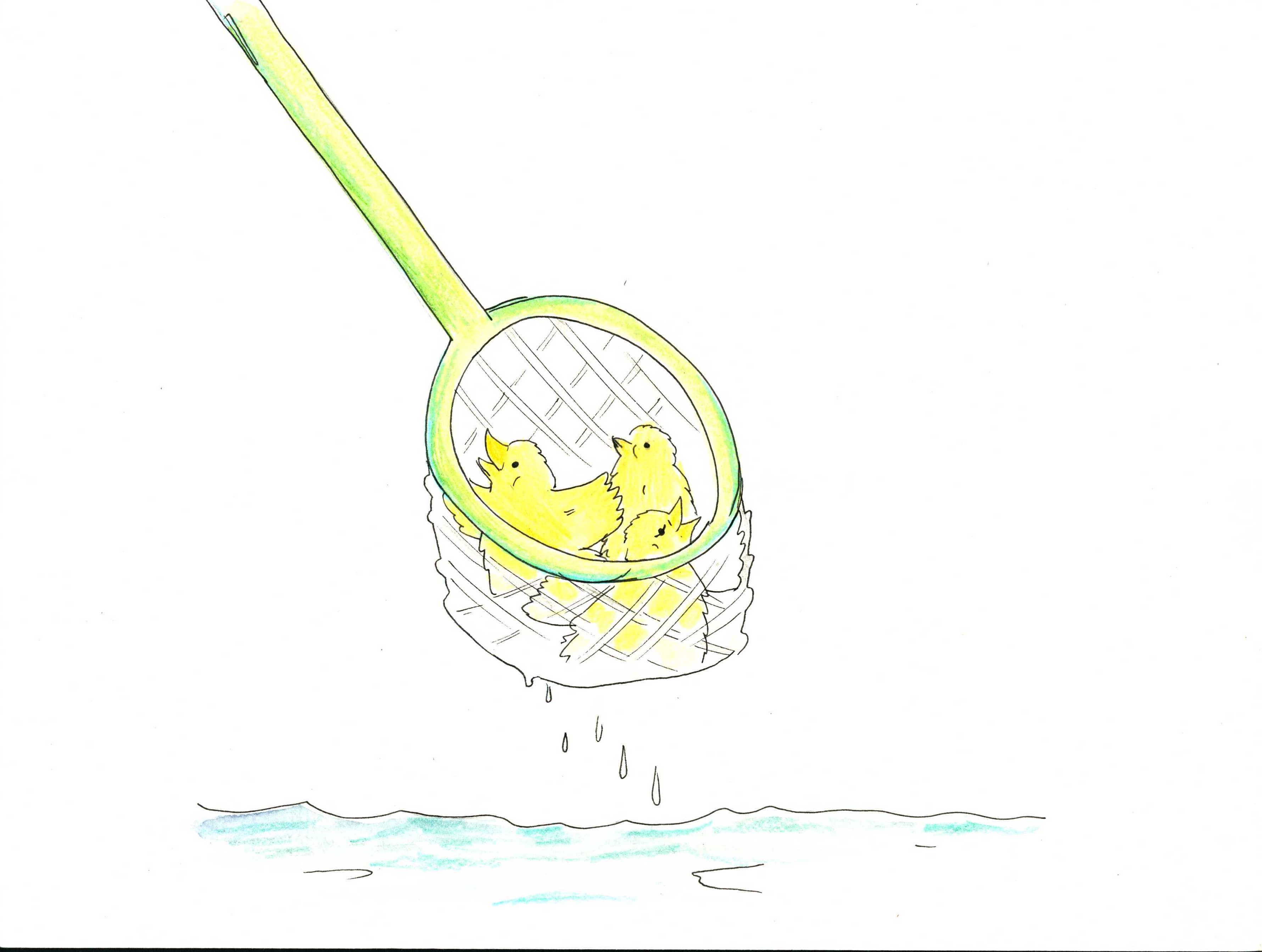
In designing this exploration, I drew inspiration from “The Case of the Missing Ducklings,” both in terms of the vehicle used for inquiry — (rubber) ducks, in this case — and storytelling as a model for investigation and exploration. 

As I firmly believe that the most effective instances of inquiry-based learning are deeply rooted in both place and community, I was excited to collaborate with the Smith College Museum of Art to create a family program.

“What’s the Mission Here?” 

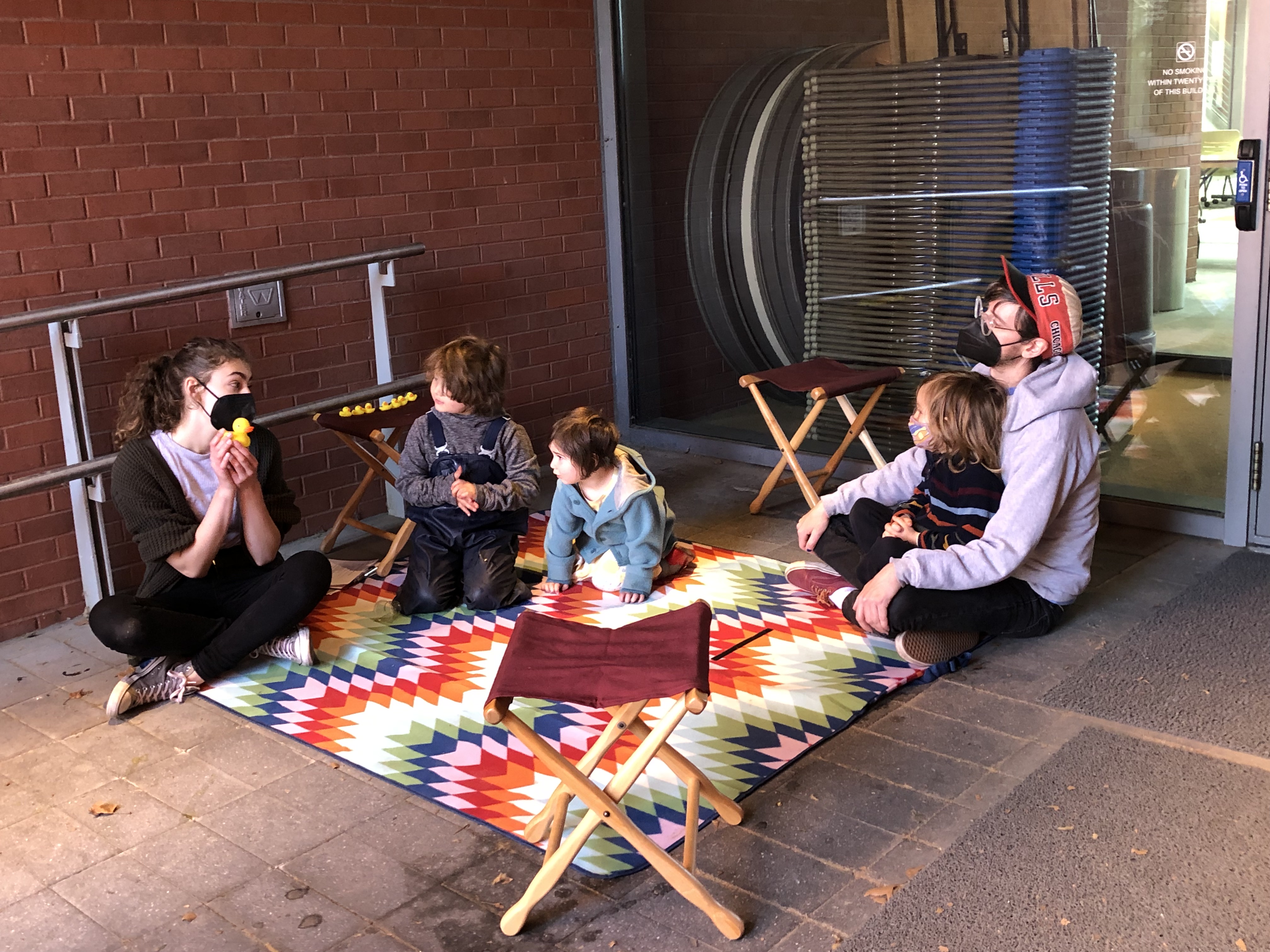
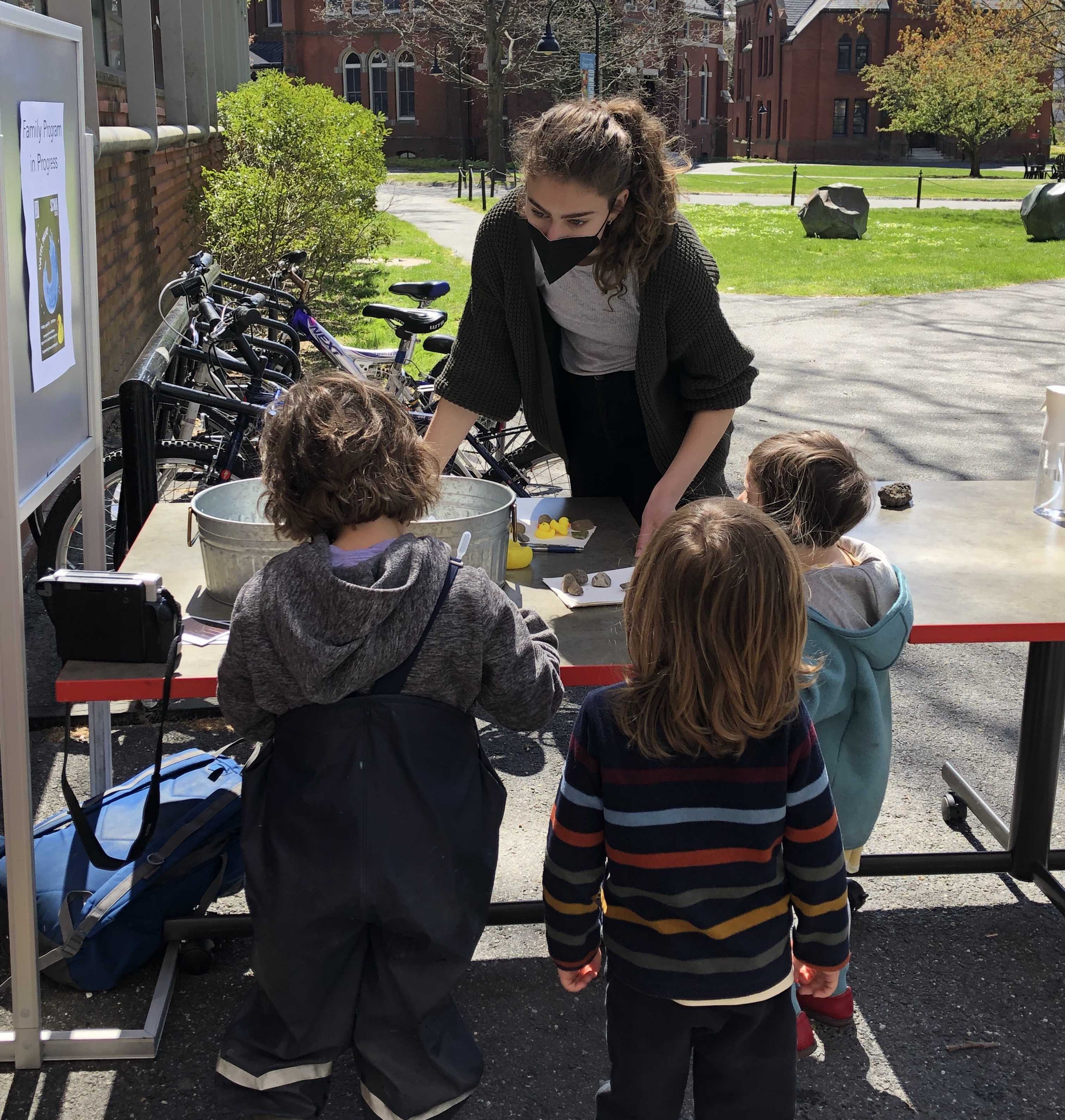
These were the first words out of Nate’s (names have been changed to protect the privacy of children) mouth as he surveyed the rubber ducks floating at his feet, and I immediately knew that my lesson plan was in trouble.

While I had spent weeks carefully curating a lesson plan designed to lead pre-kindergarten-aged children through an exploration of the way water moves and how that relates back to the Maya Lin: “Mappings” exhibition at the Smith College Museum of Art, my scripts and prompts were no match for the energy of the three four-year-olds that stood in front of me. 

They wanted to touch things, experiment with things, know things, and they wanted to do it all now. 

As is the case with any age, but most noticeably with younger students, working with preschoolers requires a certain level of planned opportunism; while you need a general plan in order to situate the children within a concept, you must also have the flexibility and humility needed to embrace the impromptu ideas and curiosities that will inevitably emerge. 

Inspiration

Touring “Mappings” by Maya Lin at the Smith College Museum of Art — coupled with the wonderfully wet Massachusetts winter — reignited my own love of and curiosity surrounding water. I have always been fascinated with water: the various forms it can take, the myriad of ways in which it engages the senses, and the artistry of it. 

As I adjusted to life in a place very unlike where I had grown up, I became intrigued with the idea of water as landmark and how the physical boundaries set by water define the spaces we inhabit. 

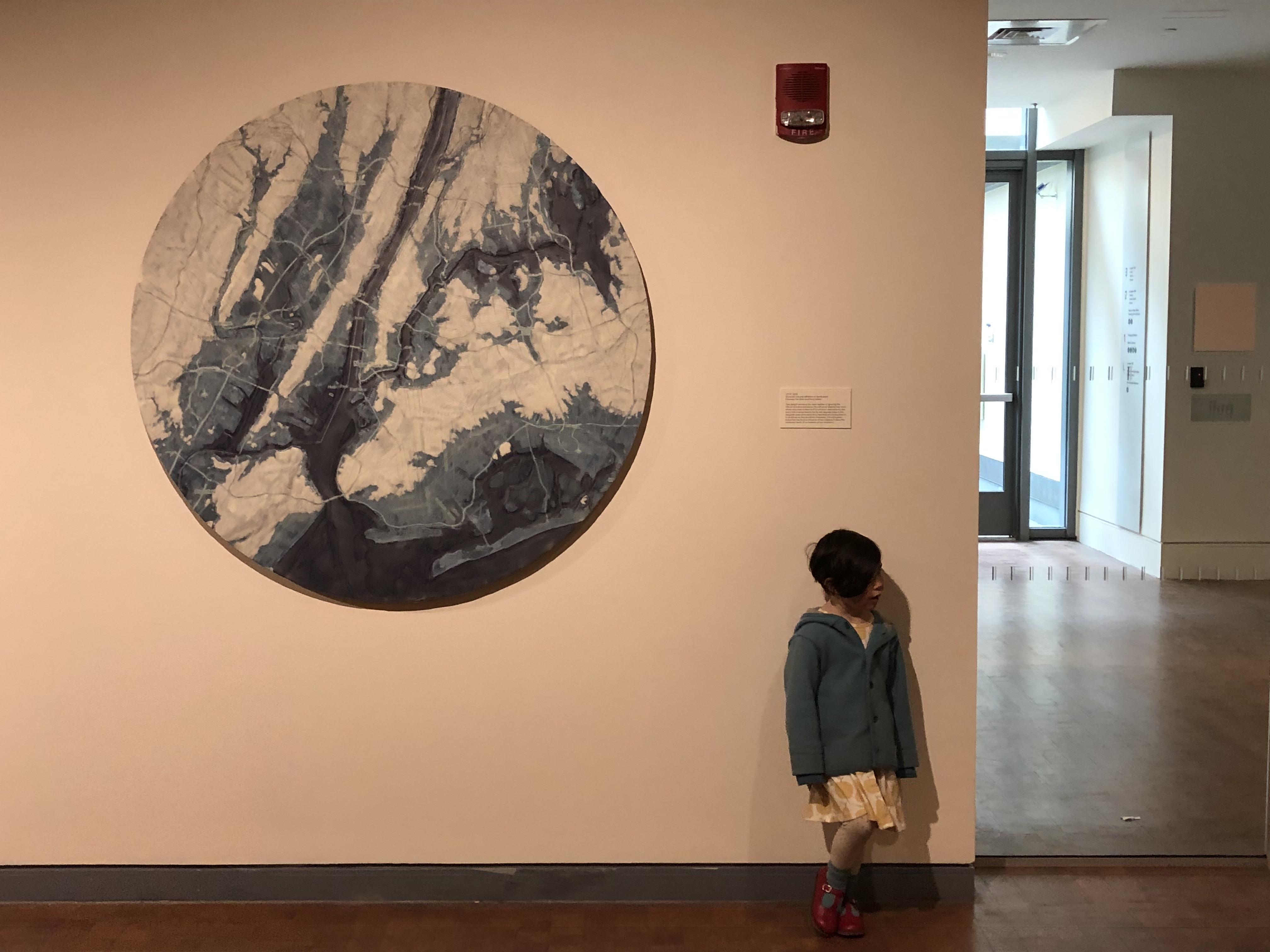
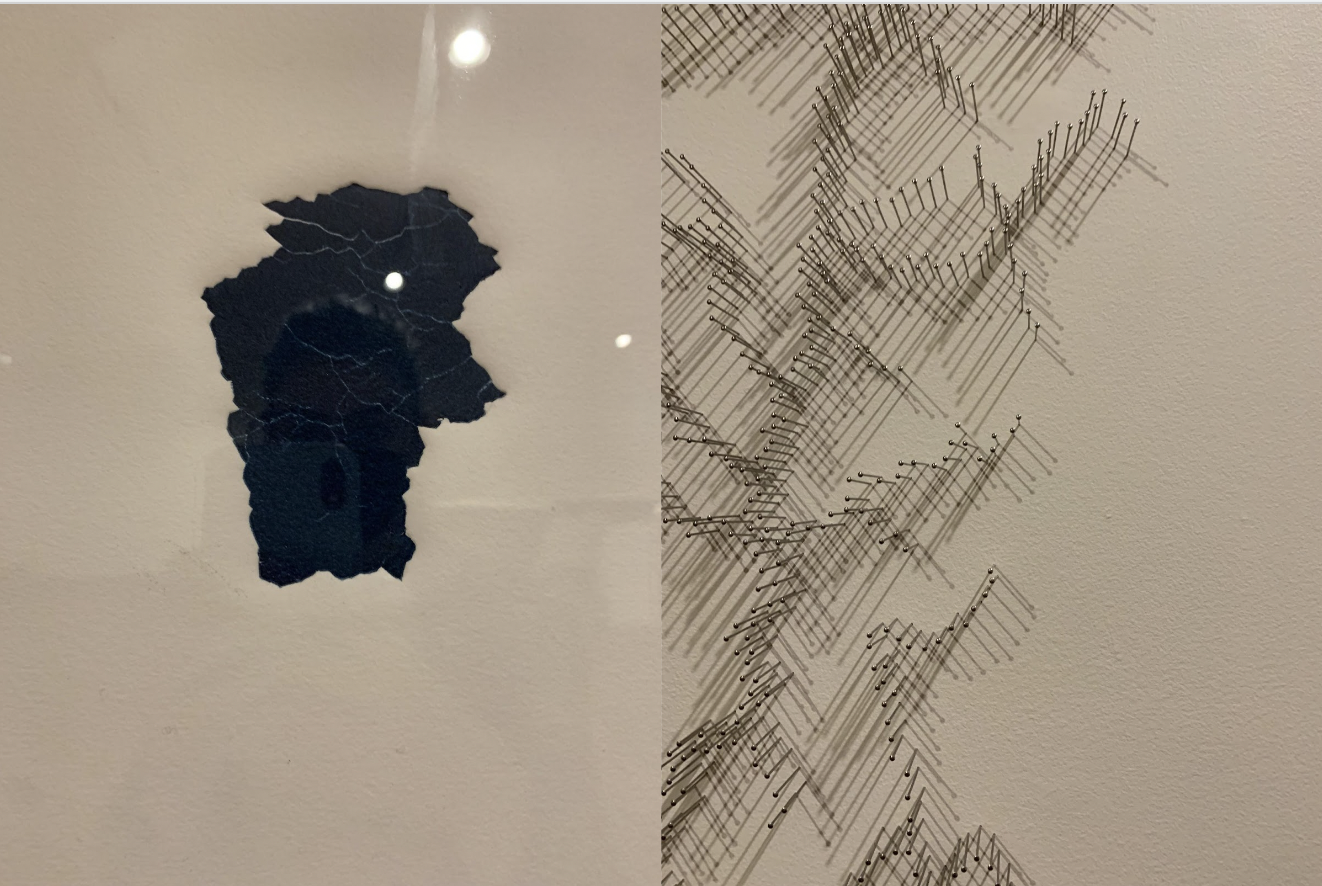
Although I loved all of Lin’s pieces, I was especially taken by the piece Pin River—Sandy, which depicts the floodplain of Hurricane Sandy, and I wondered how I might depict similar water movements in a way accessible to young children. 

The Process

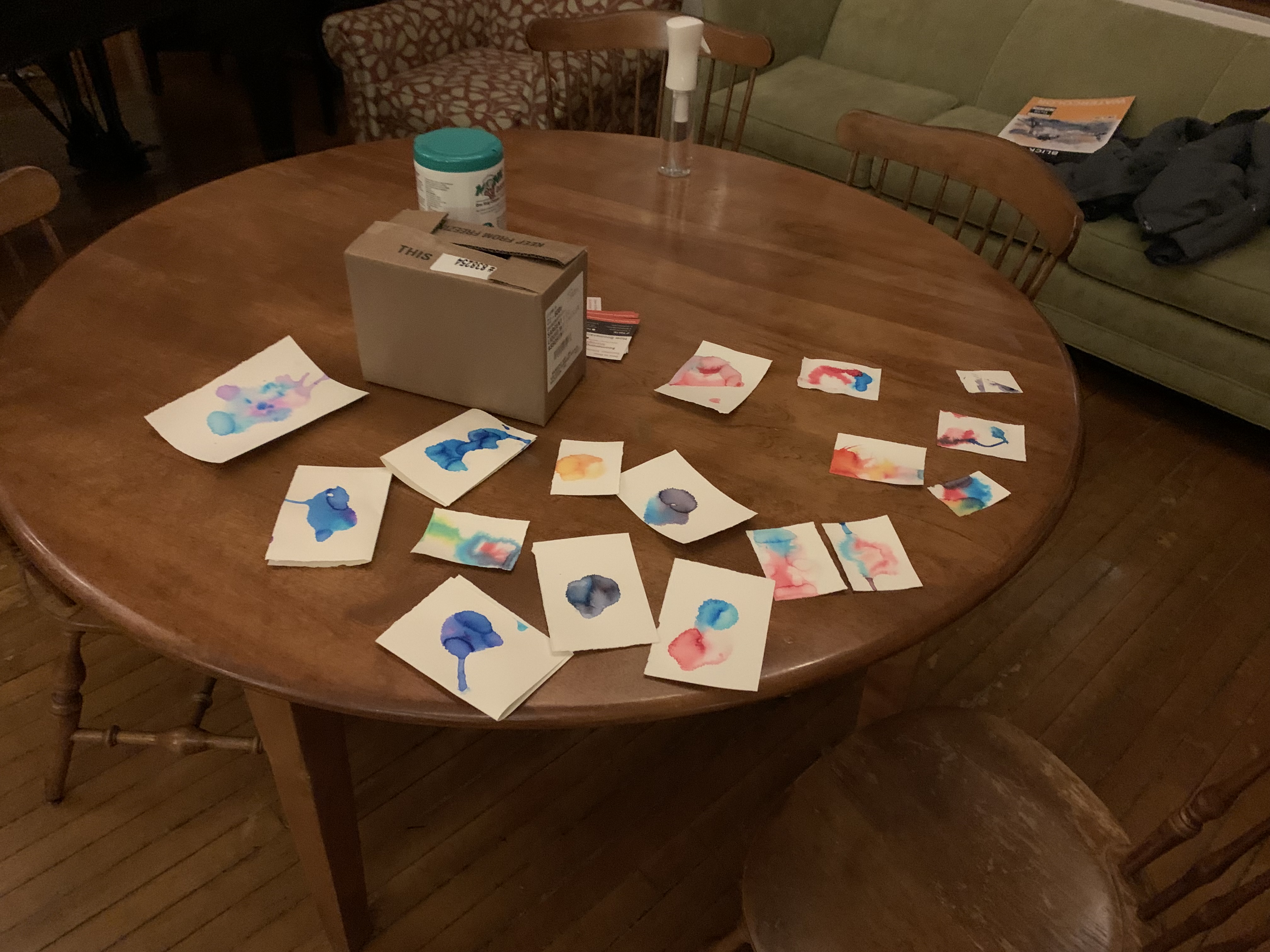
I experimented with various, child-friendly ways of recreating and preserving water tracks and discovered that liquid watercolor, slightly diluted, was the most reliable medium. 

With friends, I poured watercolors down pieces of paper, slanted to mimic hills; blew paint through straws as though we were the wind; and dropped paint onto wet paper to watch how the pigment spread. This process gave me more than stained hands, it gave me firsthand insight into the resiliency that inquiry requires.

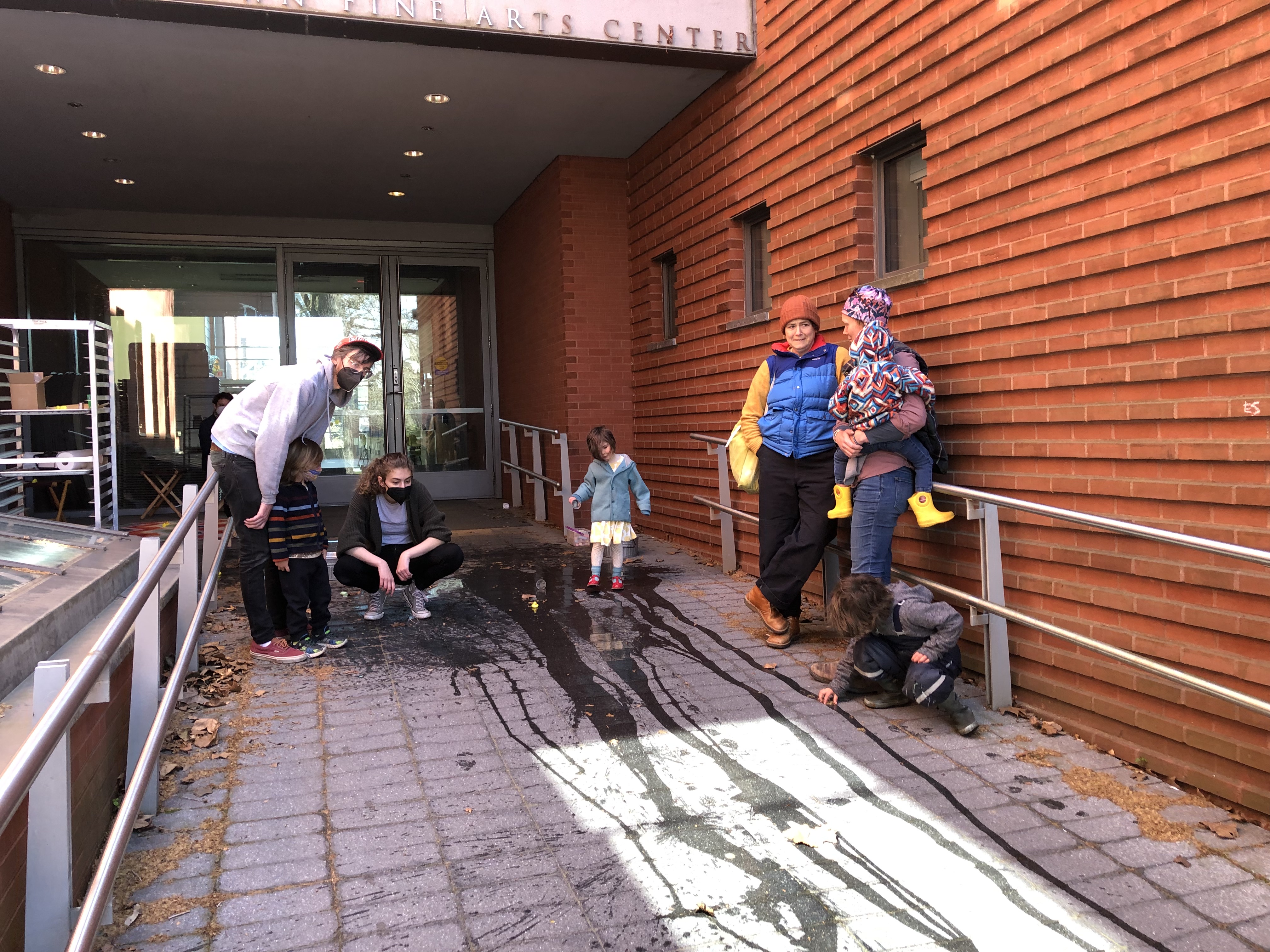
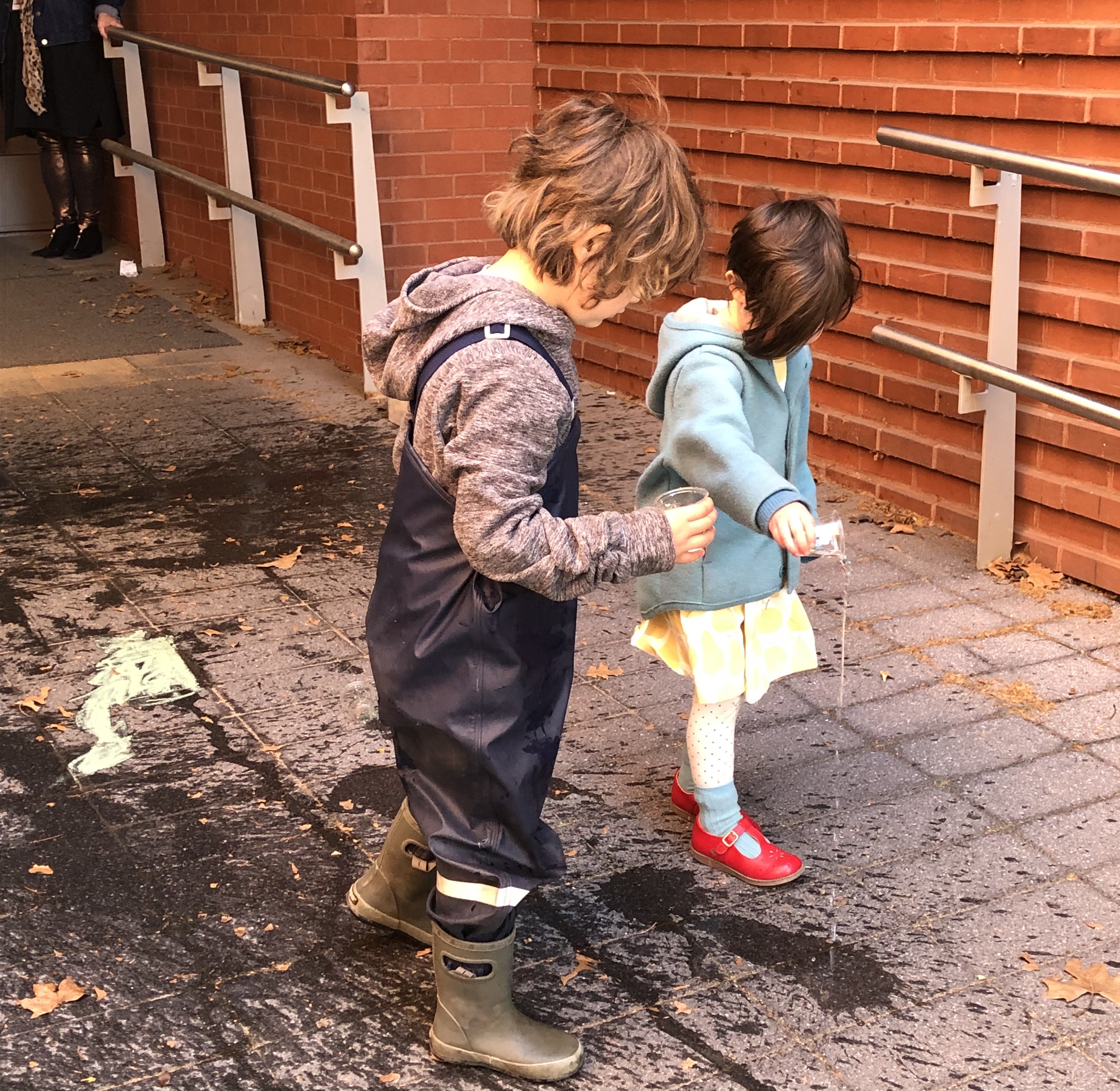
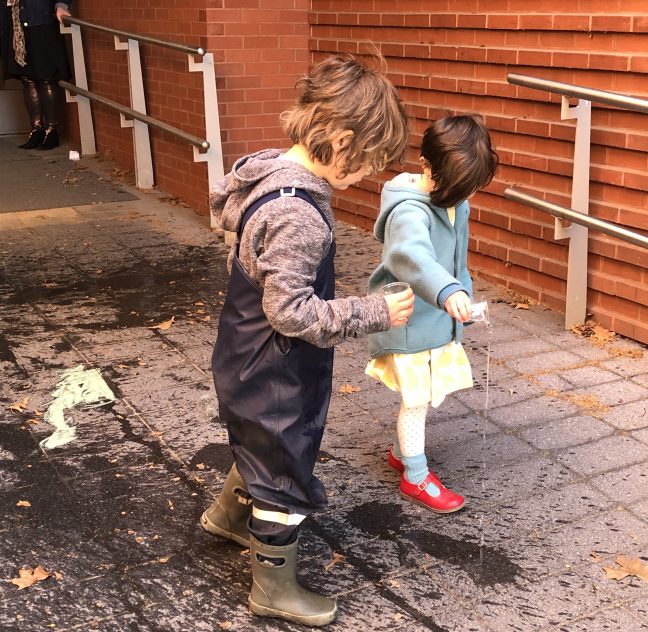
No matter how prepared I felt, I knew that my plan would hold little relevance when put into action with children: from hiding the ducks around the lawn for a massive scavenger hunt to dumping cups of water down the ramp, they had their own needs and curiosities that had to be incorporated into my plan in order to fully connect with the content.

It was swept along in this journey of true enthusiasm and pure wonder that although different from what I imagined, Mission: Water inquiry became a resounding success. 

Key Takeaways and Questions

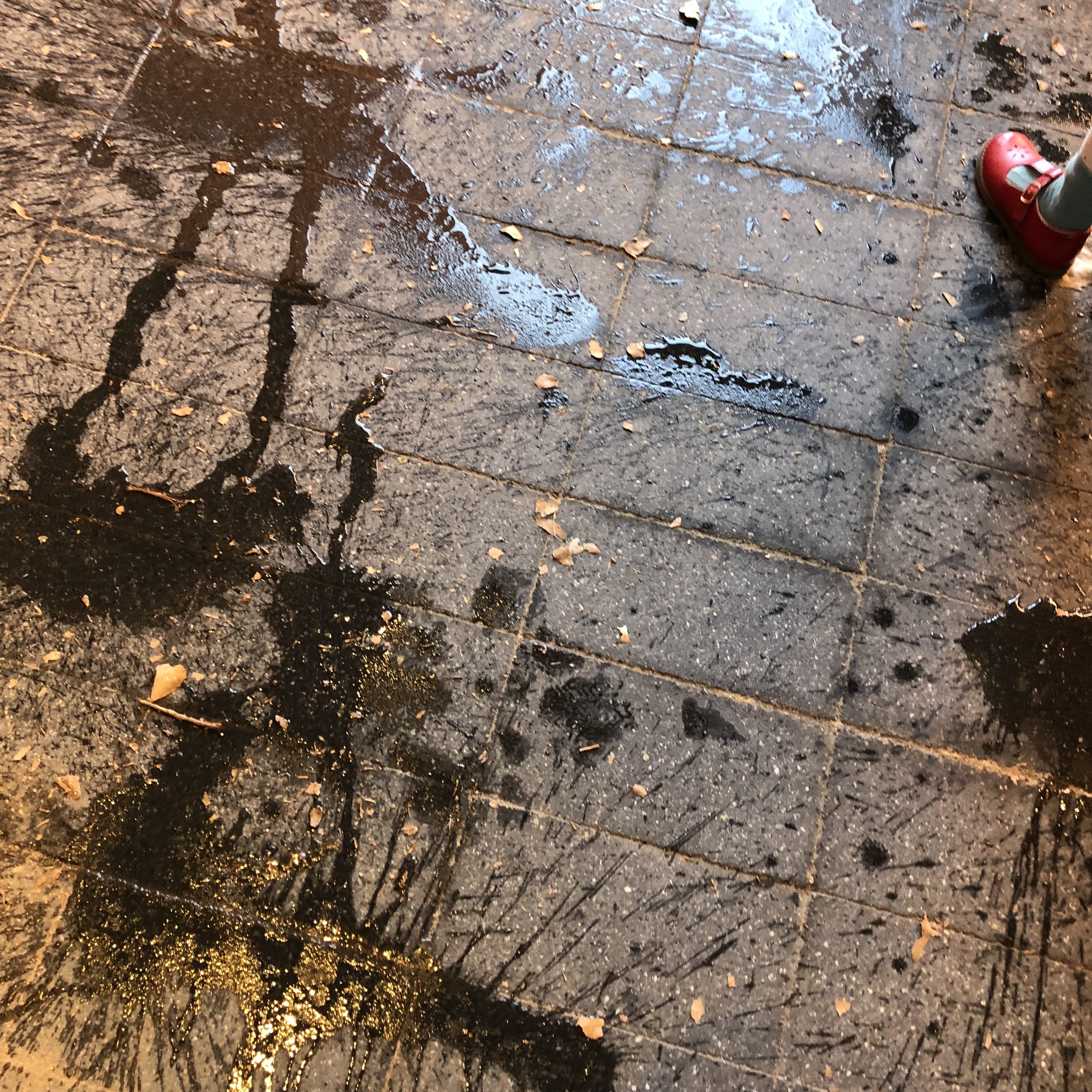
Overall, I was both pleasantly surprised by the different ways the young children viewed the water and how they characterized the shapes it made. While I might have just seen abstract shapes in the small rivers, the children saw it differently. “That looks like pants,” said one child. “It looks like trees,” said another, and then they were off, imaginations racing as the water on the ground contorted itself into fantastical images. 

Although I initially cringed at the wet mess we were making, the children seized upon the opportunities in front of them, using the spilled water to make footprint tracks down the ramp. In doing so, they expanded their understanding of the many roles that water can play, as well as my own: water was now a conduit, a medium to replicate other shapes.There is so much to be learned in play, as the greatest learning occurs in the unscripted, unplanned moments, where the children beat you to the question and run off with their own ideas, and I am grateful to the children who participated in Mission: Water Inquiry for guiding me on this journey.

Acknowledgements

This project would not have been possible without Carol Berner, my wise and patient mentor; the unflappable Gina Hall, Educator for School & Family Programs at the Smith College Museum of Art; the Smith College Museum Educators, the community members who participated, and the entire staff at the Smith College Museum of Art who opened up their doors to young children (and tolerated ducks being hidden throughout the Maya Lin exhibit)

About the Author

Tamarin Camp is a STRIDE Scholar at Smith College, where she studies early childhood education and political science. A native of the Pacific Northwest, she thoroughly enjoys water in all forms.
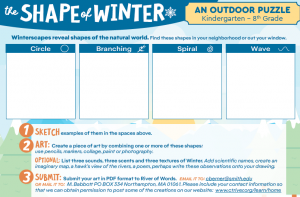
The Shape of Winter: An Outdoor Puzzle

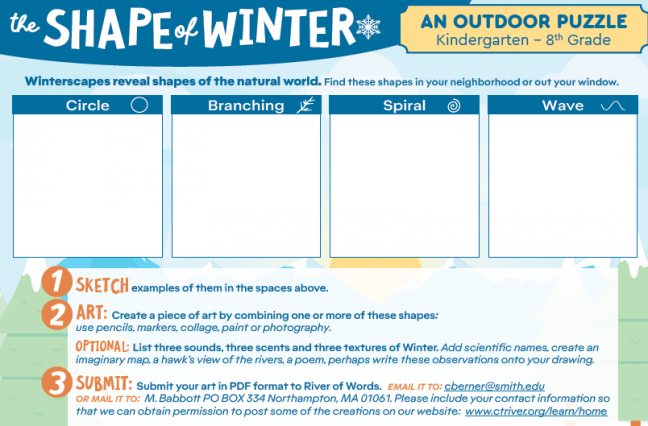
shape of winter worksheet


shape of winter worksheet
The Shape of Winter: An Outdoor Puzzle (PDF). Click here to download or print.

Recognizing the stress that the pandemic continues to have on children, their families and educators, we hope this fresh end-of-winter “outdoor puzzle” will inspire your senses and imagination. What shapes of winter can you find outdoors, or through your window?

Observe and record your findings, then create a piece of art combining shapes, sounds, scents and textures of winter. We look forward to seeing your Winterscapes! 

Planning for Spring? Try Water Inquiry Stories in Remote or Hybrid Classrooms 

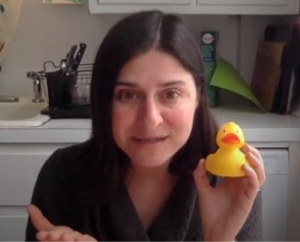
teacher with duck
How would you save those ducklings?

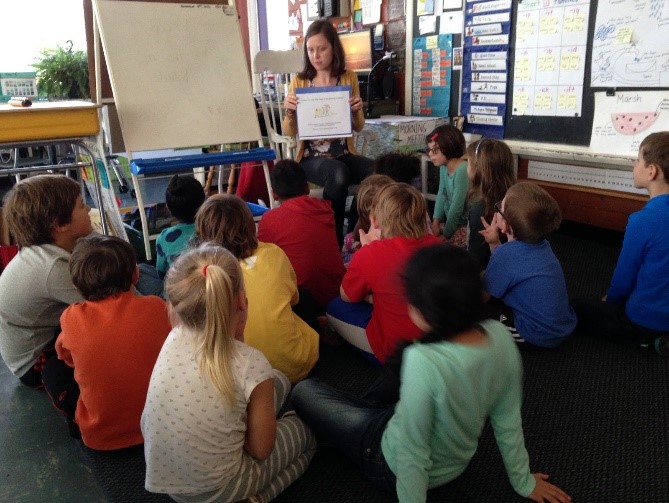
Water Inquiry’s interactive stories work well to engage students in remote or hybrid learning environments. Illustrated story books come to life in virtual read-alouds. Interactive prompts launch water investigations in backyards and kitchen sinks. Students share ideas and questions by uploading videos, sketches and audio to SeeSaw. Read the blog post Remote Water Inquiry to follow the adventures of Eva Jaffe and her first graders “immersed” in Inquiry, Inc. and the Case of the Missing Ducklings. Our team is happy to consult with educators who are curious to try remote or hybrid investigations, email cberner@smith.edu. 


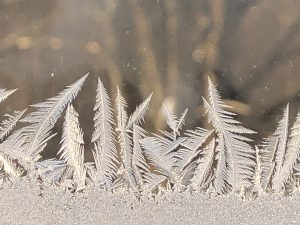
Window crystals
Branching window crystals (Carol Berner)

In winter

          all the singing is in

                    the tops of the trees


from White-Eyes, by Mary Oliver


Written by Carol Berner in collaboration with Margaret Babbott, Co-Coordinators of River of Words along the Connecticut River

November 2018: Original Stories, New Members

We’re halfway through another semester here at Smith College, and the Water Inquiry team has been busy. Not only did we gain several new members, but we met several times during the month to discuss developments on projects new and old.

Water Inquiry’s own Ruth Neils taught our first story, Inquiry, Inc. and The Case of the Missing Ducklings, to third grade students at the Campus School of Smith College. We are happy to report that it was a success; the students were very engaged, and the story helped them think critically about storm drains! We’re examining ways to adapt the story for an older audience, including providing more prompts for scientific and reflective writing.  Continue reading November 2018: Original Stories, New Members

The Flow of “Big Ideas”: Third Grade River Inquiry at the Smith College Campus School

“Always be on the lookout for the presence of wonder.”
–E.B. White

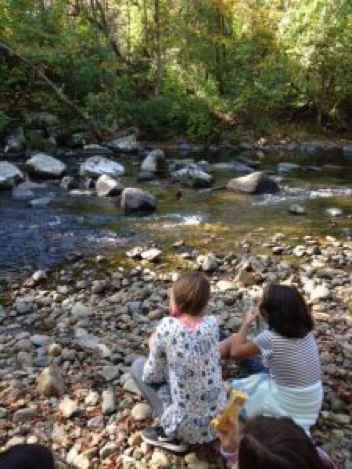
“That explains it!” one student exclaimed while looking under rocks on the banks of the Mill River.  It was a sunny afternoon in Northampton, Massachusetts, and Jan Szymaszek’s third grade class was rapt.  Autumn leaves drifted from branches, landing atop craggy boulders, or else becoming subsumed in the downward rush of water.  Cameras in hand, students hopped their way through gravel and sand to capture moments that might generate questions or theories about rivers: how they move; where they lead; how they change.  The launch of this year-long science unit invited students to explore their natural environment, making observations that they could then carry into classroom discussions. Continue reading The Flow of “Big Ideas”: Third Grade River Inquiry at the Smith College Campus School

Clue Number 2! A Rhyme from Water Inquiry

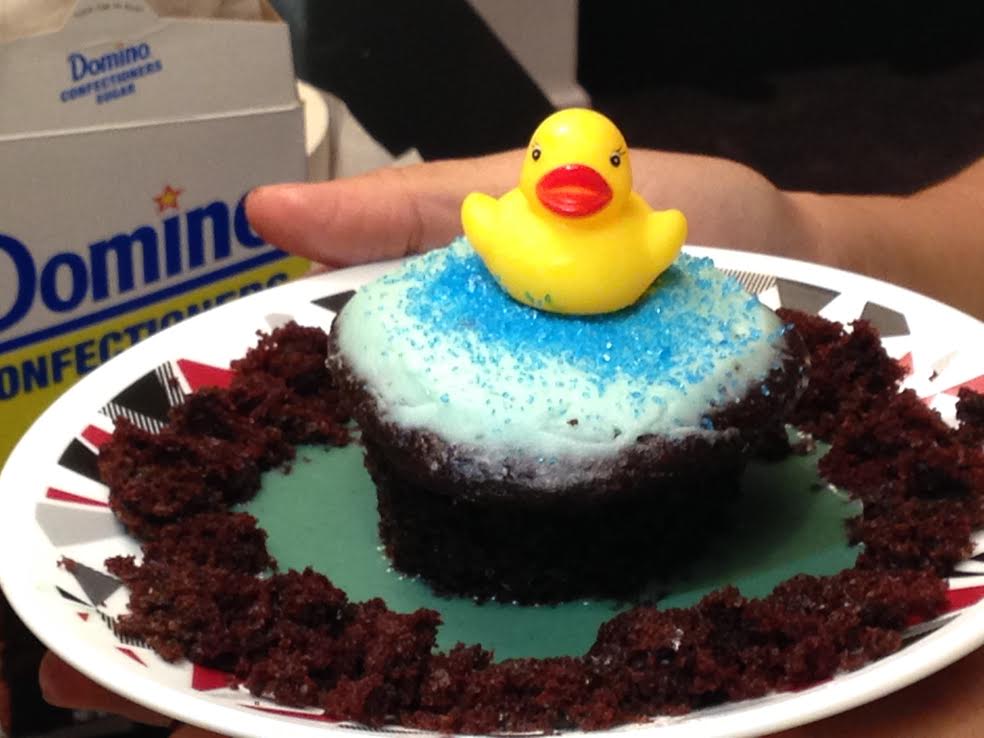
“Flood cupcakes” were enjoyed by Water Inquiry researchers at their recent meeting!

Welcome, Water Inquirers, to the end of another year!
As you grade your final papers, we hope you’ll lend an ear.

It’s been a productive fall in our “thinking lab” near Capen.
Inquiry, Inc. characters had lots of puddles to play in.

Carlos asked his questions; Lee had lots of fun.
But we can’t tell you why, for the story has just begun!

Back in late October, we presented you with a clue.
And though it was quite telling, its relevance we did eschew.

But now it’s time for another hint, as the first snow falls and vacation draws near.
If you play close attention, the theme of our upcoming story should ring clear:

On a cold winter’s eve, Water Inquiry did gather
In the apartment of Pinn, where blue frosting she did lather
Upon some “flood cupcakes,” with rubber duckies and all–
An edible depiction of the narrative we crafted this fall.

“What happens when there is too much water?” our characters ask with concern
As rain pools in important places, lending opportunities to think and to learn.

While our first tale chronicled ducklings as they traveled underground,
Our new tale presents a different problem about water that surrounds.

From drain to rain
And rain to drain
Our characters brought their knowledge.
But “What about water that doesn’t disappear?” is a question that stumped students in college.

So that is the plight that characters now explore
In an exciting new story that surely will not bore.

Your students will get to end the tale *
Before packing their work into a box and sending it through the mail.
We eagerly await their problem-solving,
Their questions and hypotheses ever-evolving.

Goodbye for now, and we will see you after the break,
Ready to share our story about a field that turns into a lake!

‘Till next time,
The Water Inquiry Team

*stay tuned for details about the “Unfinished Story Box” writing challenge that will invite your students to create and share original endings for the next Inquiry, Inc. water investigation. 

Written by Brittany Collins on behalf of Water Inquiry

New Ideas, New Members, New Stories!

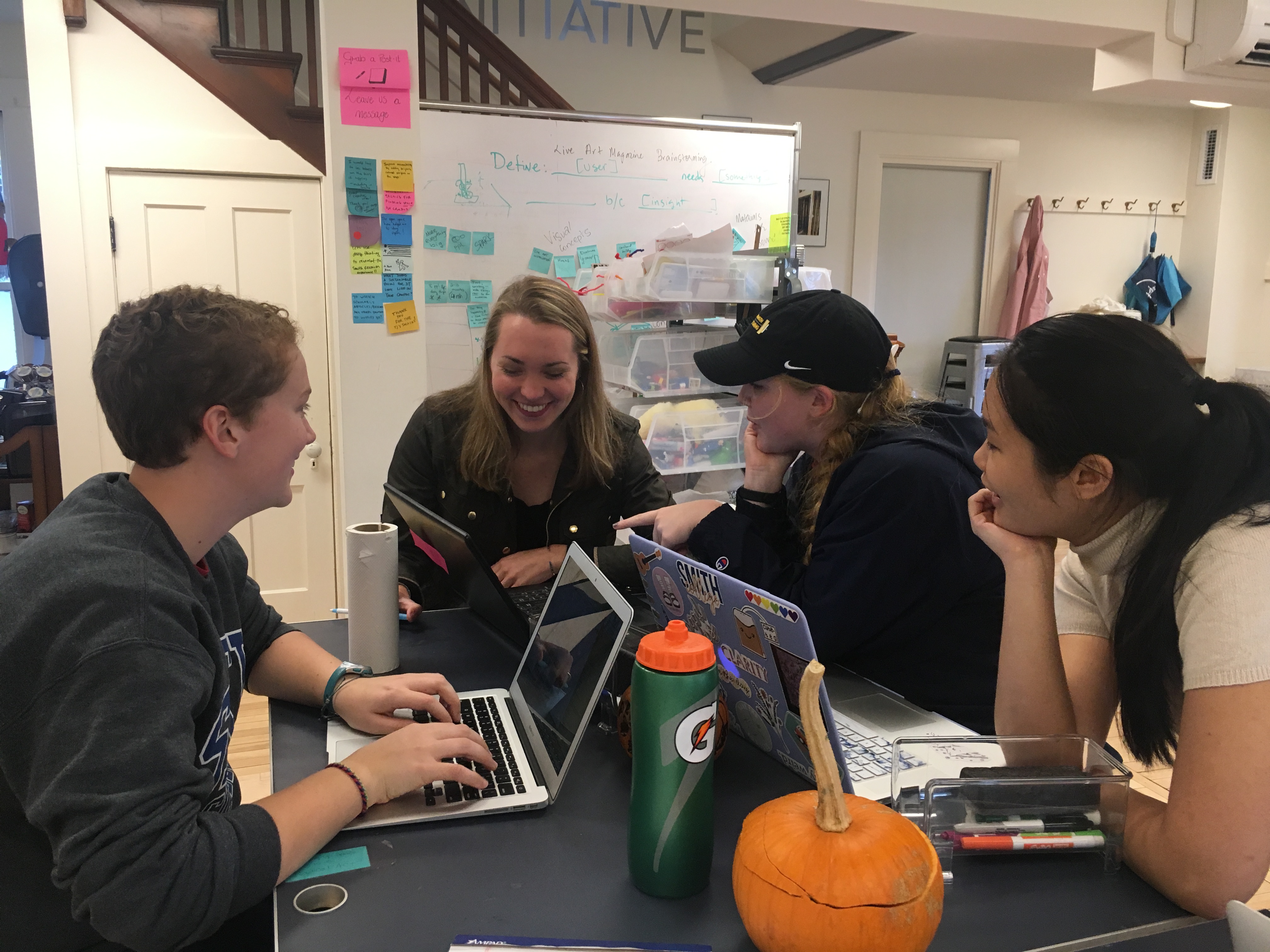
As we gathered in late September to commence our first meeting of the 2017-18 Water Inquiry Story Project, much excitement was felt among old and new members alike. New members were eager to join a story-creating research group, and veteran members were enthusiastic to start anew, having had such success with last year’s Inquiry, Inc. pilot story. With the new school year came our new working space, the Capen Annex Design Thinking Lab.

One of our main tasks was to decide our next course of action: write a new story, create a new format, do more research, widen our perimeters, etc. After a couple of weeks spent thinking, reflecting, and discussing, some of our amazing team members discovered and brainstormed a fabulous new vision: Inquiry, Inc. will appear in a story that your very own students can finish!

Inspired by the YA Unfinished Storybook Project, our next Inquiry, Inc. story will be formatted in an innovative and exciting way. Participating classrooms will receive an unfinished story featuring the familiar characters of Inquiry, Inc., along with a decorated “secret mission” story box in which to submit their original endings. In a letter to students,  Inquiry, Inc. will ask for help with their newest problem. They NEED their friends’ — your students’ — expertise and fresh ideas. We will introduce the drama of a compelling local water problem; model the first steps of inquiry; then hand the problem-solving off to students, asking them to finish our story in a way that helps Inquiry Inc. “save the day”, as shouted in their jingle.

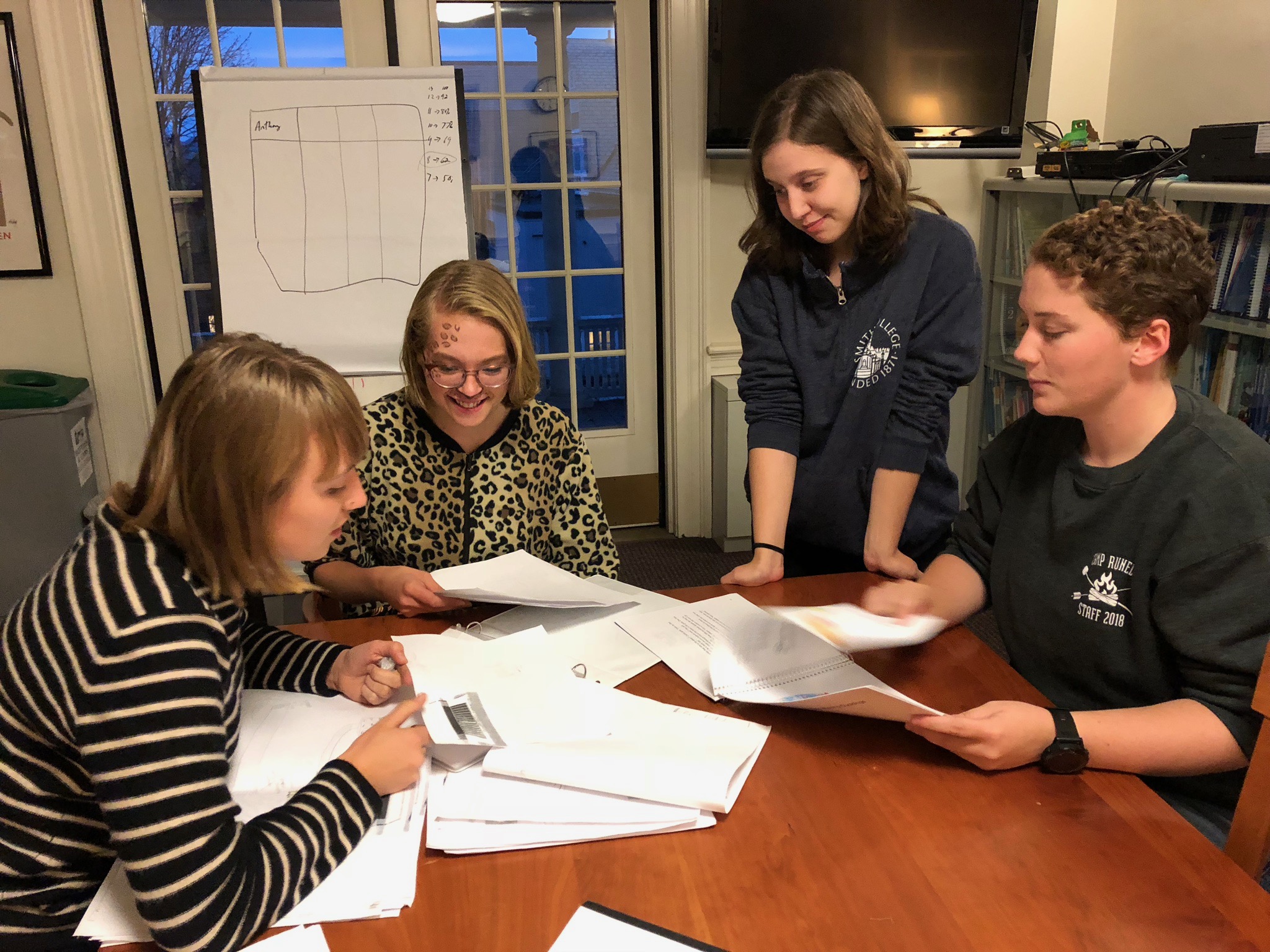
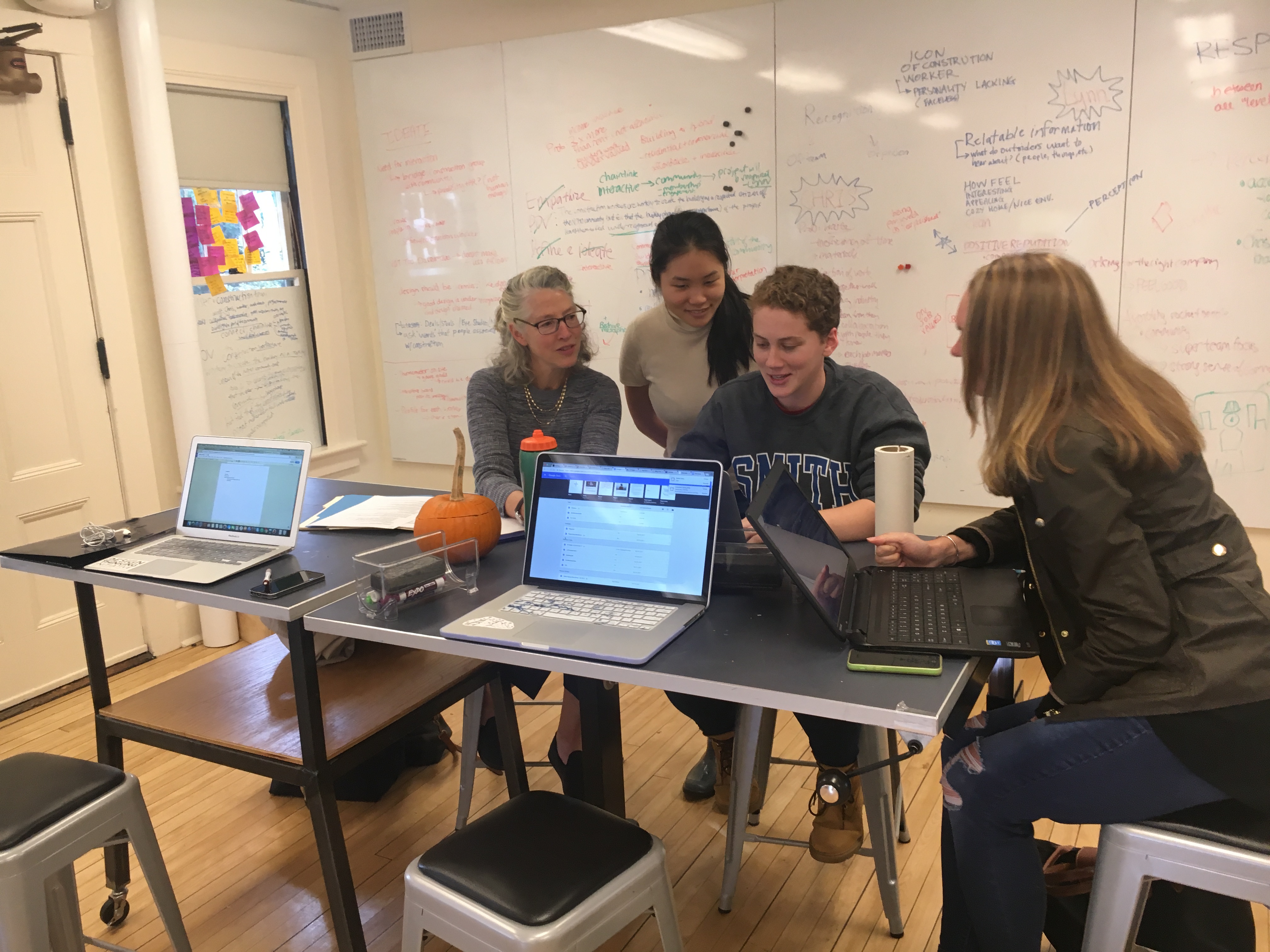
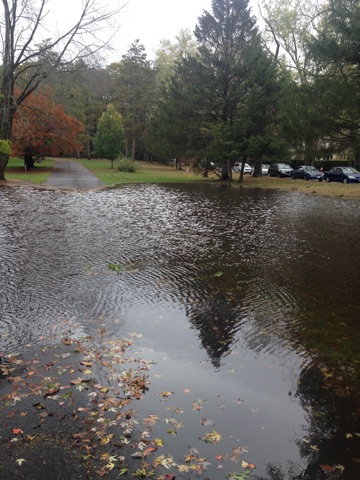
This new format rings true with the purpose of our Water Inquiry Project: learning through inquiry and interacting with the local environment. We would love to provide you with more information, but that would defeat the purpose of this Top Secret Mission, wouldn’t it? We can give you a little clue as to what we were talking about in our meeting pictured above, though; we were busy deciding what problem Inquiry, Inc. would solve next… and the hint is that we saw a lot of it while walking in a nearby park:


OK, enough secrets given away for one day! Stay tuned for updates and releases.

Thank you for keeping up with our project, we really appreciate your support and can’t wait to have Inquiry Inc. arrive in your classrooms! If you’re interested in participating in this project or would like to find out more, please e-mail Carol Berner or post a comment or question.

In the meantime, it is my pleasure to introduce the members of the 2017-18 Water Inquiry team:

Brittany Collins joined the Water Inquiry Project in 2016. She is interested in narrative learning, story-form thinking, and the integration of story in STEM curricula. Brittany attended the Smith College Campus School and has enjoyed returning as a classroom aide, dance teacher, and (now) a marketing and writing intern, as well as water researcher. A native of the Pioneer Valley, Brittany grew up exploring the outdoors– hiking, fishing, swimming, ice skating. She brings to Water Inquiry a desire to foster in students a love of the “inner” world of books and the “outer” world of their communities and environments, worlds that she views as reciprocal and connected.

Pinn Janvatanavit is a senior at Smith College from Bangkok, Thailand. She is majoring in education and minoring in studio art. Pinn loves to bake, sing and dance in her free time. This is her first year joining the Water Inquiry Project and she is mostly looking forward to helping out with the illustration and story planning processes.

Meghan Johnson is a junior Environmental Science & Policy and Education & Child Study double major at Smith College. In environmental science, Meghan focuses on marine ecology and is fascinated by issues such as clean water and rising seas. In addition to studying all about the oceans, Meghan enjoys spending time backpacking, swimming, scouting, and appreciating nature. Since the spring of 2017, Meghan has enjoyed working on the Water Inquiry project to educate children about the inquiry process and environmental issues happening all around them. Meghan is excited to see the Water Inquiry project grow!

Ruth Neils is an Education and Environmental Science double major and a current Junior at Smith College. Originally from Grand Rapids, Michigan, Ruth grew up surrounded by the Great Lakes, spending much of her childhood exploring the water and nature around her. Ruth enjoys being outdoors hiking, swimming, and traveling, all of which she has had the privilege of doing during her time abroad in New Zealand for the fall semester of 2017. The Water Inquiry Project perfectly combines Ruth’s interests in the environment and education fostering scientific investigation and discovery through engagement with the natural world. Ruth has enjoyed being part of the evolution and growth of the Water Inquiry Project over the past two years and is excited to continue working on the project to see the new directions it will take in the future.


Hannah Searles is a senior education and psychology double major who has been working on the water project in one form or the other since her first year. She is interested in elementary education and learning about creative ways to incorporate story and science in the classroom. In her spare time, she spends extra time in the water on the diving team at Smith. 


An Easthampton, MA native, Lily Sun studies Psychology at Trinity College. With her interests in Psychology, she has had research experience in the field. She enjoys working with kids and is excited to join the Smith community as a Water inquiry researcher. In her free time, she enjoys dancing, playing her violin, knitting, and reading.

Anna Wysocki is a sophomore who is currently undeclared, but plans on declaring a major in Government and is still pursuing numerous fields she wishes to minor in, from Public Policy to Environmental Science and Policy. Growing up in upstate New York, in a town called Hoosick Falls, Anna has an interesting experience with water that drove her initial interests in this project. Her town’s water supply was discovered to have been poisoned by a pollutant called PFOA just a couple years ago, which is known to be linked with serious health consequences. She joined the Water Inquiry Project in 2016 hoping to reveal water in its many forms and promote water safety and knowledge through the story-writing process. She loved her last year working on the project and is excited to introduce the project in a new light this year. Anna is also a member of the lacrosse team at Smith, a Head of New Students in her house, and is a Gold Key tour guide.

And last but not least, our fearless faculty leader Carol Berner!

Written by Anna Wysocki on behalf of the Water Inquiry team.

How do rivers stay clean? Current events coming our way

Over the next two weeks, several local water-related events may spark your curiosity: whether you’re interested in how water gets clean; how public artwork impacts water policy; or how you and your class might participate in a river clean-up. Water seems a crucial topic given the devastation caused by recent hurricanes; supplementing conversations about extreme weather with opportunities to learn about local water allows students and educators to learn more about this natural resource, whose everyday intricacies are equally astounding as its sheer power in the midst of a storm.

What discourses and projects are you and your students tackling? What are your students’ curiosities, concerns, and questions? As the Water Inquiry team gets back to work this fall, please keep us posted on your interests so that we can stay current, too.

Documentary: HERE’S TO FLINT
September 13, 2017
Forbes Library, 20 West St, Northampton
6:30 pm to 8:30 pm
“Here’s to Flint,”
a documentary by the ACLU Michigan, examines what led up to the poisoning of the largely African American city, and, on a larger scale, how lack of funding in infrastructure poses risks to the entire country. Speakers to kick off the post-film discussion include: Mary Ann Babinski, Westfield City Councilor, who will talk about water safety problems closer to home with activists from Westfield Residents Advocating for Themselves (WRAFT); and David Ahlfeld, Prof. of Civil and Environmental Engineering at UMass Amherst. A link to the Facebook event page: More…

Connecticut River Conservancy invites you to three events that address the question, “How do our rivers stay clean and healthy?” Science and engineering practices, community art, and an annual river clean-up afford insight into the multidisciplinary approaches community members use when tackling this unifying problem.

Springfield Wastewater Treatment Tour, Agawam, MA
Thursday, September 14
5:45 – 7:45pm
What happens to water when it goes down the drain? How does it get cleaned? We’ll join SUEZ Water Environmental Services, Inc. and Springfield Water and Sewer Commission for an informative tour of the Springfield Regional Wastewater Treatment Facility and learn about the process of cleaning wastewater for public health. RSVP REQUIRED

The Power of Water / The Power of Words Reception
Saturday, September 16, 1 – 3pm
Great Falls Discovery Center
2 Avenue A 
Turners Falls, MA

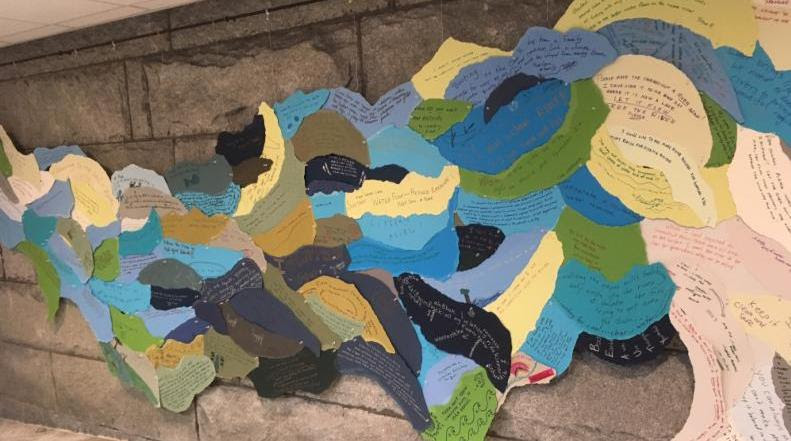
Join us for a celebratory reception of the powerful, collective art installation of The Power of Water / The Power of Words at the Great Falls Discovery Center. This beautiful art sculpture serves a powerful public policy purpose.


Source to Sea Cleanup

Friday & Saturday, September 22 & 23 
VT, NH, MA & CT
This annual trash cleanup allows us to connect with our community members and rivers– in 4 states! Learn more or sign up at www.ctriver.org/cleanup.


Back-to-School with Water Inquiry

Welcome to a new school year! Students are trickling onto the Smith campus, and we are excited to resume our Water Inquiry meetings in September. Inquiry Inc. characters spent the summer relaxing after their hard work saving ducklings in our first interactive storybook and are ready for their next adventure; this fall, they will set to work solving a brand-new water problem, and we can’t wait to share their happenings with you!

The summer months allowed us to give the Water Inquiry website some “TLC.” We hope that you will investigate our updated resources, including:

  1. Our “About” page featuring teachers’ and children’s insights about “Why Water?” and how we work to improve ideas.  
  2. An “Interactive Stories” page comprising a slideshow of local classrooms piloting our interactive story (see below); followed by downloadable PDF’s of Inquiry Inc. and the Case of the Missing Ducklings illustrated story and Educator Toolkit; a link to Pedro’s Coral Reef Adventures, a water conservation tale created by children in Belize working with Smith college students this summer; and a review of literature that informs our storytelling work. **Keep an eye on this page! We hope to offer a flippable, digital version of  Inquiry Inc and the Case of the Missing Ducklings for projection in your classrooms!** 
  3. A “Schoolyard Investigations” page with downloadable PDFs of our learning adventures, as well as teacher resources for teaching and learning about water in the classroom (mapping, thinking strategies, water vocabulary, etc.)

As always, the Water Inquiry team invites all forms of collaboration; please contact Carol Berner at cberner@smith.edu to let us know what additional resources you would like to see on this platform, to join our Water Inquiry efforts, or to pilot our story and unit in your classroom.

We are heartened by the energy of teachers, students, and community members engaged in Water Inquiry and are excited by all that the coming year will bring. Best wishes to you all as you welcome new students into your classrooms– may you enjoy a year of growth and inquiry.

Sincerely,
Brittany Collins on behalf of the Water Inquiry team

[metaslider id=1019]

“What does inquiry mean?” Maple School Pilot

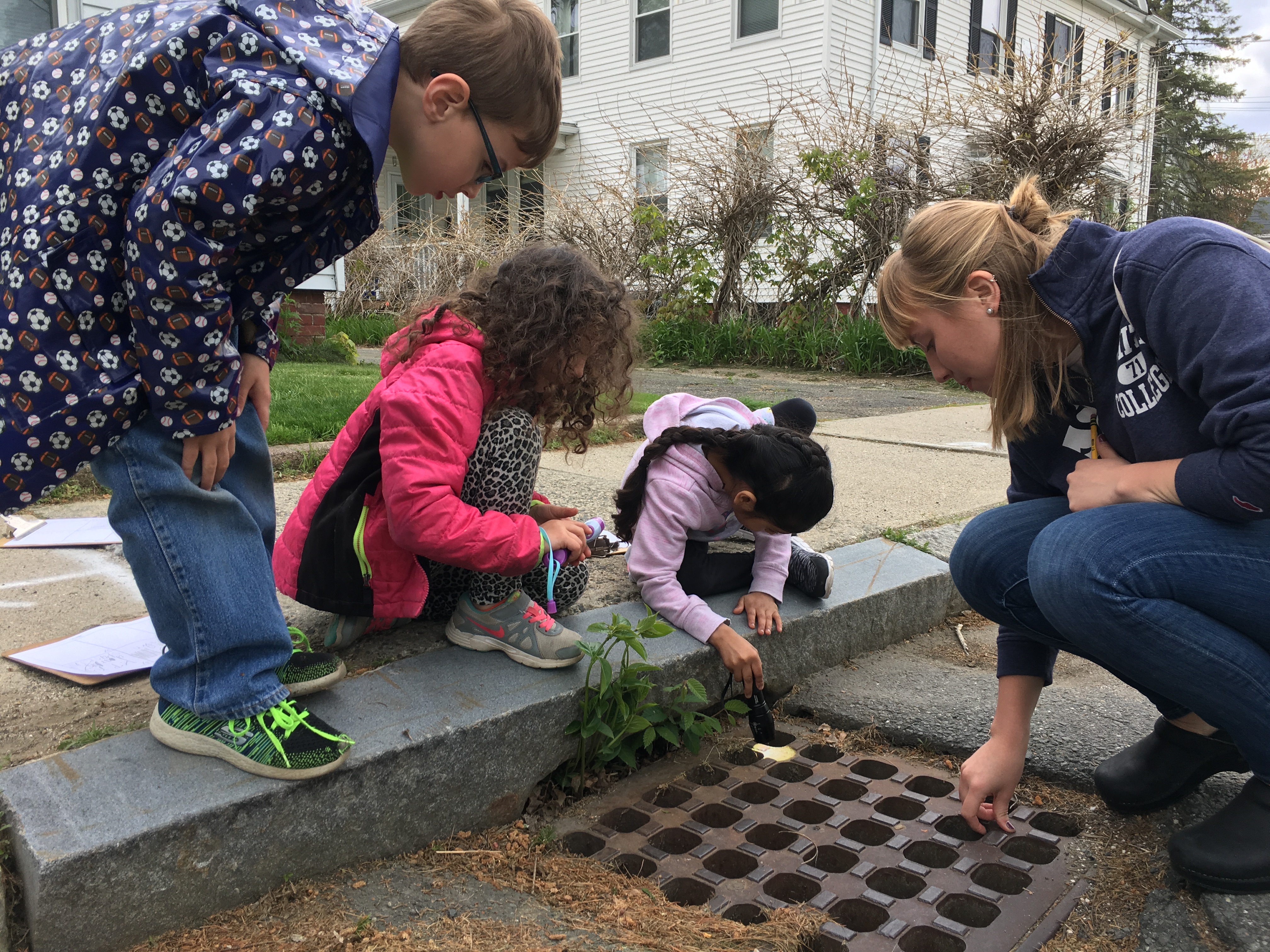
Water Inquiry Researcher Anna Wysocki ‘21 explores storm drains with first graders.

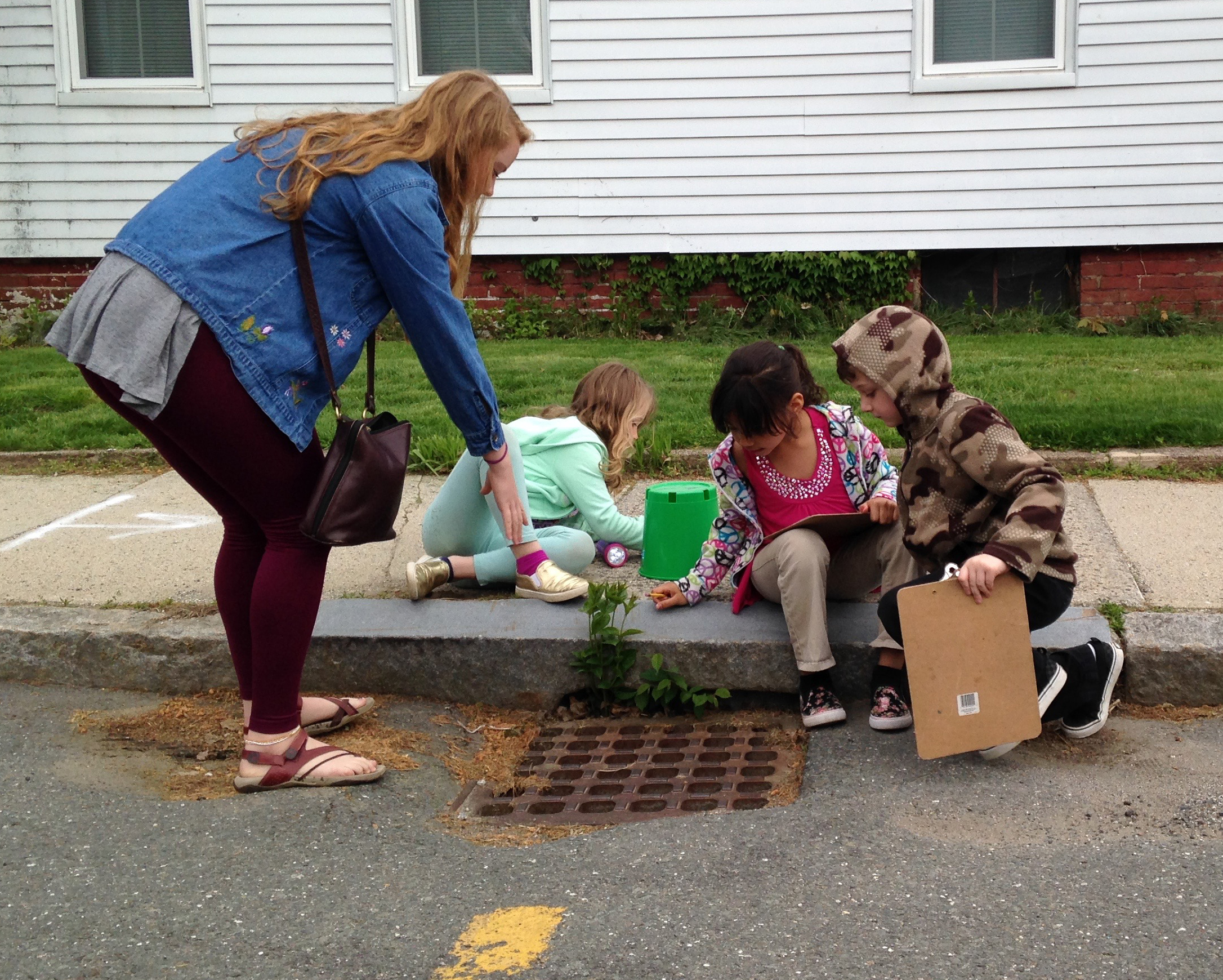
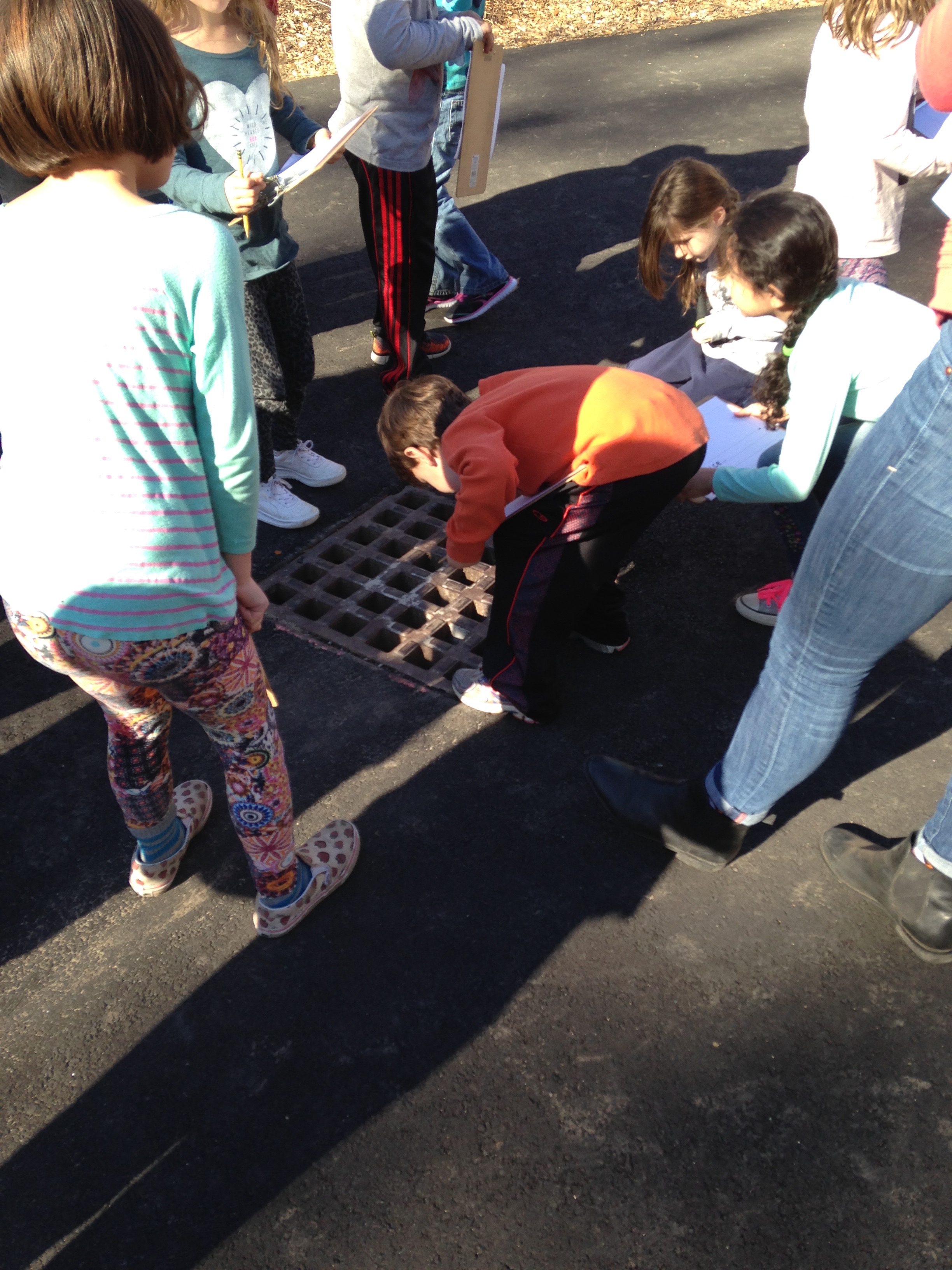
First grade students in the classrooms of Margaret Betts and Martha Morgan considered this question during a recent pilot of Inquiry Inc. and the Case of the Missing Ducklings at Maple Street School in Easthampton, MA. “Talking about something and seeing what you can do,” one student offered, while others noticed the words “inquire, wonder, investigate” written on a group chart in their classroom. “Can water run out? Is all water the same? Where does water come from? Where does water go?” These guiding questions encouraged students to view an integral resource in new and exciting ways. As they walked around their block to scout for storm drains, first graders were riveted by the facts and mysteries of the everyday wonder that is water, revealing anew the powers of place-based and narrative learning.

These inquisitive scientists were the first in their town to interact with Inquiry Inc. and the Case of the Missing Ducklings story and unit materials, but they will not be the last; we are excited to announce that our unit was officially adopted into the Easthampton public school first-grade science curriculum! In celebration of this achievement, and with reverence for the organic discoveries of collaborative inquiry, we have created a compilation of reflections from members involved in piloting our story.

Water Inquiry Researcher Anna Wysocki ’20 connects the day to her personal experiences with water systems:

“We arrived at Maple Hill Elementary with open minds and eyes and were able to leave with full hearts. The children we worked with were so insightful and full of inquiry, and truly made this adventure so special.

First grader making storm drain observations.

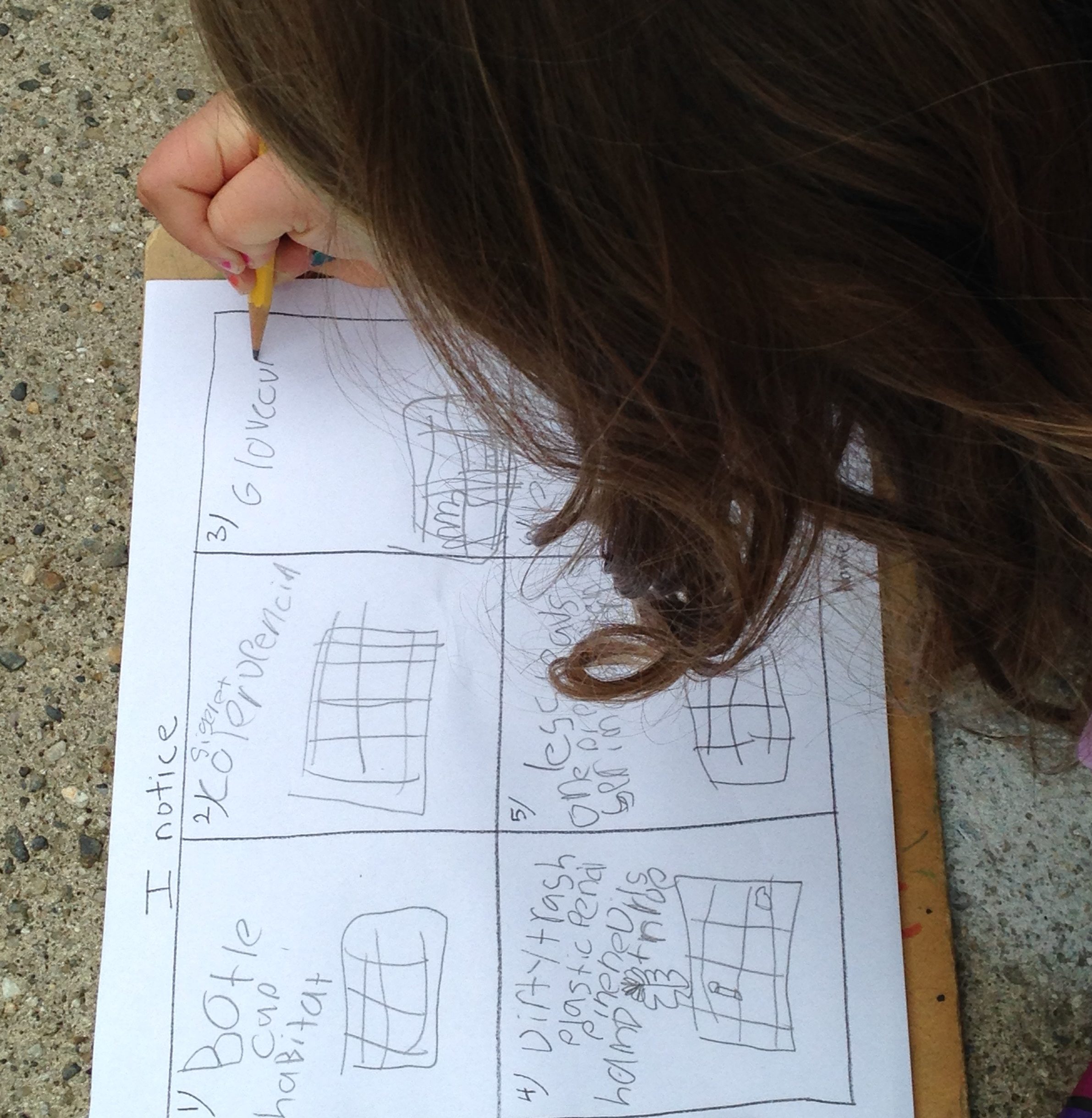
After briefing on the plan for the day with our wonderful host teachers, the students were split into groups of 3 or 4 so that they each had a chance to engage and discuss their observations. Then, we made our way outside with clipboards and pencils and flashlights to see what we could find out about how storm drains work. There were six stations of storm drains to observe, and at each there was something new to ask, to say, and to laugh about for the kids. Funnily enough, in the very beginning, as I was handing a pencil out to a student, it fell down the drain and floated in the water, just as takes place in the story.


“Look! There’s a mushroom!”

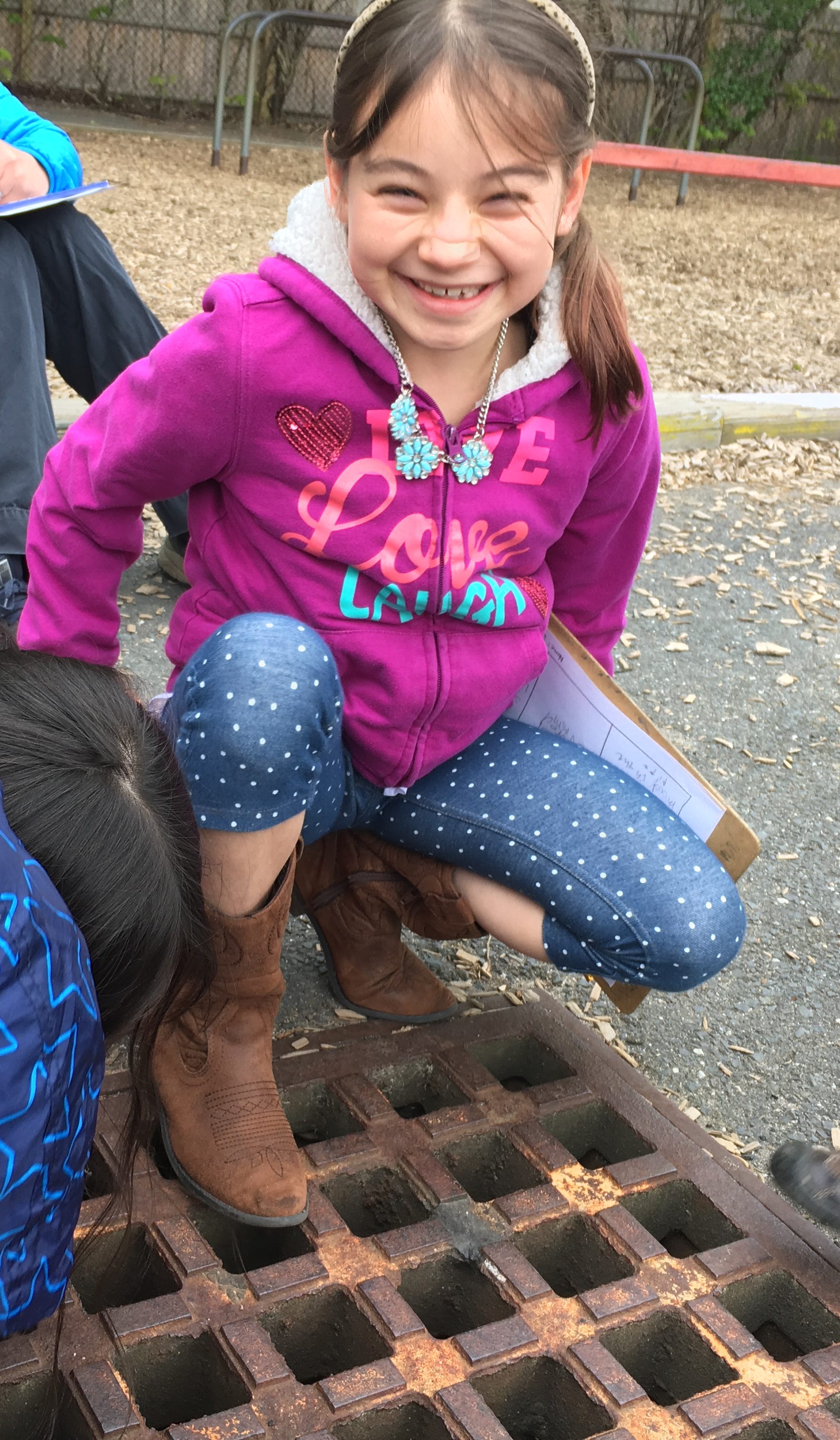
There were two moments that really stuck with me from the day. First was in the second group, when the four students were observing the storm drain located in their school playground and found a mushroom growing at the bottom of it. They found this to be hilarious and began making songs about the mushroom in the drain, singing for the rest of the time we were there.

Secondly, was once we were back inside and the teacher began reading the book. They approached a section of the story where the Inquiry Inc. “jingle” was to be said, and the whole class full of kids knew it and screamed it. It was amazing to look back to when we were writing those very lines and then now see them being memorized and cheered by people reading the book. It was really an amazing day. The children we worked with came up with so many brilliant questions and observations. It was a day that was truly benevolent to our research and to brightening our spirits.

For me, the water inquiry project was more than writing stories for children to be entertained by. Having grown up in Hoosick Falls, NY, where recently it was discovered that our very own drinking water supply is polluted by a toxic chemical called PFOA, this story was a chance to inform and make a positive difference on the way that people look at water and all that goes with it. This is just the beginning of our journey to informing kids about water safety, and this adventure is making the future look bright!”

Ruth Neils ’19 examines storm drain with students.

Pilot teacher Margaret Betts discusses her launch of Inquiry Inc. and the Case of the Missing Ducklings:

“The children were so excited to investigate the drains. They immediately took a personal interest in what would be in a drain and what might be good for the drain and bad for the drain. The activity really engaged active looking and wondering. When we returned to the classroom to reflect on our field trip everyone had something to say about what they noticed and wondered. It was a perfect way to engage children into the larger inquiry.”

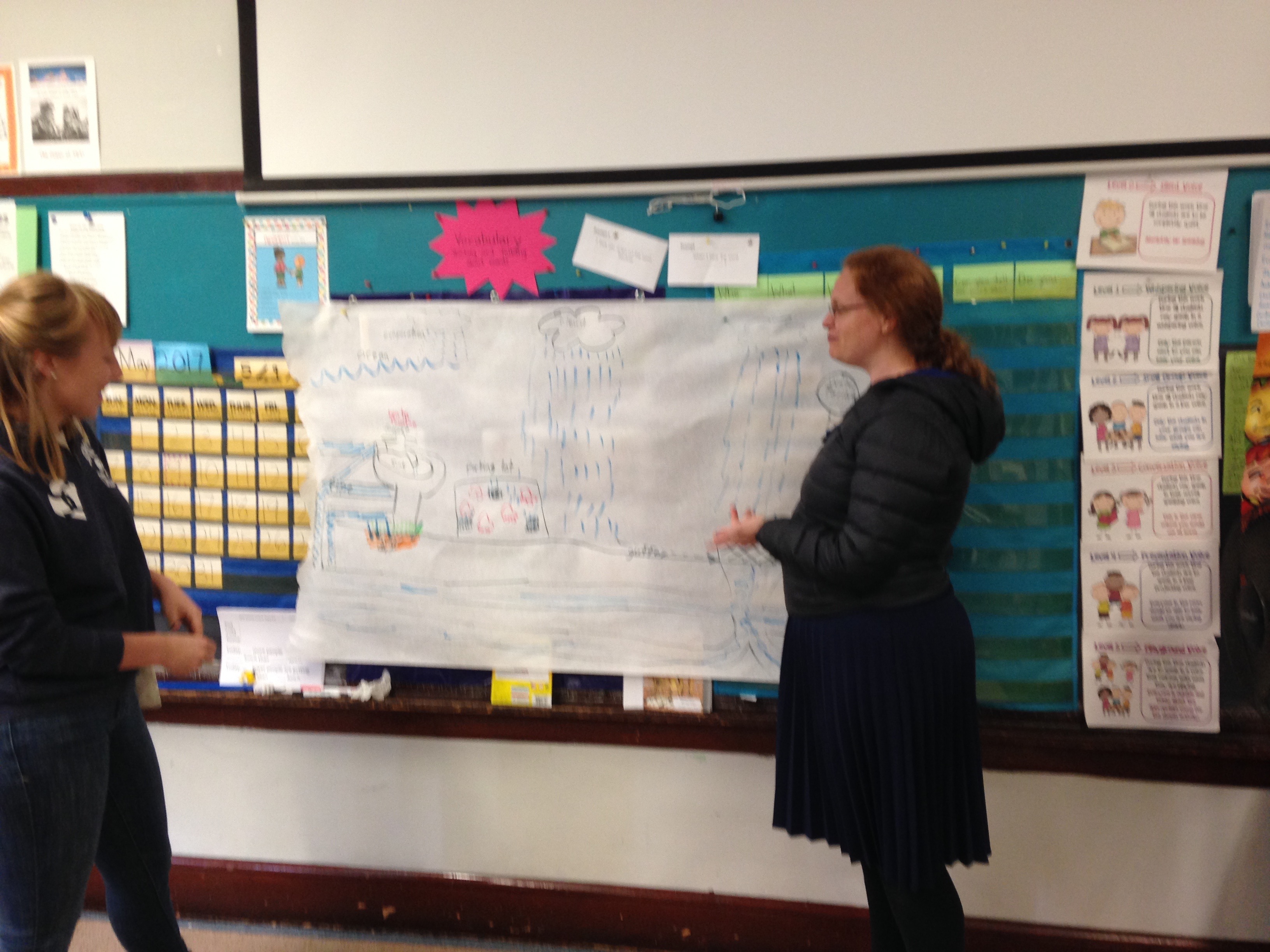
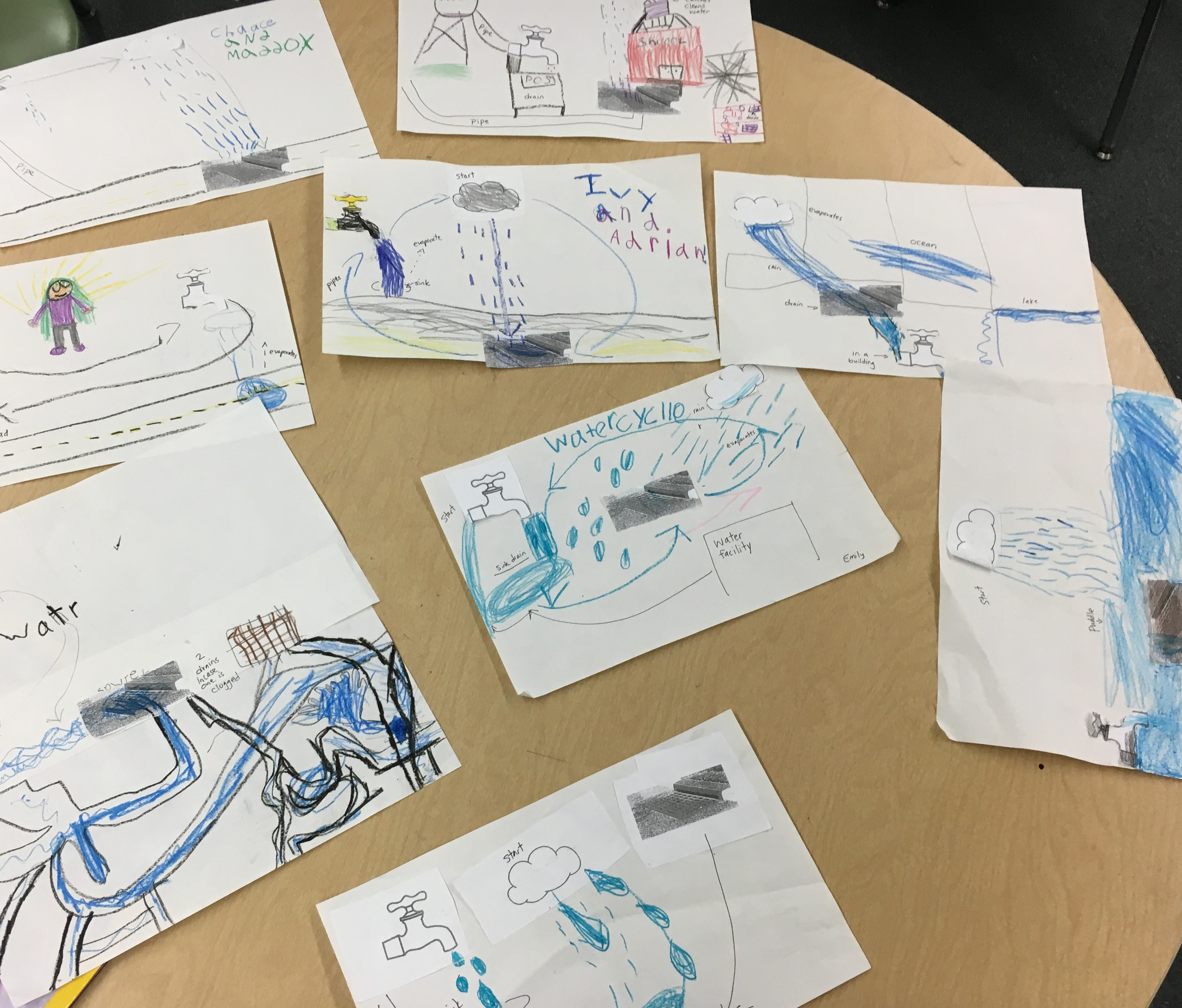
Margaret Betts (right) shows Ruth Neils ‘19 (left) student diagrams tracing the journey of water from cloud to faucet.


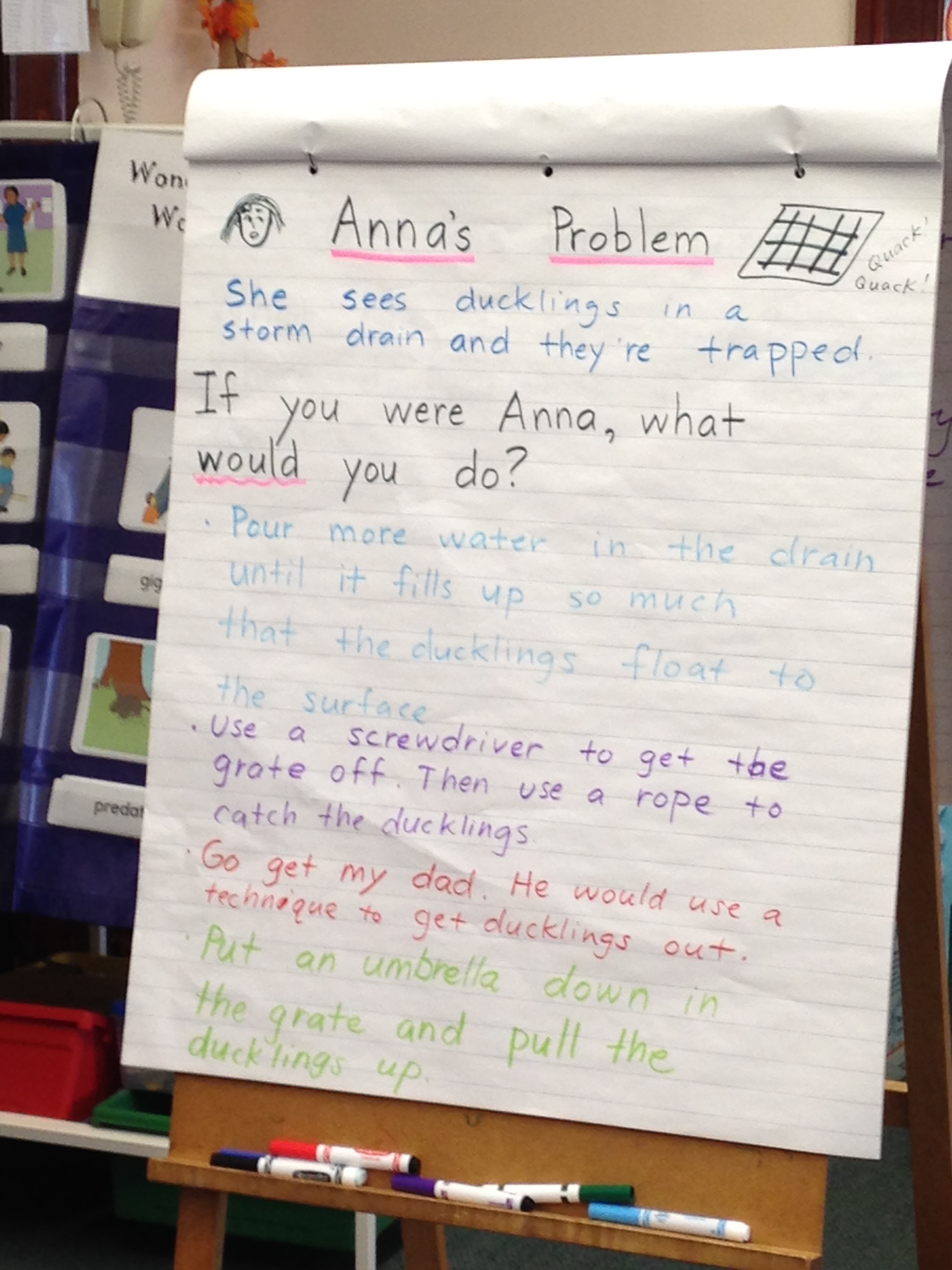
First graders began the pilot by identifying the story’s central problem (“She sees ducklings in a storm drain and they’re trapped”) and imagining real-world solutions:

Students’ ideas included:

  • “Pour more water in the drain until it fills up so much that the ducklings float to the surface.”
  • “Use a screwdriver to get the grate off. Then use a rope to catch the ducklings.”
  • “Go get my dad. He would use a technique to get ducklings out.”
  • “Put an umbrella down in the grate and pull the ducklings up.”

Concluding Reflections from Anna Wysocki ‘20

Our fun out-of-the-classroom adventure resulted in inquiry, creativity, and laughs from all participants. One of our main goals as a group is to allow the readers of our stories to gain new thought processes and techniques to use in real-world applications, encouraging them to realize the amazing impacts that they can have on any problem. As silly as saving ducks from a storm drain may sound in terms of implementation in everyday life, we were able to learn that such problems do happen, and that if you’ve “got a problem that won’t go away”, then a little bit of inquiry can “save the day!” In fact, a first grader brought to school breaking news that in our very own city of Northampton, some baby ducks fell into a storm drain and were trapped, leaving their mom above-ground in a panic. Local firefighters and passers-by used inquiry skills to save the ducks, just as Inquiry Inc. and these curious Maple School students could have done.

You never know when a little bit of inquiry can save the day!

Illustration by Zoe Dong ‘17, from Inquiry Inc. and the Case of the Missing Ducklings.

Written by Brittany Collins and Anna Wysocki on behalf of the Water Inquiry team.

Planning and Piloting: Water Inquiry Update, January 2017

waterstory4
Members of Inquiry Inc. prepare to save ducklings. Illustration courtesy of Zoe Dong ‘18J and Sarah White ‘20

“I have too many ideas” was a pleasing lament to hear on an icy afternoon in mid-December. Nestled inside a first-grade classroom at Jackson Street Elementary School, Katy Butler (’12, MAT ’18), classroom teacher and Water Inquirer extraordinaire, guided her students through an exciting encounter with our interactive story, Inquiry, Inc. and the Case of the Missing Ducklings.

Collaboration was the modus operandi of our Water Inquiry team this semester. Together, we refined our duckling rescue story—from detailed illustrations courtesy of Zoe Dong ‘18J and Sarah White ‘20, to planful “hand-off” activities that allow students and teachers to “stop and think; stop and talk; stop and do” during their reading experience. We also conferred with community members to finalize our inaugural publication; to better understand the plight our fictional ducklings might face in the real world, for example, we spoke with Doug McDonald, Stormwater Manager of Northampton, about the design and function of catch basins in town, adapting our plot with his insights in mind.

First-graders explored storm drains on their playground, just like Inquiry Inc!

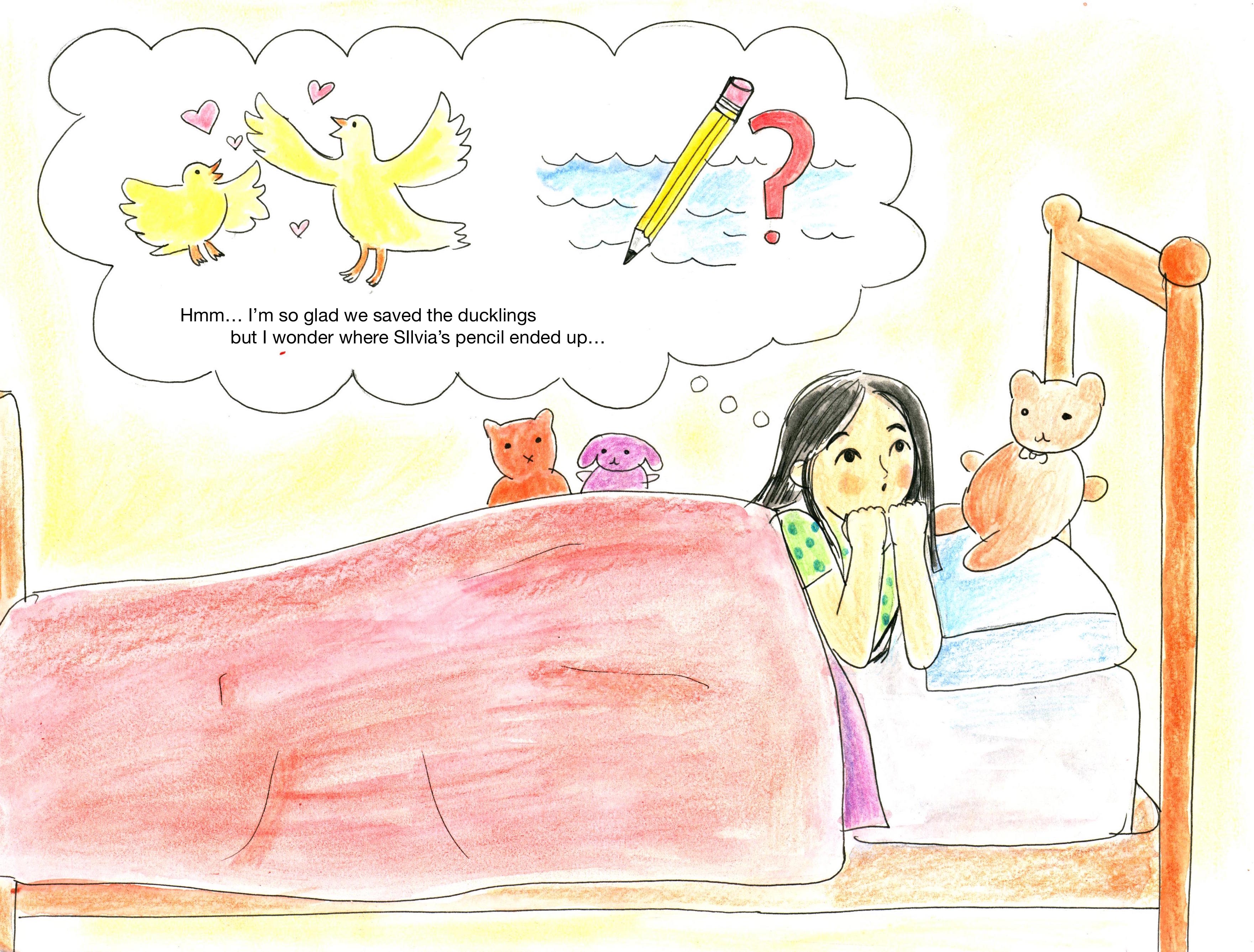
Rich collaboration continued when our story made its way into the hands and minds of first-grade readers. Spread across multiple thirty minute lessons, our piloting program introduced students to “Inquiry Inc.,” the cohort of characters that solves problems (with the help of young readers) throughout our text. After giggles were shared over the irony of “duct tape” being mentioned in a story about ducklings (“[that stuff is] not made out of ducks!”), readers brought wise analytical feedback to our work; upon studying an illustration of a duckling rescue conflict, one student suggested that “Anna [a main character] needs to get closer to the grate, lean down, and reach in,” an instructive comment that guided our artist’s revisions of the scene. Similarly, during a “stop and do” hand-off in which students searched their playground for storm drains, one unlucky group member lost her pencil down the grate of a catch basin! An apt accident for the task at hand, students were thrilled to contemplate this real-world dilemma. Speculating that “my shoe could not [fit down the drain], but my toe could,” they thought of other probable items subject to this perilous fall and predicted the fate of their lost writing utensil. Students’ enthusiasm inspired our authors to construct a surprise ending; you must read our story to see for yourself, but we’ll give you a hint (shh!), the pencil makes a cameo.

Katy Butler '12 MAT '18 read our story to her first-grade class.
Katy Butler ’12 MAT ’18 read our story to her first-grade class.

There are few contexts in which organic exchanges can occur between authors, artists, and readers in the way that our team had the privilege of experiencing this term; our colleagues more than our students, first graders brought honest feedback to our conceptual work, and we integrated their feedback into our final product: a story that extends beyond its pages by asking readers to explore the outdoors, ask probing questions, build, create, and collaborate.

water-blog-1
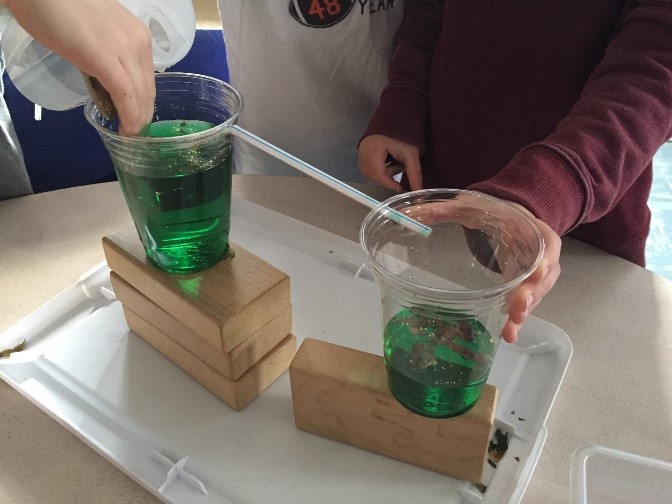
Students worked in groups to create model storm drains during one of our hand-off activities.

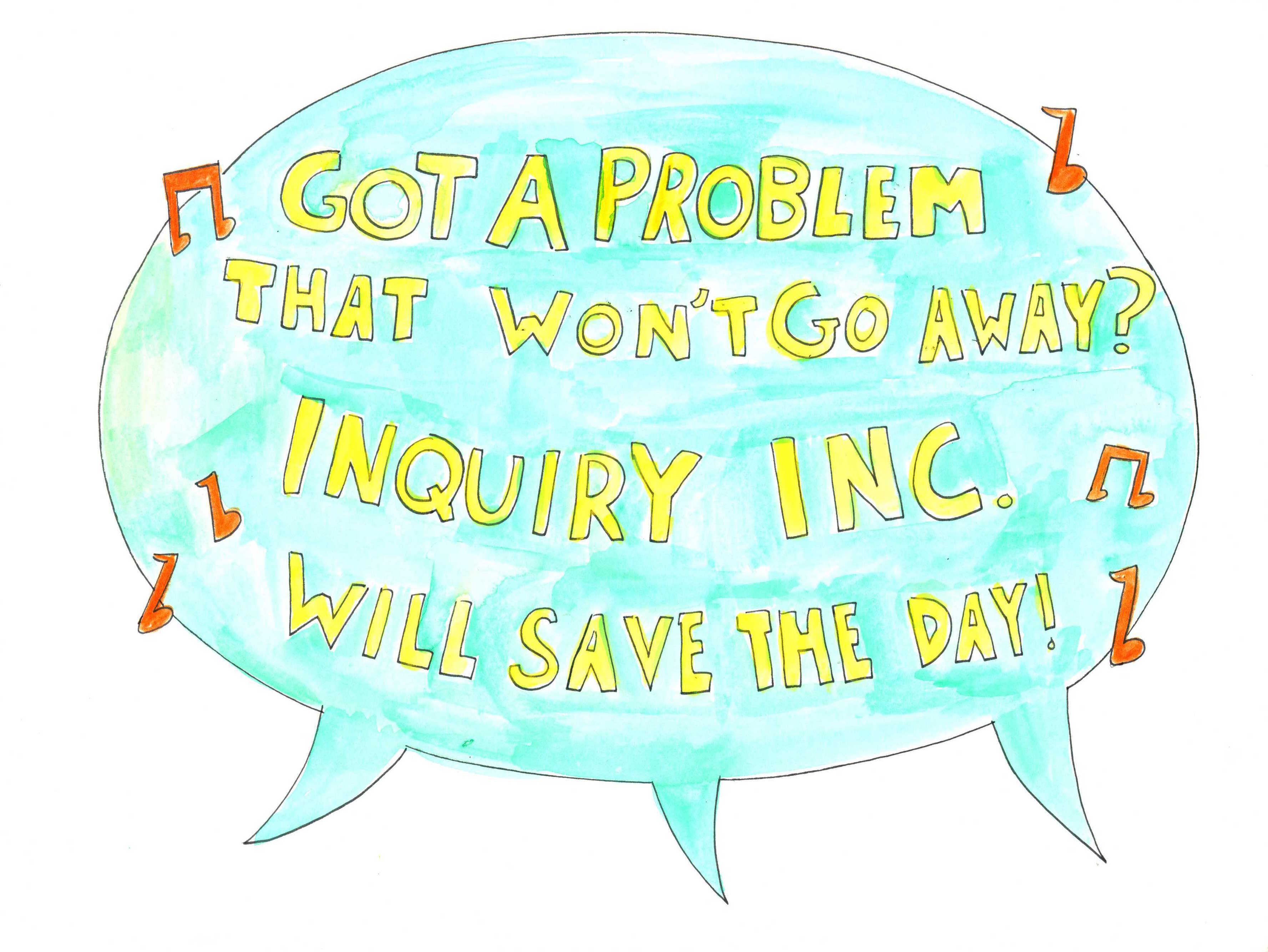
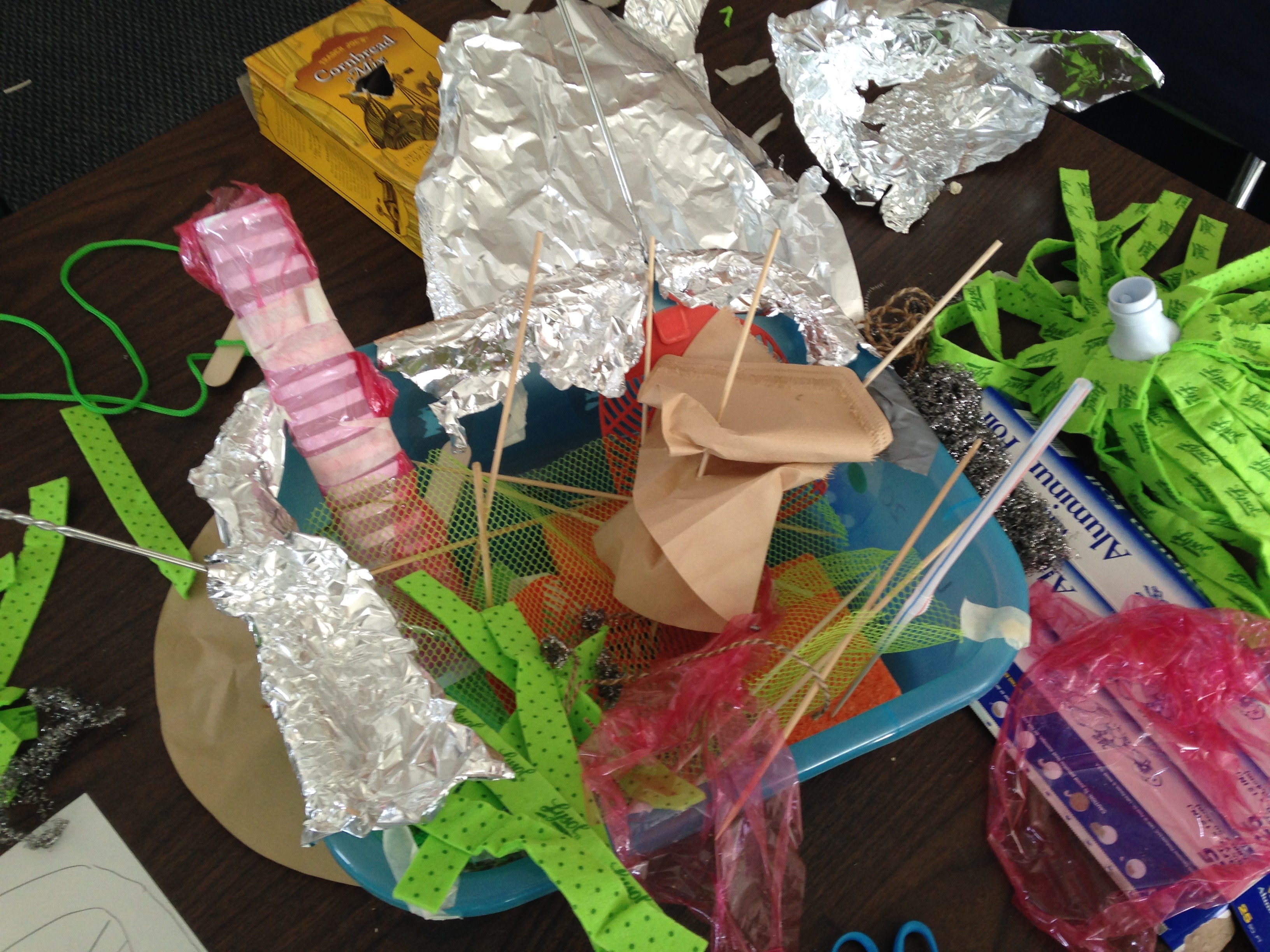
With an educative eye to the importance of inquiry, we designed our unit to transcend its topic. While our story interrogates the mysterious intricacy of storm-drains and weather patterns, a basal interest in knowledge building tactics informed our creative decisions. Woven into the fibers of our narrative, the transmission of these skills was best tested by observing reader discourse and engagement; in our pilot classroom, critical thinking was potently illustrated by our final hand-off activity, a project in which students designed and built model storm drains to better prevent real ducks from the entrapment our fictional ducklings endure. During this activity, student comments exposed careful attention: “How about we each draw what we think,” one student suggested, while another said, “I think we should have Plan A, Plan B, Plan C, and Plan D so if it doesn’t work we can do the next one.” An excited reader boisterously repeated, “I have an idea!” while his group member scribbled carefully on a sheet of red construction paper so as not to forget her theory. Inquiry Inc. characters model problem-solving skills, which similarly transcend the plot of our story. Characters’ slogan, “Got a problem that won’t go away? Inquiry Inc. will save the day!” was quickly adopted by our chorus of readers. In the text, one character encourages the sharing of “half-formed thoughts” while another asks a multitude of questions without timidity. The efficacy of these latent lessons is most tellingly illustrated by students’ comments, as cited above. Their sentiments show the ways in which stories, especially those that are interactive, serve as catalysts for powerful ingenuity.

Students quickly took to this Inquiry Inc. jingle!

Katy Butler spoke of her students’ engagement, too, stating: “Students were immediately engaged in this lesson and very motivated by the tiny duckling pictures. It was interesting to see what they thought might be underground and definitely motivated me to think past just the story to their developing understanding of water systems.” In reflecting on their experience, students mentioned the thrill of doing “experiments,” or hand-off activities, “at the same time” as Inquiry Inc. characters, introducing an additional layer of collaboration: that of the interaction between characters and readers. One student exclaimed, “I am glad [Inquiry Inc.] rescued the ducklings. They even used our idea about the stick and the net!”

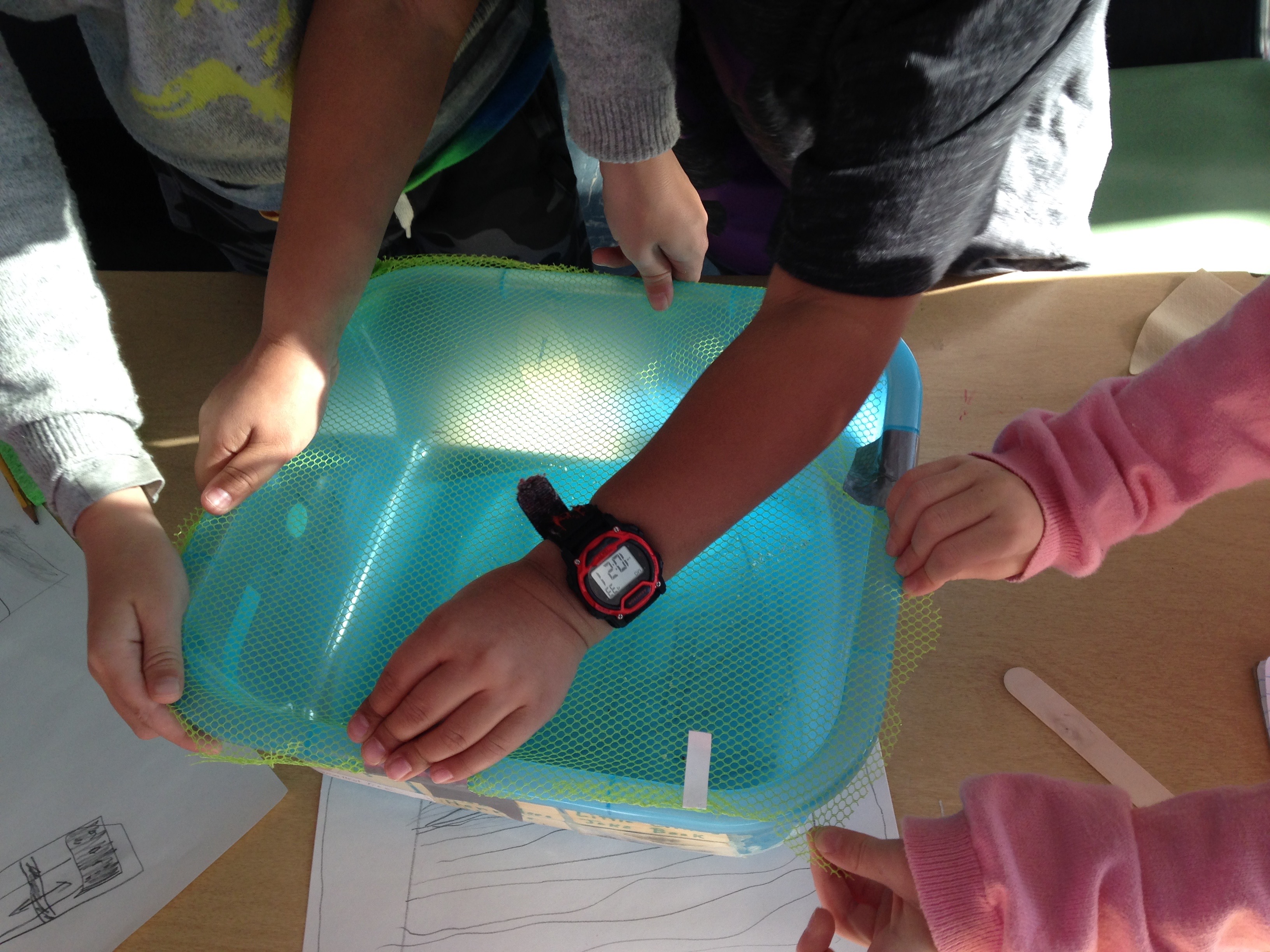
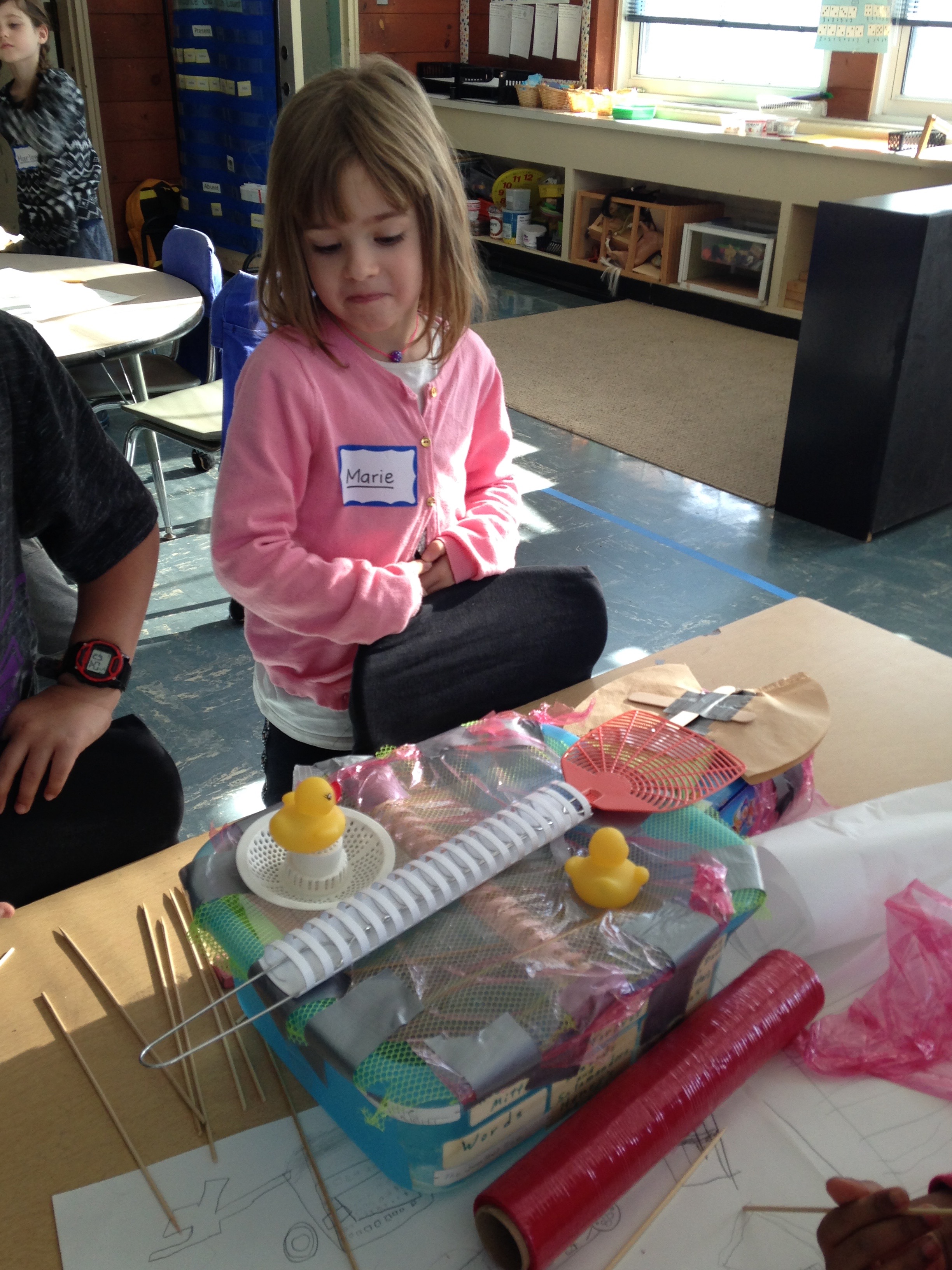
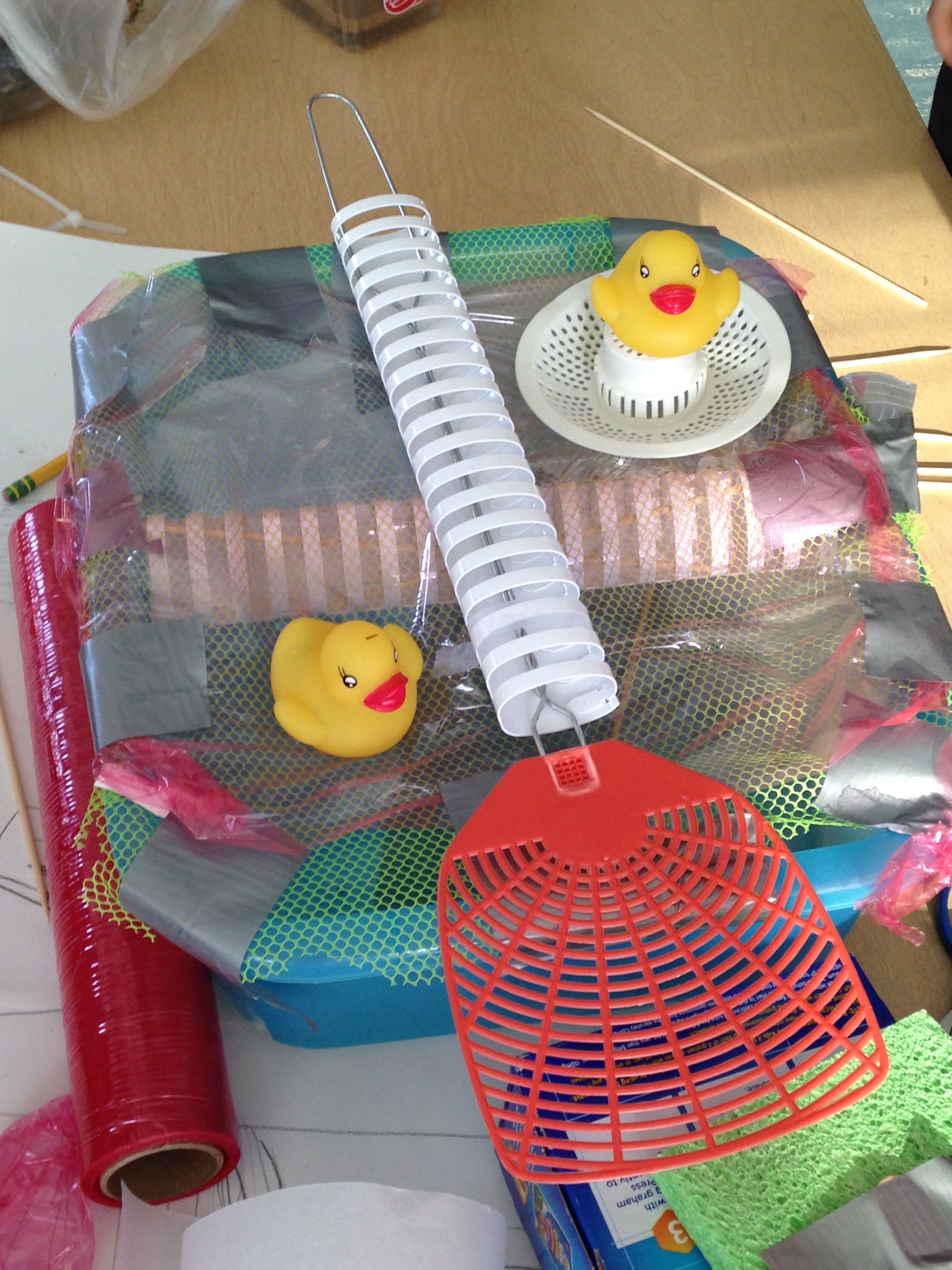
img_1605 img_1604Students designed storm drains with an eye towards function and duckling safety.This group titled their project “The Scooper.” The fly swatter pictured above is actually used to catch leaves. Of their project, kids said: “I think people could really make a drain like ours with a scooper. So maybe we can share our ideas and they will build it. Cause we know a lot about drains now. And ducklings!”

Adaptability is another great feature of our Teaching as Storytelling text. While we encourage educators to delve into the projects and discussions prompted by our book, our story is equally enjoyable when read cover-to-cover in traditional read-aloud format. Teachers may also choose to institute new “hand-offs” where they see fit, continuing our tradition of collaboration. Though our final product is artfully packaged, we hope that it serves as an invitation for adaptation, evolving with each student encounter, turn of the page, and eager hand stretched into the air.

This emphasis on adaptation allows for seamless implementation in multiple educational contexts, too. Most notably, our field investigations, engineering design challenges, and emphasis on group discourse and theory-building, align perfectly with updated standards for Next Generation Science and Engineering Practice. These guidelines mandate that students ask questions and define problems; develop and use models; plan and carry out investigations; analyze and interpret data; construct explanations, design solutions, and engage in argument from evidence. Students’ reactions aligned with the goals of NGSS; one first-grader shared: “My favorite part was when we found out how to make the water go through the pipe so it could go from one drain to the other. My group even figured out you can hold the straw down and then let it up and more water goes through!”

water2
Students then modeled the downhill flow of water through pipes to explain scientific processes to Inquiry Inc.

What better way to meet new standards and promote holistic, interdisciplinary thinking than to conduct scientific inquiry through the affective mode of story? Narrative theorists discuss the prospect of making the “ordinary extraordinary” by way of story-form, and we concur given our readers’ enthusiasm.

Making the "ordinary extraordinary" was exemplified by this group's storm drain entitled "Too Many Ideas!"
Making the “ordinary extraordinary” was exemplified by this group’s storm drain entitled “Too Many Ideas!”

Our story encourages students to be aware of the world around them, fostering inquisitive participation rather than passive reception. Regardless of topic or academic discipline, we care about students’ habits of mind, and we were thrilled to hear one student say: “I never thought so much about drains! Now I see them and wonder what is down there.” Katy Butler noted, too, that students’ discussions “extended beyond our water study times,” which affirms our contention that stories have a way of deepening students’ responsiveness to, not only academic material, but the people and communities around them. One student even announced, “Guess what? That half dollar I brought in yesterday fell down into a storm drain before school. I was wishing Inquiry Inc. was there to help!”

waterstory6
In this illustration created by Zoe Dong ‘18J and Sarah White ‘20, Inquiry Inc. saves the day (and the ducklings)!

As we look towards 2017, the Water Inquiry team eagerly awaits the opportunity to share our story with teachers. If you would like to pilot our illustrated story and its accompanying unit materials in your classroom, please contact Carol Berner at cberner@smith.edu for more information. Our first grade pilot teacher and group member Katy Butler will lead a professional development workshop this winter in which educators may learn about her experience teaching our scientific story unit. Stay tuned for more details, and we will see you next semester—Inquiry Inc. is ready to solve their next problem, and we will soon set to work drafting a new story (with pencils in hand, kept carefully away from storm drains)!

Best wishes to you, readers, for a wonderful year ahead! May it be filled with exploration, teaching, and learning.

Sincerely,
The Water Inquiry Team


Written and published by Brittany Collins on behalf of the Water Inquiry Team