Der Weltkrieg ( Photos from Book)
Transitions: From the Old Order to the New 1890-1930
GER 297 | Fall 2018

These cards were issued in 1937 by a number of German cigarette companies and were included in packs of cigarettes. Although these cards were created after the war, they are colorized versions of photos taken by the German War Ministry during the war. They show many of the new technologies in use during World War I : tanks, bomber and fighter aircraft, machine guns and poison gas all of which made WWI incredibly deadly. Also pictured here are Austrian troops laying telephone lines. Communication lines were of the utmost importance for troop coordination and this was the first conflict in which telephones were used at the front. Observation balloons ( hot air balloons essentially) were used to identify targets for artillery, however wind and enemy planes made this a dangerous job.
These cards were issued in 1937 by a number of German cigarette companies and were included in packs of cigarettes for collecting by the consumer. Although these cards were created after the war, they are colorized versions of photos taken by the German War Ministry during the war. They show scenes of soldiers’ daily life during the First World War. In this collection there are scenes from a makeshift trench barber shop, soldiers playing a piano in an evacuated town, and soldiers heading to battle. Barber Shops were important in the later parts of the war since large bushy beards made the use of gas masks ineffective.
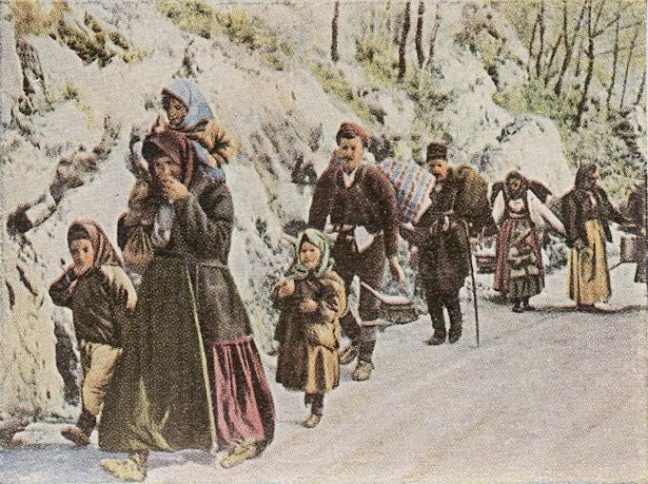
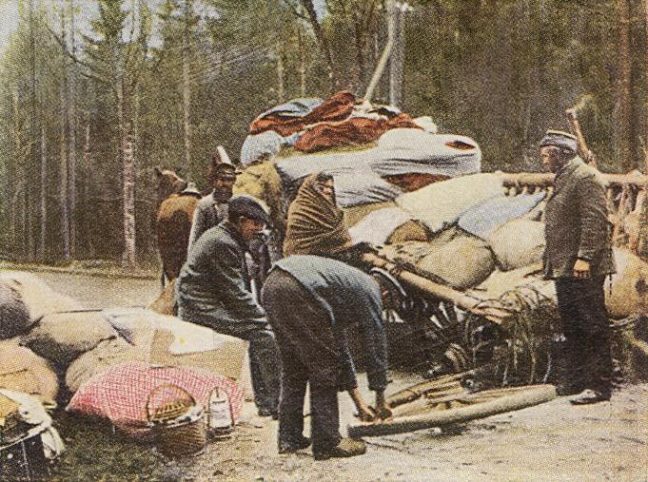
These cards were issued in 1937 by a number of German cigarette companies and were included in packs of cigarettes for collecting by the consumer. Although these cards were created after the war, they are colorized versions of photos taken by the German War Ministry during the war. They show scenes of civilian life during the first world war. During the war many resources were scarce, including food. Featured in this collection is a scene of civilians lining up outside a food distribution center. It is estimated that 762,796 people died of malnutrition during WWI. Also included is a scene from a factory worked by teenagers and women and a picture of refugees fleeing their homes due to the fighting.
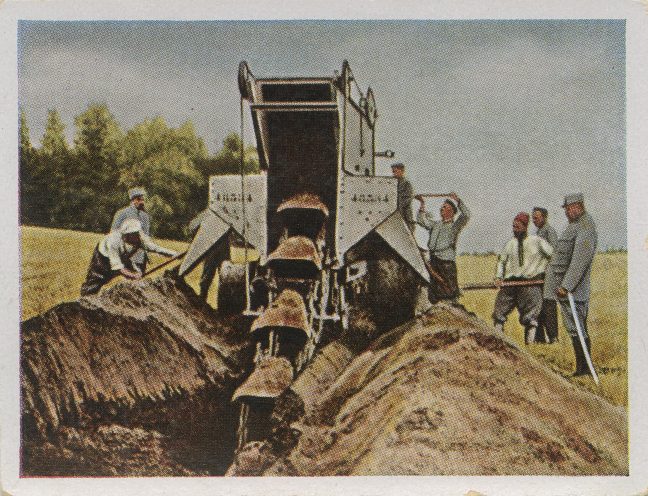
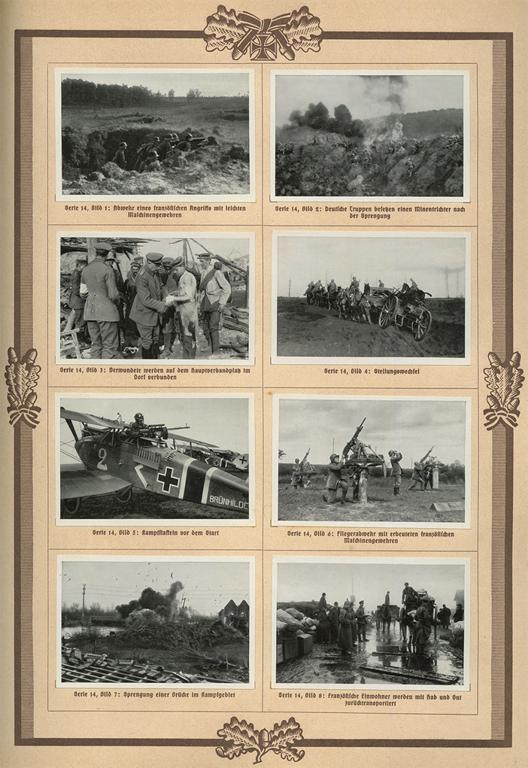
These cards were issued in 1937 by a number of German cigarette companies and were included in packs of cigarettes for collecting by the consumer. Although these cards were created after the war, they are colorized versions of photos taken by the German War Ministry during the war. They show scenes of trench warfare during the First World War. Trenches were characteristic of WWI and new technologies such as trench diggers and portable gas/electric spotlights made this possible. Life in the trenches was hard and many soldiers developed trench diseases, such as trench foot or trench fever.
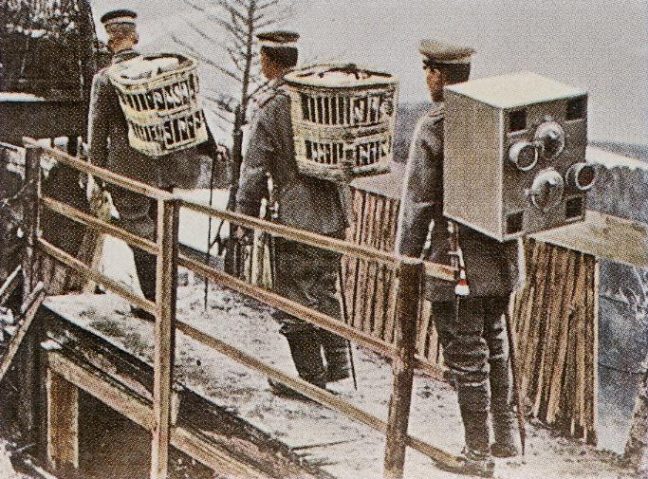
These cards were issued in 1937 by a number of German cigarette companies and were included in packs of cigarettes for collecting by the consumer. Although these cards were created after the war, they are colorized versions of photos taken by the German War Ministry during the war. They show scenes of how animals were used during the first world war. Messenger dogs were used when there was no cover for humans to move across the terrain or when communication lines were not functioning. These dogs usually had two masters, one at each end, and were usually used on routes two Kilometers or less. Messenger pigeons were also trainer and utilized in world war one. They were usually transported in backpacks or baskets to the front and would then be released to fly back to the home cage with a message. They were particularly helpful when it came to warfare in the mountains. Horses also played a big role on WWI, despite the invention of new transportation technologies. Due to gas warfare soldier now had to worry about protecting their horses from gas attacks as well.

These cards were manufactured by a German chocolate company during WWI. They are featured here in a book made by the company to showcase all the cards in their series. The topic of these cards is “Junge Wehr auf Borkum” (“Youth Defense Group on the Island of Borkum”).
Description of the cards (left to right):
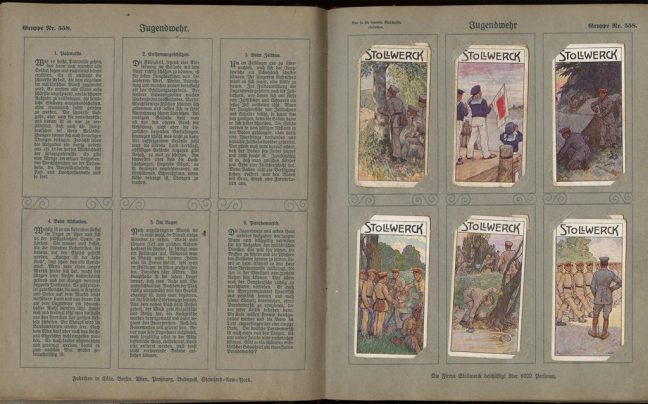
The pictures of the Stollwerck trade card album “Jungdeutschland” (Young Germany) show how such youth groups were engaged in activities to prepare them for war. Here are the titles and selected excerpts from these six pictures (only four are shown):

This newspaper was printed on the 11th of October, 1914 in the Magdeburgische Zeitung, which was the oldest German-speaking newspaper, first published in 1664, until it merged with another newspaper on the 1st of September, 1944. A week from now on October 18th, the First Battle of Ypres (Belgium) would begin between Germany, France, and England. This clip is a story about ‘After the Fall of Antwerp (Belgium)’. The Siege of Antwerp went on until the 10th of October, 1914, lasting for 12 days, and resulted in a German victory. Other news mentioned in the Magdeburg News is the progress of the Austrians in Galicia, the Russian Czar taking command of the Russian Army, speculation on whether Prince Nikolai will be the new heir to the Russian

This newspaper extra is part of the 18th of February, 1915, edition. The top headline says ‘What We Captured in East Prussia’, and is a report from the German General Headquarters. The report details that the Germans captured 64,000 Russian troops, along with 71 cannons and over 100 machine guns and planes. At the time, Germany was fighting in the Winter Battle of the Masurian Lakes. By the 21st of February, the survivors of the Russian 20th Army Corps surrender after being surrounded by the German Tenth Army. This gave Germans a front in Russia and the Germans drove the Russians from East Prussia. The bottom headline details the crash of ‘Airship “L3”’, but informs the reader that its crew was rescued when the airship experienced motor problems off the west coast of Denmark and went down whilst on a reconnaissance mission. February 18th is also the date that the Germans begin U-boat warfare and they attack ships in the waters around the British Isles.