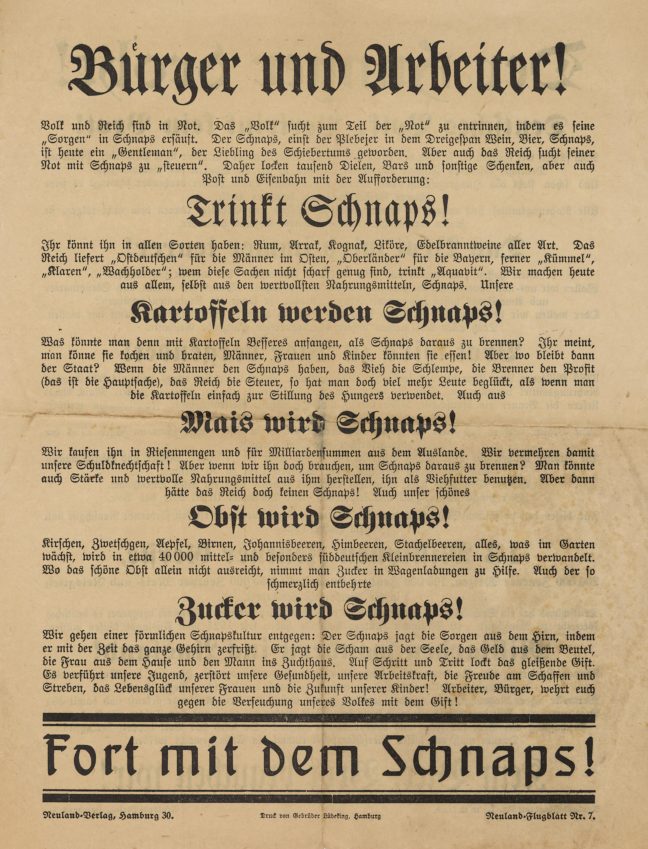
This is an advertisement and piece of propaganda proclaiming that a patriotic act would be for Germans to stop drinking beer and only drink Schnaps. Beer is made of wheat and other ingredients that would have been better used for bread and other sustenance for children, women, and old people, all of whom it was frowned upon for them to drink beer. To drink beer would have been irresponsible since German citizens needed those ingredients to create food they could eat. During times of war, it was impossible to import food and fuel for people to use, and so rationing was introduced. During this rationing, daily calorie intakes were slashed, and people saw the effects of rationing well after the war due to shortages. Additionally, rationing led to many people starving to death.
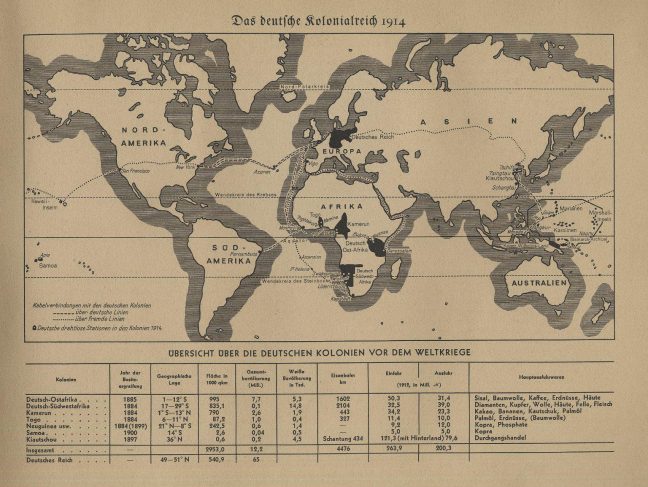
This map was published by the Cigarette Picture Service in Hamburg, Germany. The map details the ‘German Colonial Empire in 1914’, showing an overview of the German colonies (pre-WW1), as well as information into the different colonies’ year of establishment, location, area, population, railway, imports, and exports. This helps the viewer understand just how much Germany gained, stood to lose, and then lost during the war. It also emphasises the importance of trade on the economic stability needed to maintain overseas colonies, as well as international relations. This was published in 1935, potentially a tactic to enrage German citizens into remembering the ‘good old days’ when Germany had been a global superpower, as a way of drumming up support for World War Two and the new government that would be headed by Adolf Hitler.
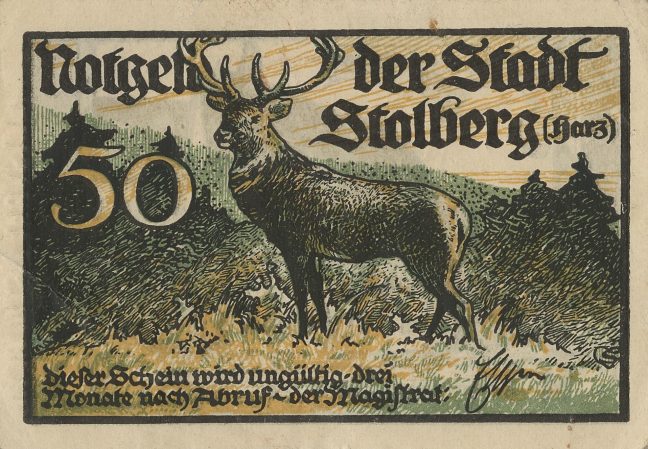
This is 50ℳ (Papiermarks or Paper Marks) of emergency money from the city of Stolberg. It is paper due to its material when gold was no longer linked to the Papiermark, shortly after the beginning of World War One. Notes were decorated with different artwork from artists and time period in Germany’s history. This note, in particular, features a stag in the wilderness on one side and has the Stolberg town hall on the other side. The wilderness reflects the hardy nature of the German people, who spent time outdoors earning their livelihood and boasted a strong, healthy population, as well as a reminder of Grimm’s fairy tales, which extensively feature German forests. The art style is simple but modern, as it was easier to print than detailed drawings, but were not modern enough to cause outrage.
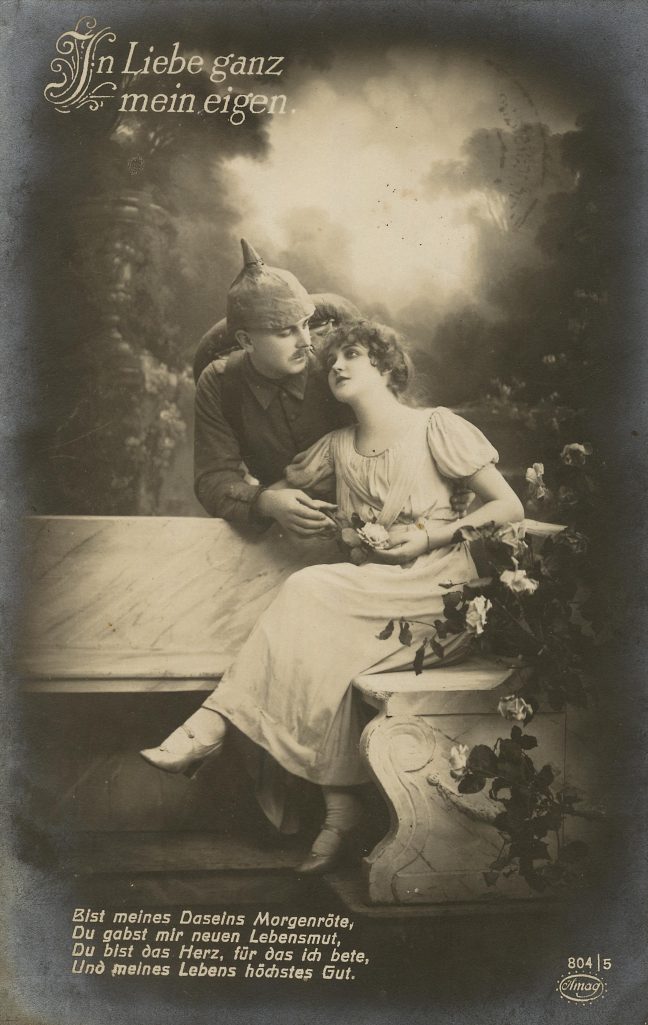
This is a postcard with both the front and back. The front is a picture of two lovers: a soldier going off to war and a young woman holding flowers. The text on the front reads: “In love, my very own-
You are my being’s dawn,
You give me new courage to live,
You are the heart I pray for,
And my life is good.”
On the back, the postcard was written on the 18th of September, 1916, and sent on the 20th of September, sent to a woman from her loved one fighting in World War One.