Grace Harvey, Summer Pratt, Charlotte Yesser, Ingrid Steen-Adams & Aahana Mulchandani
“It is now time that we not only make this acknowledgment, but work hand-in-hand with the Gullah-Geechee so that they might learn of and reclaim their archaeological heritage.“
–Theresa Singleton, “Reclaiming the Gullah Geechee Past”
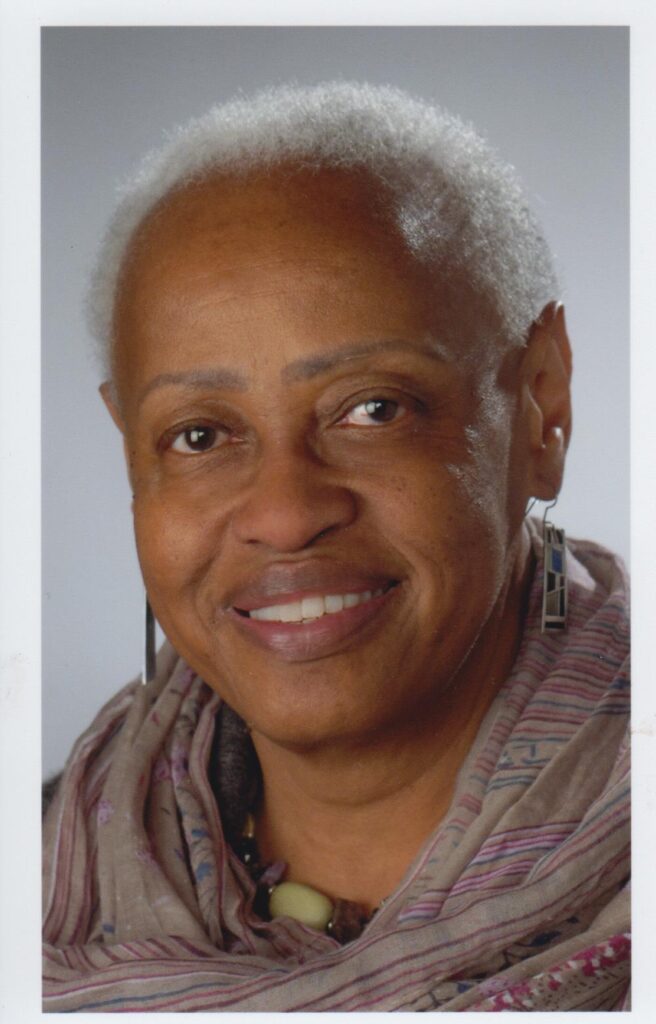
Theresa Singleton is a historical archaeologist, with a focus in African Diasporas, African-American Culture and Slavery in North America and the Caribbean. Her primary geographic focus is the American Southeast coast and Cuba. Her work has contributed to numerous publications, as well as museum collections, exhibitions, lectures, and workshops geared toward general audiences. She currently teaches at Syracuse University, and has spent two decades of her career working with the Smithsonian Institution’s Museum of Natural History and Museum of American History.
Background
Singleton grew up in Charleston, South Carolina and completed her B.A. in anthropology from Trinity College in 1970. In 1980, she became the first African American woman to receive a PhD in historical archaeology, which she received from the University of Florida.
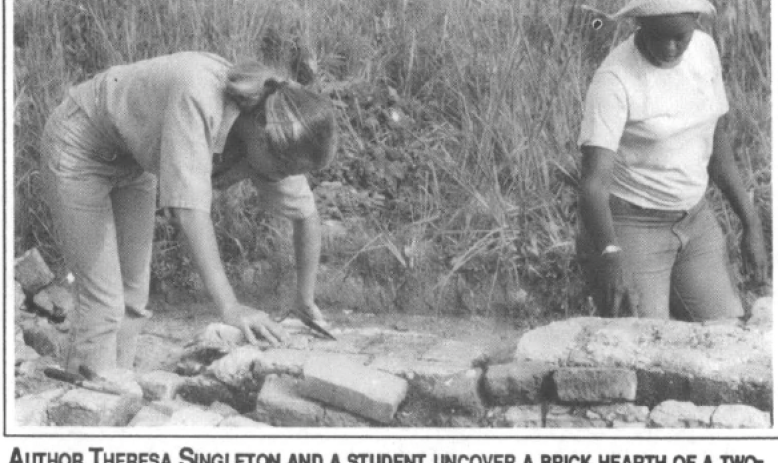
Singleton’s early work focused on the regions of the south coast of Georgia, with her main areas of interest throughout her career centering on historical archaeology, African diasporas, museums, North America and the Caribbean. Her Master’s work dealt with sites pertaining to American Slavery, rice plantations, sugar mills, etc. on the Sapelo, Colonel’s, and Butler Islands off the coast of Georgia. She wrote “synthetic assessments of the role of archaeology in examining African American life in Southern plantation contexts in a range of archaeological and historical venues” (page 4). Throughout her career, her interaction with descendants of enslaved people informed her appreciation of the importance of making education on historical archaeology accessible to both descendants of the people being studied and the general public, ultimately contributing to the organization of 8 public-facing exhibitions and articles and 3 films, and doing extensive work in the Smithsonian National Museum of American History and the National Museum of Natural History. Singleton’s work onward from the late 1990s is primarily located in Cuba and the Caribbean, based out of coffee plantations. Her research aimed at investigating the ways in which slaveholders controlled enslaved populations, and the forms of resistance that were exhibited by such peoples draws upon a combination of archaeological study and written histories/historical documentation.
Her Impact
Today, Singleton’s work continues to make impacts to past and present communities. Her methodology of not centering written records helps give a voice to the enslaved people who lived on the plantations she studied, and she works with the goal of connecting their descendants to the heritage found there. In 1994, Singleton, along with Elizabeth Scott, founded the Society of Historical Archaeology’s Gender and Minority Affairs Committee. Which was described as “breaking new ground” because the 90s was “a boom in social and political consciousness from Black scholars” in terms of African American archaeology (Society of Historical Archaeology).
She also provides representations for black youth who want to be archaeologists, with black people making up just 6.8% of all archaeologists in 2021; which is down from 11.31% in 2010(Zippia). She is a member of the Society of Black Archaeologists, as previously stated, she was the first African-American woman to earn a doctorate in historical archaeology and African American history and culture from the University of Florida, the first black person to be awarded the JC Harrington Medal in Historical Archaeology in 2014, and she wrote a book in 1999 I, too, am America: Archaeological Studies of African American Life. This book addresses the lack of representation within the archaeological field and changes that need to be made. Also a graphic novel, titled The Adventures of Us: Getting to Know Theresa Singleton was released in 2024; as part of a series dedicated to teaching about lesser known historically significant black figures.
Publications
Singleton, Theresa A. 1980. THE ARCHAEOLOGY OF AFRO-AMERICAN SLAVERY IN COASTAL GEORGIA : A REGIONAL PERCEPTION OF SLAVE HOUSEHOLD AND COMMUNITY PATTERNS. Ufl.edu. https://ufdc.ufl.edu/AA00024758/00001/images, accessed December 7, 2024. University of Florida,
Singleton, T. A. (1990). The Archaeology of the Plantation South: A Review of Approaches and Goals. Historical Archaeology, 24(4), 70–77. http://www.jstor.org/stable/25616051
Singleton, Theresa A. 1995. The Archaeology of Slavery in North America. Annual Review of Archaeology 24:119-140. www.jstor.org/stable/2155932
Singleton, Theresa A. 2001. Slavery and Spatial Dialectics on Cuban Coffee Plantations. World Archaeology 33(1):98–114
Singleton, Theresa A. 2010 Reclaiming the Gullah-Geechee Past. In African American Life in the Georgia Lowcountry: The Atlantic World and the Gullah Geechee, edited by Phillip Morgan, pp. 151–187. Race in the Atlantic World, 1700-1900 volume 7. University of Georgia Press, Athens, Georgia.
Image Source:
Discovery West Bend
2024. Women of Discovery: Theresa Singleton. Discovery West Bend. discoverywestbend.com/women-of-discovery-singleton/, accessed November 30, 2024
Facing South